José Arroyo in Conversation with Joaquín Aras


Joaquín Aras is an artist and filmmaker from Buenos Aires. His work is on show alongside that of María Agustina Fernández Raggio and Paula Monzillo at the What It Became Is Not What It Is Now exhibition curated by Louise Hobson and currently on show at Grand Union until the 9th of November. Aras also screened Snuff 1976 at The Electric Cinema in Birmingham. Snuff 1976 is a reworking of the original ´snuff´/horror/ soft core porn’ American exploitation film shot in Argentina just at the time when a military dictatorship was coming into power and beginning to commit the atrocities this period in Argentine history will forever be remembered for. The film was advertised as ‘A movie that could only have been made in South America, where life is cheap’.


IMG_5336

This is a wide-ranging conversation that touches on: film history; what is centre/ periphery in relation to how film cultures circulate?; how does one reconstruct popular memory?; film preservation; the connection between Snuff 1976, Once Upon a Time in Hollywood and the Manson murders; and Aras´ ongoing attempts to give voice and expression to those areas related to history and popular memory currently occluded, bypassed, sometimes even lost or erased.

Joaquín and I also discuss the relationship of his work to the video essay, how his choices of what to focus on are contextual and specific to Argentina. We discuss the relationship of guest and host in the horror film and what the work of Levinas and Derrida can bring to an understanding of that relationship. We also talk about how memory might be a great way to challenge historicity. A conversation worth hearing and a show worth watching. Details of the exhibition are below:


IMG_5323.jpeg

Those of you interested in issues of film history and popular memory might want to follow up by reading Annette Kuhn´s foundational work in these areas:

An Everyday Magic: Cinema and Cultural Memory. London: I.B. Tauris, 2002. Published in the US as Dreaming of Fred and Ginger: Cinema and Cultural Memory. New York: New York University Press.

Family Secrets: Acts of Memory and Imagination. London: Verso, 1995; rev edn, 2002.


Eavesdropping at the Movies: 167 -Notorious


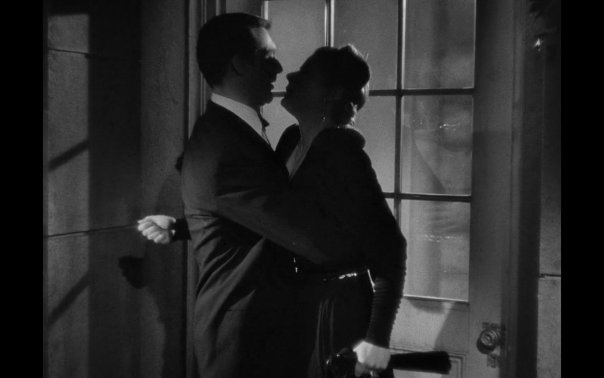
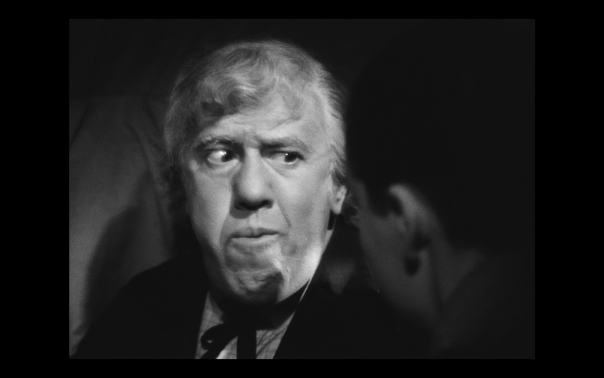
Considered by some to be his best film, Alfred Hitchcock’s Notorious comes to the mac in a beautiful 4k restoration. We explore its sumptuous close-ups, complex characterisation and smart, effective editing, which elicited big responses from the audience. We also have an argument about focus pulling.

Below, you can see several screenshots and four clips of moments and scenes to which we refer in the podcast.

The podcast can be listened to in the players above or on iTunes.

With José Arroyo of First Impressions and Michael Glass of Writing About Film.

grant-in-motion


Screenshot 2019-09-11 at 11.13.02.png


Grace in motion: Cary Grant in Notorious

One of Grant´s tiny movements in Notorious that so delight by their physical grace.

grant-in-motion.gif

José Arroyo


José Arroyo in Conversation with David Greven


A conversation with David Greven, distinguished Hitchcock scholar, author of Intimate Violence: Hitchcock, Sex and Queer Theory, Psycho-Sexual: Male Desire in Hitchcock, De Palma, Scorsese, and Friedkin and many other books (see images below) which took place at the Under Capricorn +70 Conference at King´s College, London. We talk of Hitchcock as a queer filmmaker, how his works undermine gender roles and expectations. We discuss David´s explorations of the intersection of Queer Theory and Hitchcock and what he´s learned by bringing them together. We bring into the discussion recent television work by Ryan Murphy as well as the work of Pedro Almodóvar. We touch on the significance of the re-release of five Hitchcock films in the 80s in the context of gay male representation, as well as on E.M Foster adaptations such as Maurice, Room with A View, Howard´s End and the recent theatrical deployment of some of those structures and tropes in The Inheritance. Finally the conversation refocuses on his work on Under Capricorn, the presentation of which is David´s reason for being in London, putting it in the context of Ingrid Bergman´s ‘trilogy’ with Hitchcock (Spellbound and Notorious are the others). Under Capricorn is enthralling but is it goodP? Finally David offers some recommendations on how to introduce yourself to Hitchcock´s work if you haven´t already done so. If you don´t love Under Capricorn, you don´t love Hitchcock, and if you don´t know how to appreciate Hitchcock, you don´t know how to appreciate cinema. An informal but stimulating and all too brief conversation.


José Arroyo

Eavesdropping at the Movies: 166 – Pain and Glory

It’s probably fair to say that Pedro Almodóvar’s films seem to be made specifically for José. It’s in every detail: the locations, eras, sexuality, ways of life, attitudes, class, love of cinema and countless other aspects of Almodóvar’s ouevre speak to José on a deep, intimate level. He’s watched every one of his films time and time again, and he considers Pain and Glory, which he has already seen twice and plans to see again, a masterpiece. Mike doesn’t have anything like such a specific relationship to Almodóvar, and indeed has only seen one other of his films, 2016’s Julieta, which he liked very much – and indeed he likes Pain and Glory just as much… though not quite as much as José.

We discuss how Pain and Glory stands alone but might benefit from being seen in relation to Almodóvar’s ouevre. Several of his regular collaborators appear, including Cecilia Roth, Antonio Banderas, Julieta Serrano and Penélope Cruz; this film, as with The Law of DesireBroken Embraces and Bad Education, is about a filmmaker; it makes use of art as an unconscious but pointed visual layering and underlying theme; images of characters writing on typewriters or computers show up – this is a film about, amongst other things, writing. Mike brings up the way chance events are used to drive the plot forward and thinks about how they’re contextualised; José praises how fluid Almodóvar’s storytelling is here, effortlessly bringing together disparate timelines and plot strands.

Is this autofiction, as the mother in the film accuses her filmmaker son of so often indulging in? José considers the appearance of Almodóvar’s own mother in his previous films and how so many of his previous films are in fact about mothers (All About My Mother and Volver being the most obvious examples). We discuss the structure of the film, the movement from the relationship with an actor who’s an addict to a previous relationship with an addict, through the performance of a confessional monologue titled Addiction, then a sexual awakening seen from a young boy’s point of view. Representations of Spain in the 50s, memories of the past and a present setting fluidly intermingle. We also consider its themes of illness, ageing and loss, and how it’s a film about cinematic expression, the revelation that half of the diegetic world is in fact a film within a film recontextualising half the story, similar to Bad Education but to different effect here.

It’s a film on which as soon as we finished, José regretted not saying more: The references to Lucrecia Martel’s La niña santa, the clear allusion to Fellini’s , the use of Rosalía to sing the song by the river, the section on films that feature water such as Splendor in the Grass and Niagara. He’s only scratched the surface of a great film.

The podcast can be listened to in the players above or on iTunes.

With José Arroyo of First Impressions and Michael Glass of Writing About Film.

EICTVianos por el mundo: José Arroyo, Pablo Ascanio, y Jaime Guerra se reunen en Madrid y discuten la gran peli de Nuri Bilge Ceylan, El Peral Salvaje,

EICTVianos por el mundo se re-encuentran en Madrid para hablar de cine en una noche de verano. Pablo Ascanio es de Puerto Rico, Jaime Guerra de la Repulica Dominicana. Los dos son cinematógrafos, asique empezamos hablando de lenses. José Arroyo, EICTViano, honorario solamente, es crítico en Inglaterra. La pelicula es una grande que nos pide todo lo que sabemos: El peral salvaje de Nuri Bilge Ceylan . Mucho de hablar y de disfrutar. Al final nos reunimos con Claudia Caremi, otra EICTViana entre los cines Golem de Madrid y la libreria Ocho Y Medio, despues de una gran pelicula, y con amigos viejos y nuevos: una noche perfecta hablando de cine.

Eavesdropping at the Movies: 165 – Animals

There’s a remarkable female gaze in Animals, Sophie Hyde’s adaptation of Emma Jane Unsworth’s novel, and a wonderful sense of insightful observation in the world occupied by and behaviours of the two friends whose stories it tells.

Mike, who’d been anticipating it keenly since seeing the trailer, feels a little shortchanged by the triteness of the larger themes on which the film builds and the relative lack of excitement in comparison to what the trailer conveyed. José shares a little of that feeling but is keen to express his pleasure at seeing a film so confidently and originally expressive of a female perspective, particularly in its sex scenes. And we both adore the stars, Alia Shawkat for her fabulously performative comic theatrics, and especially Holliday Grainger for her extraordinary, sensitive, soulful expression of a girl falling in and out of love and friendship and upset with her own failings.

Animals is a film that explodes with creativity and expressiveness in the details, but whose big picture leaves us wanting.

The podcast can be listened to in the players above or on iTunes.

With José Arroyo of First Impressions and Michael Glass of Writing About Film.

Eavesdropping at the Movies: 164 – The Lion King

Mike has seen 2019’s remake of The Lion King, and it sends him into a state of deep woe. José hasn’t, and is glad Mike took the bullet for him.

The podcast can be listened to in the players above or on iTunes.

With José Arroyo of First Impressions and Michael Glass of Writing About Film.

Voici le temps des assassins/ Deadlier than the Male (Julien Duvivier, France, 1956)


Catherine (Danièle Delorme), a young woman recently arrived from Marseilles, gets out of the metro before dawn. She wonders through the Les Halles market in the dark, parks herself in front of the ´Au Rendez-vous des innocents´ café and stalks her prey: its middle-aged and prosperous owner, Henri Chatelet (Jean Gabin)

Voici le temps des assassins is as bleak a view of post-war Paris as I´ve seen. In its presentation of a young woman, outwardly innocent and vulnerable but inwardly capable of calculating the most dastardly deeds, it bears comparison to Otto Preminger´s great noir, Angel Face (1953), where Diane Tremayne Jessup, the character played by Jean Simmons, is conceptually not that different from the character Danièle Delorme plays here, though there are important distinctions: Simmons plays rich, Delorme poor, etc.

After the film came out, François Truffaut wrote, ´Julien Duvivier has made fifty-seven films. I´ve seen twenty-three, and liked eight. Of them all, Voici le temps des assassins seems to me the best, where one can sense the control over every aspect (script, mise-en-scène, acting, image, music, etc.) _ control by a filmmaker who has arrived at total confidence in himself and his vocation. The script of Voici le temps des assassins (….) is practically flawless in its construction as in its design. (cited in Ben McCamn, Julien Duvivier, French Film Directors, MUP, Manchester, 2017 p. 183

There is much to admire in the film, and it deserves more time and thought than I can give it here. But I want to first start with Gabin. Has any star ever aged more gracefully on screen? I suppose one could make a case for Spencer Tracy, who seemed to get more handsome as he arrived in middle-aged and always played his age. When Gary Cooper was trying to make it with stars who were 20-40 years younger than he, such as Audrey Hepburn in Love in the Afternoon, Tracy was the father of Elizabeth Taylor in the Father of the Bride films or the father of Jean Simmons in The Actress (George Cukor, 1953), in romantic comedies opposite contemporaries (Katharine Hepburn in Desk Set,) or as middle-aged men on a mission or at work, films that weren´t love stories, Bad Day At Black Rock (John Sturges, 1955), Inherit the Wind (Stanley Kramer, 1960) , etc

Like Tracey, Gabin was considered the premier film actor of his day by his peers. Big as Tracy was in American cinema,– and he was a Top-Ten box-office attraction from the late thirties to the early 50s; and top-billed in prestige pictures right to the end — Gabin was bigger: a level above and apart from any other actor in France, completely central to French cinema and, by extension,  20th-century French culture.

The role of André Chatelin was a departure for Gabin. Though he memorably played the owner of a restaurant and cinema in Carne´s La Marie de Port and before that a well-to-do contractor in Martin RoumagnacGabin was always associated with the working class (La Grande Illusion, La Belle equipe) or being a criminal from a working class background (La Bandera, Pépé le Moko, Au dela des grilles, or the film that with French Can-Can re-established him in the 50s, Touchez-pas au grisbi. 

I love how Duvivier introduces him in Voici (see clip below)through a fogged up glass that names him. Note the expression on his face: glum, resigned, middle-aged but raising up the energy for the job. Note the lined mouth, the heavy lower lips, the downturned mouth as he peeks outside. Then, the shoulders up, the rubbing of hands as he confronts the cold outside. He does not yet know that the young woman who will raise his hopes only to dash them, is eyeing him up outside.


Gabin´s performance here, as in so many other films, is wondrous. Being low key and minimalist throughout most of his films, then gives a context and a power to the explosions he was so famous for, as in the clip below. Note how he handles the old lady, how dangerous and out of control that move seems, particularly when considering its someone he loves. Look also at how he handles props below. Watching how he handles food –how he salts a bird, how he flips a pan — is one of the film´s more minor but nonetheless intense pleasures. Lastly, look at the design of the scene, how the kitchen allows for entrances, and makes of the restaurant itself a stage, something framed outside of where real life and pain lie, backstage, in the kitchen. Note too Duvivier´s elegant mobile camera, and the way Gabin plays in, with and against it. It´s like a tour-de-force of a great team, Duvivier-Gabin, unobstrusive until you notice it and are then thrilled by the results of a partnership that was even then into its fourth decade.


Part of the scene above´s power comes from the way that it rhymes with the earlier one below, where Chatelin and Catherine first meet. It´s a scene that it establishes Chatelin´s prosperity. He´s just received raves for his cooking in the newspaper, he´s turning people away.- Chatelin  is wonderful with the locals but the restaurant is also where duchessess, show-biz people, the rich and the louche feel at hone. We´re told he´s been previously married, that his ex-wife is dead, and that Catherine is her daughter and has moved into the city and needs help. It´s a scene full of brio and fun, the way the camera moves, the orders, the cooking, the way the elderly man grabs the young woman´s breast, as he introduces her as the new young hope of French Cinema. And all of this information begins to fix itself to a nexus of what we know and what is planted as seeds of doubt. Chatelin has arranged a lovely life for himself that includes the patronage of a young man he loves like a son, Gérard (Gérard Blain). But is Catherine his daughter? That she will marry him later doesn´t quite erase the seed planted here. That she gets  Gabin´s surrogate son killed becomes tragic in view of our knowledge of his earlier feelings for him. And all, and again, in and through that wondrous camera work. This is the busy, inclusive, communal, ritual that will be destroyed in as systematic and calculated a fashion as Catherine can muster.

Is Voici le temps des assasins misogynist? I do think so, Catherine is a murderess without conscience who walks by nonchalantly as a friend gets killed by a car; her mother, Chatelin´s ex, is no better, a manipulative drug addict, Chatelin´s house-keeper is a spy, and his mother at least as monstrous as those of late Francoist cinema. It seems only the relationship between old Chatelin and young Gérard is non instrumental, based on pure feeling, and that´s what Catherine gets most pleasure in destroying.

That said I want to direct you to our brief glimpse of the elegant lesbian couple in the restaurant, so unusual in the cinema of the period, and thus to be prized (see below)


I also want to draw your attention to the scene below. We´ve just seen Chatelin´s mother kill a chicken with that whip. But it´s Catherine who instigates the violence: ´my mother used to call you cow-hide9. But it´s the older lady who gets the last word, for now: ‘I´ll tame you yet my girl? It´s spectacle, a bit gothic, pulsing with excitement but bleak, and shrouded in sadness, a bit like the film as a whole.

José Arroyo

In Conversation with Adrian Garvey on James Mason


A long, wide-ranging and informative discussion with scholar Adrian Garvey on the career of James Mason , the subject of Garvey´s interest and research for over a decade now. We touch on various aspects of the particularities of Mason´s career and achievements but with a particular focus on his work in the UK in the forties, and then in the United States in the 50s. The conversation ranges from the differences in his level of stardom in the UK and the US, his choice of projects, the quality of the people he sought out to work with, how a star becomes a lasting star in spite of never quite becoming a box-office star in America, what his star persona was in the UK and how that was re-deployed but also re-inflected in America. We touch on the directors he worked with: Reed, Ophuls, Hitchcock, Kubrick, Minnelli, Nicholas Ray; we compare his career to that of other British stars of the period and after– Stewart Granger, Dirk Bogarde, John Mills, Richard Burton, Peter O´Toole, Richard Harris, Alec Guiness…. A must-listen for anyone interested in James Mason.

José Arroyo

Eavesdropping at the Movies: 163 – Once Upon a Time in Hollywood

Mike feared it might be the most tasteless film ever made. José doesn’t look forward to Quentin Tarantino films. But we both came away from this fantastical reimagining of a near-mythological era of Hollywood history having had a great time. Tellingly, for a film that exceeds two and a half hours, we both felt the time fly by.

Tarantino’s love for and expert knowledge of Hollywood and cinema informs all of his work, and arguably not that consequentially – he cribs shots, pastiches genres, and evokes styles and tones specific to cinema, but to debatable significant effect beyond the superficial. But in Once Upon a Time in Hollywood (OUATIH for brevity’s sake), the decision to bring this passion to the surface and tell a story directly about Hollywood results in Tarantino’s most meaningful and personal film. What he values is brazenly displayed here, and, Mike suggests, isn’t entirely pleasant to examine. He finds OUATIH initially troubling in this regard – with a day’s reflection on it, he comes to see it as deeply conservative and protective of privilege. In digging this up, we discuss its sexual politics, the way it uses race, and the clash it represents between the old and the new in a rapidly changing 1969 Hollywood. Mike argues that, as in 2009’s Inglourious Basterds, Tarantino’s revisionism revealingly reflects his fantasy of what an ideal world would look like and contain, and in this case it’s a little uneasy to stomach. He also takes issue with the way the Manson family are used, but not, as he feared, for reasons of taste – Charles Manson wasn’t in Hollywood by chance, he wanted stardom, and for a film in which the desire for and loss of stardom are interests, to show no interest in drawing a thematic link here is more evidence of Tarantino’s retrograde attitude.

The flip side to this coin is that the things Tarantino loves are wonderfully, warmly depicted. OUATIH is as much about television as it is cinema, if not more so, and Tarantino offers imagined and reimagined TV shows of many types in evoking in detail the time and place in which he grew up. To José, about the same age as Tarantino, there abound countless nostalgic pleasures; to Mike, disgustingly born 30 years too late, the film’s enthusiasm and obvious knowledge about its setting rubs off easily. The film easily convinces you to love what it loves, be it silly, overblown action movies; cheesy, overblown TV acting; or Brad Pitt’s Hawaiian shirt, which in one scene blows off.

Speaking of Pitt, José considers this his best performance, one in which he switches from evoking coolness and control to dumb and tripping balls. But for all the little touches and tone he brings to his character, Leonardo DiCaprio brings entirely different registers. His performance is a tour de force, his Rick, a declining Western star, constantly performing, even only to himself at times, and at every moment his emotions and thoughts are crystal clear, even under layer upon layer of performance. DiCaprio practically shapeshifts in sketches depicting Rick’s old movies and television appearances, and offers a sympathetic portrait of a star unable to adapt to his changing environment. It’s a rich, demanding role, and DiCaprio is spellbinding in meeting its challenge.

You’d be doing yourself a disservice missing Once Upon a Time in Hollywood at the cinema. It’s an excited, passionate trip through a Hollywood fantasy, hilarious, light, and thoroughly enjoyable – though, like so many fantasies, its underbelly is dark.

A very interesting article by Mark Olsen on the film´s ending can be found in the LA Times 

The podcast can be listened to in the players above or on iTunes.

With José Arroyo of First Impressions and Michael Glass of Writing About Film.

Taekwondo (Marco Berger/ Martín Farina, Argentina, 2016)

taekwondo

In his great A Brief History of My Body (Colombus, Ohio: 2020) Billy-Ray Belcourt writes, ‘Is there anything left to say about the closeted gay kid? Sometimes I think, without pathos, that the coming-out story is endangered, and rightfully so. Best left in the previous century, where it teemed with subversiveness. Back then, to confess to a different desire in a different direction was to expose oneself to existential risk, among other types. The avowal — you are gay — had everything to do with a refusal of the world-as-it-was‘ (p.24).

I know what Belcourt means but it’s not the same for everyone much less everywhere. Working from Argentina, Marco Berger has become the poet of the closet. Has any other filmmaker explored its various extents, the gradations, the degree through which it can shift, in such detail and over the course of so many films? His oeuvre is a pointillist study of desire in the closet but on the point of emerging.

His latest, Un Rubio was all ´meaningful glances, sidelong views, sideways compositions of frames within frames, the small gesture, the way small things become deeply meaningful. Men desiring, men loving, men crying: all without much dialogue.´One can see all of this in Taekwondo. See, for example, in the images above, how a simple rack in focus in itself becomes a metaphor for the closet.

In Plan B, ”Scenes often begin on empty spaces, anticipatory of the people that will soon inhabit them; and scenes often end on empty spaces; characters have lived a moment; and the irresoluteness of it lingers and overhangs the scene.’ Note how even the shots remain similar from film to film. The one above left is from Plan B; the one of the right from Taekwondo.

In Ausente, ´’Social oppression is what creates the closet, and Martín having to live in the closet is what creates those sidelong glances, the looking on in secret, the interior yearning facing external barriers and lived through lies, the danger, the endangering’ The image on the top left is from Ausente, the other two, first anticipatory space, then that space filled by shadows who are looking on but hidden from view, are from Taekwondo.

In Hawaii, ´What separates Eugenio and Martin is class and this is depicted in the starkest of terms. But throughout the first part of the film what keeps them apart is also the uncertainty about the other’s sexual orientation, the false clues they give each other regarding their sexuality, the insecurity that their own desire will not be returned. They play peekaboo games with each other. But what they hope to win by doing this is at the cost of real understanding and becomes a block’. The image on the left is from Hawaii . Taekwondo has many examples of almost identical images or inserts of crotches, like the one of the right.

People have commented that not much seems to happen in his films. But I would argue that either they don´t know how to look or that they lack empathy in relation to conflicts that arise between individual desire and a closet that shifts depending on social situation and social context. A closet that not many of us, no matter how óut´we are, are immune to. There are very few of us that have the luxury of being out in every context, at every first meeting, no matter what the situation.

I´m not without sympathy for that perspective. Take ,for example ,the opening shot of Taekwondo below. One could argue that the whole film is in that shot: A couple, initially out of focus, approaches the camera, and in doing so, come into focus as a couple. But to me that would be that would be a misremembering of the shot, see how as the title comes into view, the couple veer of to the right. There are impediments to that coupling. Impediments that the film will explore: neither of the young men is sure the other is gay or reciprocates his feelings. There will be another man, Leo (Francisco Bertín, one who´s had sexual relations with Fer (Lucas Papa), is deeply in the closet, and will get in the way of the budding relationship, primarily through trying to get it on with German (Gabriel Epstein)


Now look at the end below: The first shot is a characteristic re-framing, from the darkness of the inside, as if peeking out, as all their friends leave the summer home. Finally the couple, Germán (Gabriel Epstein) and Fernándo (Lucas Papa), are alone, they get closer. The camera shows us the now empty tennis court, the soccer paraphanalia, all the sites previously peopled by friends now empty of them, and it´s only then, by themselves and in the dark, that the couple may kiss. Now look at the start of the film in the clip above again. You´ll see that the couple does come into view, but as the title comes up, they swerve to the left of the frame. The couple that´s come into focus but it can´t be held, there are impediments that have to be taken care of. The closet is ever-present in all of Berger´s work, but particularly in this one.


The story of Taekwondo is a simple one: Fer has invited a new friend he´s met in his Taekwondo class, German, to join him and his friends, all men, most of them friends he made at various stages of his school life — from kindergarten to High School — for a summer holiday. Most of the men are straight, three of them aren´t, two have a history, the other two have a crush on each other but don´t know if the other person is gay and, if so, whether that attraction is reciprocated.

What´s unusal about this film is that it very much feels like a typical Marco Berger film yet with an interesting perspective on heterosexual masculinity, perhaps the contribution of Martín Farina, who, significantly, is credited as co-directing the film. See the scene below where Fer is looking on at German, the longing evident to his friend, with the friend hinting that everything would be ok if that longing were to be acted on, a hint that Fer completely understands but nonetheless does not respond to.

What´s at stake in this film is the tensions created by gay men in a heterosexual context. This is brought into the film forcefully as soon as Germán enters the house, and he´s introduced to Fede, El Gordo (Juan Manuel Martino). As they´re all greeting each other, the film brings in a big close-up of Fede´s penis (see below) and from that moment on that becomes the elephant in the room. The men are undressing like this because there´s an assumption that it´s all amongst heterosexual men. But that´s not the case. Would the men behave differently if they knew there were three poofters amongst them? Almost certainly. Even if they do call each other gay every so often and discuss previous experiences when they were children. Who´s looking (the characters, the camera, gay, straight), how and when are they looking? What is the significance of that look. These are all questions the film puts into play

Screenshot 2019-08-19 at 11.17.24.png

The closet is both protection and a threat in Taekwondo, and its boundaries are constantly mobile and shifting. See the clip below with Germán reading his book, trying to focus so as not to pay attention to the man taking a shower nude next to him, whilst Léo appears, clearly taunting him with an unwanted advance, one that could reveal and shatter. The meaningful glance, the flash of cock, is both desire and threat, and its effect on German is clear from the last line he mutters to himself.

The film is full of looks at crotches that seem both undirected (who can that close-up of Fer´s crotch be attributed to: the camera, or Germán), followed by more clearly attributable point-of-view shots between Fer and Germán as they each try to figure out what´s going on between them.

The film has a wonderful moment ( see below) where a camp gay friend comes to bring some grass and he and Fer, can talk clearly, amongst gay friends, and it´s worth noting that it´s a type of ease, of clarity of communication, of understanding amongst gay men that is not seen elsewhere in the film.

One of the things that makes Taekwondo so rich and interesting is the way the heterosexual men are treated in the film, which would make a good study of masculinity and homosociality. We see their dreams, hopes, attitudes to sex, their competitiveness, but also their affection for each other and for Fer, who is central to the group; it is after all his house and his friends. The real threat comes from Leo, the closety gay man, constantly talking about his girlfriend, but threateningly imposing himself, and making of himself a barrier and block to the desires of the protagonists´. See the scene below where Germán accompanies Leo to do some shopping but Leo takes a detour. We see how a bed is ever-present, and then Leo effectively begins to cock-block by telling a story of how in love Fer is with a woman, a friend os his own fiancée.


Taekwondo is a film were very much happens, not in terms of plot, but in terms of  what the film has to tell us about individual desire in a homophobic context, the closet, masculinity, homosociality.  Perhaps thanks to Martín Farina, it´s the film in Marco´s oeuvre that is most densely peopled and where heterosexuality is not just a veil or a threat but a sexual orientation that takes on many shapes, including friendly ones. We understand these men´s hopes, desires, their fumbling failures, as easily as we do those of the protagonists. It´s a good-hearted film, but also a complex one where all the meaning and feeling is in the small detail, the hidden glance or even the outright look that can nonetheless be veiled as something else when challenged. Berger´s is a world that I´m happy to inhabit even, perhaps particularly, with Farina´s shaping glance.

José Arroyo

Two Drifters/ Odete (João Pedro Rodrigues, Portugal, 2005)

Screenshot 2019-08-18 at 09.07.45.png

Two mouths hungrily kiss. The camera pulls back to reveal it’s two young men, Rui (Nuno Gil) and Pedro (João Carreira). They’ve just celebrate their fist anniversary and exchanged rings: they’re madly in love. Their favourite film is Breakfast at Tiffany’s (Blake Edwards, 1961) and their song is ‘Moon River’:

Oh, dream maker, you heart breaker
Wherever you’re goin’, I’m goin’ your way
Two drifters, off to see the world
There’s such a lot of world to see
But it’s not to be. As Pedro leaves to go home, his car crashes and he’s thrown through the windshield. The scene where Rui finds him made me purr. It’s a complete Sirkian moment but with a swooney romanticism Sirk himself was incapable of: Rui cradles Pedro, now a corpse, in his arms. The rings they’ve exchanged glisten in the darkness. At the very moment Rui embraces Pedro, it begins to pour with rain, a totally expressive rendering, just like the beginning of Written on the Wind (1956); and the citation is not accidental: A poster of Sirk’s Tarnished Angels is prominently pictured in Rui’s bedroom.
Screenshot 2019-08-18 at 10.19.01.png
The other protagonist of Two Drifters is Odete. We’re introduced to her roller-skating through a supermarket looking very much like Shelley Duvall in an early Altman movie. The song playing is Joni Mitchell’s ‘Both Sides Now’. When she gets home Odete, tells her boyfriend she wants to have a baby. He just wants to fuck. She lashes back at him. They part, and she’ll spend the rest of the movie, like Rui, engulfed in grief, seeing the other side of Clouds:
But now they only block the sun
They rain and snow on everyone
So many things I would have done
But clouds got in my way
Screenshot 2019-08-18 at 09.12.04.png
Rui and Odete will meet at the Pedro’s funeral. She will first try to pretend she’s carrying Pedro’s baby, then begin to shape herself into Pedro himself. Rui and Odete will end up together. But not as you think. And with Pedro looking on.
I’m an admirer of Rodrigues’ O Fantasma, which I think a great masterpiece. Two Drifters is almost as good: a very beautiful dramatisation of love, loss, grief and mourning —  very moving, very queer. It makes me sad that so many of us spend so much time spouting our disappointment in Marvel or Tarantino instead of devoting more time to the depth and beauty of films like this one. I shall be seeing it again.
José Arroyo

Eavesdropping at the Movies: 162 – Fast & Furious Presents: Hobbs & Shaw

Fast & Furious Presents: Hobbs & Shaw. If there’s a clunkier title out there, we’d like to see it. The first standalone film in the Fast & Furious series, and the first Mike’s seen at all, while José gave up some years ago, after seeing the first two. But José liked the trailer, and coerced Mike into accompanying him, which means that Mike now gets to force José to do something he doesn’t want to one day.

But, with expectations at an all-time low, Mike can confirm that he, in his words, “did not hate it”. In fact, despite it being obvious trash, with an entire family of awful, lazy jokes – the extended metaphors and puerile insults that The Rock and Jason Statham trade are comedy sinkholes – there’s quite a lot that charms us here. While Mike argues for the creativity and execution of the film’s action, José expounds upon his fondness for its stars, on the one hand through the humour and enthusiasm of The Rock, who Mike (who writes these descriptions) refuses to call Dwayne Johnson; on the other, Statham’s working class charm, which sets him apart from any other English star you’d care to name, all conspicuous products of privileged backgrounds and public schools, and none of whom can claim his level of box office power.

The film travels from one character’s home to another, beginning in London and moving to Samoa, leading us to discuss the film’s star vehicle nature – its stars are two of its producers, and indeed, there’s much in it with regards to their images that is closely controlled and orchestrated, Mike noting in particular the manner in which Hobbs, The Rock’s character, annoyingly laughs off Shaw’s insults, as if to say, “I’m The Rock, I’m very likeable and can take jokes”. But the move to Samoa in particular is one we enjoy, especially Hobbs’ slipper-wielding, affectionate mother, and the way his family and friends act as a unit and support him despite his estrangement from them.

Though we happily expound upon the things we enjoyed about the film, which are several, it is far, far from valuable or unmissable. Mike notes the enthusiastic response from the audience we saw it with, a response that rendered him emotionally bleak at sharing a room with them. Hobbs & Shaw is very well-made, expensively-produced trash, and José, for one, wishes we’d all venerate trash a little less.

The podcast can be listened to in the players above or on iTunes.

With José Arroyo of First Impressions and Michael Glass of Writing About Film.

La Fin du jour/ The End of the Day (Julien Duvivier, France, 1939)

la fin


Anyone who loves actors and acting will be charmed by this paean to the profession from Julien Duvivier. The story revolves around three actors, too old to work and too poor to retire independently, who end up on charity at the  Old Folks Homes for theatre folk provided by the profession. One of the joys of watching the film is to admire the different registers each of the actors play in.

Screenshot 2019-08-15 at 09.55.08.png

Louis Jouvet, both extremely stylised and yet understated plays Monsieur St. Clair, a matinee idol, great star of drawing room comedy and melodrama, a gambler in love with love, who trails a history of broken hearts and suicides behind him. Half the elderly ladies in the retirement home seem to have had a fling with him at some point, often a highlight of their lives. He can´t remember any of them, including that of a woman wo bore him a son, but loves them all.  He´s all shoulders backwards, nose in the air, performing on and off the stage, re-sending himself letters he once truly did receive. Can he get at least one more romantic girl to commit suicide over him before he dies?

Screenshot 2019-08-15 at 09.58.44.png

Victor Francy is Marny, an actor worshipped by the profession for his handling of the classics, a darling of the critics, but also someone who never quite became a star and has turned dour, judgmental, closed-in and bitter . Marny despises Monsieur St. Clair for running off with his wife many years before, an adventure that resulted in her death, probably by suicide. Marny is a prig with a chip on his shoulder, far too easy to rile, always in a bad mood. Victor Francy, though always competent and believable, is simply not up to the heights of his two other co-stars.

Screenshot 2019-08-15 at 09.59.25.png

The great Michel Simon is a wonder as Cabrissade, perennially an understudy, perennially a bit player: did he just never get the opportunity or was he not as talented a he thinks? Whatever, his is the spirit of fun, and anarchy and daring: very comparable to Monsieur St. Clare in many ways — the love of the profession, the love of adventure — but with Cassibride less selfish, less self-involved, more ethical, much kinder. That said, nothing is going to get in the way of his final chance.

Screenshot 2019-08-15 at 10.00.02.png

The film is full of show-business lore, the peccadilloes, the competition, the little resentments, the hierarchies, the love for the theatre. There is also much sadness and this is in many ways a bleak film: people are selfish, greedy, no good. But they´re romantic and foolish also, devoting their life to something that is beyond the instrumental: they love the applause but they also believe in the power of theatre to change people and change society. This redeems them in their eyes and the film suggests it should in ours as well.

Screenshot 2019-08-15 at 09.59.06.png

Duvivier frames everything beautifully, keeps everything moving at a clip, and if anyone has doubts about how truly wondrous he can be with actors just look at Jouvet and Simon here. What skill, how they dazzle, two performances that could hardly be more different but could hardly be bettered.

Screenshot 2019-08-15 at 10.08.14.png

This is the third film I´ve seen (Marie-Octobre and La Belle equipe are the others) in a handsome series of French classics restored by Pathe and available on 1080 blu-ray from the 4k restoration. They all have very good English sub-titling, which surprised me.

Screenshot 2019-08-14 at 13.01.53

The film won Best Foreign Film at the 1939 National Board of Review Awards, and came second at the 1939 New York Film Critics Circle Awards.

Marie Octobre (Julien Duvivier, France, 1959)

Marie-Octobre

Marie Octobre is now the name of Marie-Helène Dumoulin´s coutoure house. But it was once her code name in the French resistance. This evening she´s organised a get-together with all her former in colleagues the resistance group to commemorate the 15th anniversary of the death of their former leader, Castille,; killed when the Gestapo instigated a raid in the very room they are now reminiscing in. But was it a random raid or did someone turn them in?

Screenshot 2019-08-09 at 12.28.34.png

The film feels like a theatrical adaptation of the last segment of an Agatha Christie mystery, where everyone gathers in the drawing room and each is questioned about their whereabouts, alibis, motivations etc. Like an Agatha Christie adaptation, it´s got an all star cast: Danielle Darrieux, Bernard Blier, Paul Meurisse, Serge Reggianni, Lino Ventura. Each star is given their moment to shine, and all are excellent, with Regianni standing out not only for his emoting but for his charm (and to do credit to the others, apart from Darrieux, Regianni has the best role).

Screenshot 2019-08-09 at 12.28.47.png

To be fair, Marie-Octobre is thematically richer than the average Christie: What was collaboration with the Germans? Is it an absolute or were there degrees? How much choice did people have? Who behaved ethically and who didn´t? What is the intersection of individual and collective choice and action? Does any of this matter 15 years after the fact when even the statute of limitations has lapsed?   It´s an address-the-nation exercise in historical remembering with practically all the sections of society represented (the maid, the butcher, the doctor, the priest, the tax inspector, the printer, the plumber, etc.)

Screenshot 2019-08-09 at 12.28.12.png

Except for a few exterior shots at the beginning and end Marie-Octobre takes place all in one room. Duvivier shot chronologically, which certainly seems to have paid off with the actors, and keeps the whole thing moving well: it never feels static. Though it never looks particularly great either: Duvivier conscious of movement and rhyme but not really making the most of framing and composition in widescreen (1.66). One need only compare this to one of Hitchcock´s formal exercises to see how Duvivier here falls short. It´s a piece that works well —  it´s never boring — but that one can imagine working even better on stage, rather damning for a film.

Screenshot 2019-08-09 at 12.28.58.png

Sometimes I think the French New Wave ruined a whole history of French Cinema for subsequent generations with their condemnations of ‘quality cinema’, ´white telephone films´and ´cinema de papa´. Oops, to the critical dustbin go the marvellous Gremillons and Carnés and Duviviers and films by other great filmmakers of the 30s, 40s and 50s. And for several generations.

Screenshot 2019-08-09 at 12.29.08.png

But then one sees a film like Marie-Octobre and one understands. It´s stagey, lacks poetry, lacks depth, compositions and lighting are proficient conveying a sense threat and of things being off-kilter….but at a price (see how inelegant the compositions are in practically all the image-capture that illustrates this piece) . I know that Duvivier fans esteem this one highly, probably for its theme and the clever way the screenplay keeps one guessing. But as film art, it doesn´t add up to very much. If this is what the new wave directors were watching, then their position is very understandable indeed. But is this all they were watching. Did they not see Panique, La Belle Equipe, Pepe le Moko, La Bandera et?

Screenshot 2019-08-09 at 12.29.51.png

It is worth mentioning that Lino Ventura plays to his persona as a former wrestler, which he was before he took up acting. and worth noting also that Lucien Marinvale, the  butcher played by Paul Frankeur, keeps being glued throughout the narrative to a wrestling match taking place on screen, a commentary on what´s taking place in the drawing room as well as a domment on a society that seeks forgetting in spectacle. Perhaps it´s no surprise that Wrestling was something Roland Barthes felt compelled to write on.


Screenshot 2019-08-09 at 12.39.06.png

Marie-Octobre is one of the Collection Fondation Jerome Seydoux releases by Pathé, with English sub-titles, a lovely shiny print with rich blacks..

José Arroyo


Panique (Julien Duvivier, France, 1946)


Panique-Criterion-Blu-RayAnother adaptation of a Georges Simenon novel (Les Fiançailles de M. Hire),  a great film,  Duvivier´s first upon returning to France from Hollywood after the war, a noir, and a huge big flop at the time of its release. And one can understand why.

The film begins with a close-up of a pair of feet, pans past a hobo´s body, and rests momentarily on his face. No that´s not the Boudou who was saved from drowning in Renoir´s 1932 film. But as the camera pans back we see the actor who played him, Michel Simon, snatching a picture of this. In Panique Simon plays Monsieur Hire, a man who keeps to himself, is abrupt and without small talk, and a bit mysterious. Patrice Leconte remade Panique in 1986 as Monsieur Hire. I haven´t seen it but I´d be very surprised if it were any better than this.

The film has a characteristic camera move: a dollying back to demonstrate context or a dollying in to move the public sphere into the personal and private. And context,; the neighbourhood, the mob, the French, their narrowness, smugness, hypocrisy and murderousness is the theme of Panique. It´s no surprise the French didn´t like it. They´re not very well reflected in it.

Screenshot 2019-08-09 at 10.18.51


At the beginning of the film, after the neighbours and neighbourhood have been introduced, we get shown a pair of shoes. When they see them, the binmen react as if they´ve won the lottery. But the shoes are attached to a body. Who killed Mme Noblet. Was it Monsiur Hire? He certainly seems more preoccupied with the ripeness of his camembert than with the death of a person when he hears the news.


As all this is taking place, a woman comes to the hotel Monsieur Hire lives in. We soon learn that it´s Alice (Viviane Romance), who´s just come out of jail after taking the rap for her lover Alfred (Paul Bernard).  They´ve got to pretend not to know each other but their first and secret re-union by the side of the church, in large, looming closeups, intensely lit, as rather funereal music wafts in from the Church, indicates the depth and intensity of their passion. They´ve got to pretend not to know each other but will meet as if for the first time the next day.


Alice goes to stay at the same hotel as Hire. His room is one floor up and overlooking hers. She finds this creepy. Indeed the whole neighbourhood finds this solitary man so. Even his being nice to children in the neighbourhood is interpreted as the predatory grooming of a child molester.

Hire has two problems. Firstly, he is hiding many things: His real name is Desirée Hirovitch, a jew who doesn´t want others to know his identity or his past (and for good reason: The film is set in 46). He also works as Dr. Vargas, though he seems to be only a doctor of horoscopes; lastly he used to be a lawyer with a comfortable house in the country he left abruptly the day his wife ran off with his best friend. Though I´m sure family breakups and abrupt departures for people named Hrovitch had other connotations in 1946.  The second  problem Hire has is that he´s fallen for Alice, opens himself up completely to her, and she uses this knowledge to get the man she loves off the hook for the murder he´s committed.

Screenshot 2019-08-09 at 10.22.42


Things heat up, get out of control and murderous, when the Carnival takes over the neighbourhood.

Screenshot 2019-08-09 at 10.23.24

And the lighting in some of the shots could be taken straight out of an American noir of the period:


What begins as a whodunnit ends as social commentary. There are some scenes that are just extraordinary. Hire alone in the bumper-cars at the carnival, being crashed into by everyone. All these crude, smug couples, laughing at the violence they´re doing to a lonely old man. And then the extraordinary ending where Alice plants Mme Noblet´s purse in Hire´s room, and manoeuvres with her killer lover to turns the whole neighbourhood, — all to willing to believe the worst — against him, thus turning herself into a defacto killer….for Love. . The fat butcher, the smug tax man, the local hooker, the gossipy neighbours, all collaborate in killing this poor lonely jew who somehow managed to survive the Occupation. It´s a condemnation of collaboration, of social hypocrisy, of petit bourgeois culture, of intolerance.


It´s an incredible film with a soft, quite, knowing, sad and all too human performance, a truly great one, from Michel Simon as a man who closes himself off due to having suffered too much from love only open himself up to it once more and be killed for it.

It´s out now in a newly sub-titled and great looking version from Criterion.


José Arroyo

La Marie du Port (Marcel Carné, France, 1950)


Gabin as he is in La Marie du Port (right), and the much more youthful portrait the poster advertises (left). The image the poster sells harks back to his thirties films, perhaps hoping to appeal to his pre-war popularity and regain it. But it´s also an image that somewhat contradicts one of the film´s main themes, which is about inter-generational love. The film itself I´ve now seen twice and it gets better each time:

The film is based on the novel by Georges Simenon (see above) and tells the story of Henri Châtelard (Jean Gabin), a well-to-do owner of a restaurant and cinema in Cherbourg, the biggest town in the region, who accompanies his mistress Odile (Blanchette Brunoy) to her father´s funeral in the small village of Port-en-Bessin in Normandy, only to fall in love with her sister, Marie (Nicole Courcel).  There are several obstacles to the union of Châtelard and Marie: Marie is seeing a young local boy Marcel (Claude Romain), crazy in love with her and threatening suicide; she´s Odile´s sister; there´s a considerable difference in age (one of the things the poster for the film is trying to obscure); Marie doesn´t want to be a mistress like her sister, living the good life but shunned by ´respectable’ people — she wants a ring.

At the beginning of the film Henri and Odile are driving to the funeral of Odile´s father. They get a puncture and arrive late. These first few scenes paint a powerful picture of small town life and mentality. The house is so small, mourners and well-wishers remain outside, on the street. Inside, Marie is feeding the family. Odile and Marie have three younger siblings, which now have to be distributed amongst the aunts and uncles to be brought up. We get a sense of a subsistence culture –whether the children can earn their keep is part of the discussion of how and to whom they will be distributed –and that  children will most likely be used as slave labour until they come of age. Odile has escaped this by becoming Châtelard´s mistress. But at a price. She doesn´t really love him, or at least no longer. She´s stuck in Cherbourg where she really want to be in Paris. And she´s being shunned by the village folk she grew up with. Carné well indicates the community´s opprobium towards her by the expression in some of the mourner´s faces as she arrives to her father´s house (below right), something that reminded me of the scene with the nuns at the hospital in Almodóvar´s  Live Flesh (below right) and how a series of expressions can not only evoke character but a whole structure of feeling.

Marie is hard-working, dour, conscientious, honest, and Châtelard is smitten from the first moment he sees her (below left), an image significantly rhymed the first time Marcel sees her with Châtelard: interestingly, one is on the inside looking out, the other outside looking in.

Carné surrounds himself and this production with some of the greatest talents the French cinema of the period had to offer: Jacques Prévert worked on the screenplay (Louis Chavance and Geroges Ribemont-Dessaignes are the writers credited); there is beautiful work by Herni Alekan as cinematographer, the legendary Alexandre Trauner is with Auguste Capelier credited for the production design. And the way Carne orchestrates the various elements they contribute tells you all the story you need to know and more, as you can see in the lovely image below, where Claude, in the image that follows the one above right, sees Châtelard and Marie, clearly in love because, as you can see below, in that busy café, surrounded by people, and with Marcel´s own father propped at the bar anticipating the scene to come, the light seems to envelop them alone, a couple, even if they themselves don´t yet know it.

Screenshot 2019-08-07 at 16.23.15.png

One of the things that´s striking about the film is the presentation of a freewheeling, guilt-free, pragmatic and easy sex-life to almost all of its characters. Marie and Marcel are the exceptions: she too puritanical and serious, he over-excited and dangerously romantic. But they´re young and they will learn.

The clip above is preceded by a scene in which a party leaves Châtelard´s restaurant because their table has been handed over to the local football team who´ve just won a match. The party leave in a huff except for the young woman who goest to the cinema next door. Châtelard has gone there too to eat his lunch and get some peace and quiet. But before the newsreel is over, they´ve agreed to spend the night together. It´s a scene that luxuriates in the cinema itself,  letting us see it in wide shots, with the projector throwing a beam of light in the darkness, and the screen itself creating a glow in the space. Note the partial lighting of the characters, allowing us to see their expressions but evoking the covert by the surrounding darkness. Note too the adventurous (at sea) playful (the cat), the structured (army manouvres) the explosive (the guns going off), and the brief that´s indicated in the newsreel being shown but that is also commenting on the action we see.

Another scene that I also found unusual in its attitude to sex is the one where Châtelard and Marie, find Odile (Châtelard´s mistress and Marie´s sister) in bed with Marcel (Marie´s boyfriend).  Marie and Châtelard have had a fight, he goes to find Marcel and when he opens the door he sees Odile and Marcel in bed together. Instead of being angry he finds it a joke, laughs, and won´t hold it against them later. It´s a scene unimaginable in American cinema of the period.

What I also found intriguing about the scene is that we´re shown the action through a relay of close-ups that indicate each of the principals´reaction but tellingly we´re never shown a two-shot or a medium shot in which Odile and Marcel are in the frame together, as if the idea really is too incongruous.

Screenshot 2019-08-07 at 11.21.07

When Marie descends the stairs it´s photographed so as to evoke a feeling of hopes plummeting. But it´s not what Châtelard suspects: ‘If you only knew how little I care  about Marcel, even if he is with someone else, and even if it´s with my sister’. When Marie admits that she had really come for him, that she hadn´t wanted to say it but it´s true, the camera pans to a little girl, dressed poorly, with a milk can on one hand and a loaf of bread under her other arm,  behind a barred and locked gate that casts shadows inside (Châtelard here calls his house a cage). On one level the little girl is there as a narrative device to demonstrate the intrusion of the public on a private and sentimental moment. On a more metaphoric level, it´s clearly a commentary on Marie herself. But what exactly? It´s a moment that´s given considerable weight. It comes just after Châtelard says ‘Oh, so it´s for me that you´ve come’, at which point Châtelard looks left, and a pan follows his gaze to show us the little girl. Does that mean that there will be another young woman after Marie? Is it meant to signify a younger Marie. And does it mean that her choosing to go with Châtelard will be a kind of prison? I´m not sure but it´s an image that raises these and more questions and thus lingers in the mind (see above).

Carné is clearly in love with cinema and the cinema setting allows him to express it to us. Gabin is filmed against cannisters in his office, we see the projection system, posters, the cinema itself and clips from several films. The cinema also affords a nice contrast to the life and world Marie comes from.

La Marie du Port has two scenes set in Châtelard´s cinema. The first is the easy pick-up I discussed earlier on. The second takes place amidst a screening of F.W Murnau´s Tabu. Châtelard speaks of getting old, of time passing. Odile is off to Paris. Marcel to the cruise ships to become a lady´s hairdresser. Maybe he too will go away, in that boat he´s been fixing in the village. Besides one isn´t alone when one travels he muses. Marie comments that he doesn´t have to be alone. But he replies that, as she can see in the film,  there are girls in every port, ones that don´t impose conditions: rings, marriage. This is an interesting rhyming scene with the first scene in the cinema: the newsreel, vs Murnau´s romantic and luscious Tabu; they´re alone instead of part of the crowd as in the earlier scene, and more importantly, Marie walks out on him. She´s not that kind of girl. And he will chase after her, offer her the keys to his business, and make jokes about how at the wedding he´ll tell the officals she´s his daughter doing her first communion.

Screenshot 2019-08-07 at 10.31.53.png

Seeing  La Marie du port again I was struck by how queer it seems to me now and not just becaause Carné was gay and he met his long term partner Roland Lessaffre , the sailor next to Gabin above, on the film : Chatelard, unmarried in his fifties, the open relationship he´s established with Odile, the easy pickups in cinemas, the older/younger pairings and the switch the narrative delivers, the dream of escape to the big city, the dream to be a lady´s hairdresser, the homage to Murnau, the identification with the prostitutes and the lowlife, the handsome sailors, the hypersensitive youth who attempts suicide. It evokes a ´structure of feeling´´or a ´’gay sensibility´of another time without anything being mentioned. I read the book yesterday to see if it was just me projecting: it isn´t. The film follows the book quite closely and is a page turner, more ‘exciting’ than the film, but without the depth or any queer connotations. Claude Viau, Marie´s young lover, takes up less space in the novel whereas Carné gives him a whole set of recurring scenes, his own struggle and dream, plus the way he´s visualised. The other question is, if this is so glaring to me now, why did I not notice it upon first viewing in Bologna where the main topic of conversation seemed to be the discrepancy in ages between Chaterlard/Gabin and Marie/Nicole Courcel, understandable as it´s one of the film´s main themes  (in the novel he´s meant to be 37 to her ‘six months short of 18).

Screenshot 2019-08-07 at 11.22.07

La Marie du port was shown as part of the Gabin mini-retrospective at Bologna and he´s glorious in it, understated but alive at every, and in every film he´s got a moment of expression that brings a character alive. The moment below is characteristic.  The scene is really about Marcel and his father (Julienne Carette, the poacher in Renoir´s Rules of the Game).  Gabin´s just responding. But look at how he responds; his expression evoking a whole lifetime experience of dealing and humouring drunks, completely relaxed and at ease, yet indicating a strength capable of dealing with every situation.: a man who knows how to handle himself.  It´s wonderful.


As is the film. It´s a great film that hasn´t yet gotten it´s due, possibly because Carné and Gabin, separately and together, have so many other more famous masterpieces in their filmography. Don´t let that deter you.

Screenshot 2019-08-07 at 11.24.00

José Arroyo


Eavesdropping at the Movies: 161 – Cold Weather

Cold Weather is a mumblecore crime thriller, if it is indeed possible to conceive of such a thing, which it must be, because Cold Weather is one. Gentle, leisurely, and with a close focus on character relationships and foibles, it’s a pleasant and surprisingly engrossing film, more evidence of the reliability of MUBI’s curation. Never has a brother-sister amateur detective duo been so laid back.

José has issues with the ending, Mike has an issue with the crime story, but neither takes issue with the film’s strength: its characters’ relationships. Whether between adversarial brother and sister, amicable exes, or newly bonding buddies, these are smartly observed and efficiently rendered, and the film relishes moments such as a familial debate over who gets to drive, and a detour in which a character hopes that taking up pipe smoking will allow him to think like Sherlock Holmes. With the exception of some self-consciously ‘art filmy’ shot choices, the film is well directed by Aaron Katz, who maintains a precise and agreeably unhurried tone throughout, and earns characterful performances from his cast. José also remarks upon the cinematography, some later scenes shot during dusk capturing Portland’s natural light and industrial landscape beautifully.

It’s the least interesting of the three films we’ve recently explored on MUBI (the other two being O Fantasma and Border), but this low-key indie is lovely to spend time with, and worth a glance.

The podcast can be listened to in the players above or on iTunes.

With José Arroyo of First Impressions and Michael Glass of Writing About Film.

Eavesdropping at the Movies: 160 – The Matrix

The Matrix, the Wachowskis’ groundbreaking, iconic sci-fi, is twenty years old this year, and we catch a one-off screening of its 4K restoration. Mike can’t believe he’s old enough for a film he watched as a kid to have a restoration, but this is the world we live in. Or is it?

Well, what an experience The Matrix remains. None of its pleasures have diminished with time, and with the benefit of the years that have passed since its initial release, we see it with fresh eyes. Mike looks at it as part of a late-90s cyberpunk/rave culture era that acts like a time capsule, comparing it to films such as eXistenZThe Beach, and Johnny Mnemonic, films born of the same culture and dealing with similar philosophical themes, and asking why only The Matrix has stood the test of time. José notes how the film is a product of its time in terms of technology – landline phones are not only everywhere but have plot functions, the computers are large and clunky, the text they display neon green.

We remark upon the film’s slow, noirish start, its willingness to flit between ideas and motifs, dropping them as quickly as it picks them up, and of course, the extraordinary action scenes, as thrilling today as they ever were. José considers the sustained, if not indeed increasing, appeal of Keanu Reeves, and the world’s affection for him. Mike asks whether Neo and Trinity’s love story really works, offering that he found the emotional core of the film to instead be the Oracle scene, and in particular the extraordinary warmth and humour that Gloria Foster brings to it. He also bangs on for a bit about Plato’s Allegory of the Cave and assorted other shite. (He would also like to add here that his phone background has for years been an image of the Matrix’s ‘green rain’, and he may, in fact, believe that he is the One.)

What an unadulterated thrill it was to see The Matrix again, on the big screen where it belongs, after so many years. It may be bizarre to think of it as an old film now, but time makes fools of us all, and it’s a true great.

The podcast can be listened to in the players above or on iTunes.

With José Arroyo of First Impressions and Michael Glass of Writing About Film.

Worth noting that the film remains as influential as ever and only yesterday (Aug. 2, 1919), watching The Boys on Amazon Prime, the film was utilised as a pop culture reference known to all (see below)