Tag Archives: Eavesdropping at the Movies

Eavesdropping at the Movies: In Conversation at the University of Warwick

We were delighted to be invited to the School of Creative Arts, Performance and Visual Culture at the  University of Warwick  for a conversation with James MacDowell about Eavesdropping at the Movies: how it began, why we do it, what we get out of it, how we make it. We hope you enjoy what was an enormously satisfying hour and a bit in which we had the privilege to discuss our practice of film criticism with an audience keen to ask questions. Thank you to James for chairing, to Julie Lobalzo Wright for inviting us and to all those who attended and asked such interesting questions.


Listen on the players below, Apple PodcastsAudibleSpotify, or YouTube Music.

With José Arroyo of First Impressions and Michael Glass of Writing About Film.

Un flic (Jean-Pierre Melville, 1972)

The only sentiments that mankind has ever been able to inspire in the police are ambivalence and derision (Frančois-Eugéne Vidocq).

People prattle on with their smart alecky dismissal of authorship – defined in the most reductive way possible so as to allow for a straw argument —  but in the first five minutes of UN FLIC you’re already in another, deeper, richer, more complex and more beautiful realm than in any of the Giovannis, or even Derays, or other polars. It’s so palpable: the wind, the fog, the waves, the lights turning on simultaneously as if to announce a sadness — gorgeous. No wonder Delon dedicated POUR LA PEAU D’UN FLIC (1981)to Jean-Pierre Melville. He made polars lesser directors could only aspire to. Delon acknowledged that he himself could never dream of making a film like Melville or Visconti; only they could make them. Delon had to make something else. What remained unspoken was that it was also something lesser, at least as a director

The seaside bank-robbery at the beginning is followed by a sequence in which Commissaire Edouard Coleman (Alain Delon) is called to a different type of robbery. A young hustler, under 18, has tried to rob an elderly gay man of a valuable sculpture (see clip above). The con is that the boys pretend they’re 20, steal from the older gents, but blackmail them into not calling the police as they’re minors. ‘We’re targeted by real professionals.’ ‘You’re only charged if you are repeat offenders,’ says the inspector. ‘We all are,’ says the victim.

It’s a beautiful moment in the film, one which made me understand why queers of a previous generation looked to film noir for representations of homosexuality. In this era homosexuality was a crime and it signifies criminality in these films. A queer appears and already they connote an underworld, blackmail, seediness, sadness, uncontrollable desire, transgression , liminality and perversity, The figure of the homosexual is as much a liminal figure — between desire and crime — in noir as the boxer, the gangster or the gambler, usually not given as much screen time, thus condensed into a more potent signifier. It has its romance but must then also have had social consequences: all those sad young men looking at these images, often the only ones available. It now has a certain romance but one can understand why it then politicised critics like Vito Russo.

When I first saw UN FLIC, I took the representations of gay and trans figures in this film as homophobic. Having now seen the film again, I see it differently. There’s an understanding and a generosity in the figure of Coleman as played by Delon and as filmed by Melville. Note the sympathy in the blackmail scene to the elderly man. Note too that he could have arrested him but doesn’t. Lastly, see how the elderly victim also asks Coleman not to ‘kill the sinner,’ ie. not to be too rough on the young boy. They’re all in this world, one not of their own making, together, even if each has to play a designated role not chosen by them. The old man is sympathetic to the young boy, just as Coleman is to him.

The complexity of this representation is underlined in Inspector Coleman’s dealings with his trans informant. See the exchange of glances in the clip above, the softness with which she says ‘Merci Edouard’, but in voice-over on his face. The way they look at each other suggests a tenderness, a hint that there might have been something between them. Note how the camera stays on Delon’s face at the end, a hint of — a smile, something suggesting tenderness or sympathy — appears.

This is underlined in the subsequent scene, where inspector Coleman thinks she’s been misinforming him. He’s no longer Eduard but inspector Coleman, hits her, calls for the cops to ‘get this thing out of here’. She’s no longer a person but a thing, dehumanised. And yet when the cops ask her if he wants them to book her he says, ‘no, take her out’. He could have booked her, just as he could have jailed the elderly gay man previously, but doesn’t. Melville again films this so interestingly, note in the clip above how she looks at him longingly, bewildered. He turns his back on her, the camera zooms in on her face, still expressing a surprise but also longing. The camera then follows her in a fantastic shot filmed from outside as she makes her way through all the various police procedurals and onto the street, the camera getting closer as she leaves the shot. No quips, no wise-cracks, no defiance; a sense of being hurt, misunderstood betrayed, in a world between police headquarters and the street, both filmed as a kind of jail. Our sympathy is with her. Expressing that, and what she might feel, and how what she might feel is a commentary on the film’s world —  to not only re-humanise her but for that moment make her the locus of our perception and understanding — is the shot’s sole purpose. It’s beautiful.

It’s a structure of feeling the film shares with Aznavour’s ‘What Makes a Man’:

‘I ask myself what I have gotAnd what I am and what I’m notWhat have I givenBut an answers come from those who makeThe rules that some of us must breakJust to keep living

I know my life is not a crimeI’m just a victim of my timeI stand defencelessNobody has the right to beThe judge of what is right for meTell me if you canWhat make a man a man
The Aznavour version can be seen here

UN FLIC  is full of such extraordinary scenes. My favourite is that of Delon, cigarette dangling, stopping to play the piano. Deneuve steps out to look. He’s the object of her gaze but it’s her the camera lingers over. She catches his eye. He  smiles knowing that she’s been looking. A third person (Richard Crenna) enters and he’s called away. He blows her kisses. She does the same. But she’s already betrayed him. All this smokey perfection wafts through on a gentle jazz piano, sound and image masterfully conceptualised by Melville. It’s hard to think of who and what’s more perfect: he, she or the direction that’s orchestrating all of it.

The reason the scene above fascinates me is the gun in the bed, as potent a metaphor for noir as I’ve seen, here encouched in an ambivalence created by the doubling/reflection, distorted and partial of the mirror, the role play, the dialogue. She’s betraying him. Does he suspect at this point? Does he care?

Deneuve is a cold-blooded murderess. Delon lets her go, just as he let the gay man and the trans woman go. But here it’s not sympathy, or understanding so much as his feelings for her, which take precedence over her actions and the law. This film, all tinged in blue filters is all about that moral ambiguity.


I love the scene above where Paul Weber (Riccardo Cuciolla) the former bank manager turned bank robber is allowed to commit suicide. There are parallelisms and foreshadowings here. Paul’s wife (Simon Valère) is the third blonde in the film, the only law-abiding one. Melville does a wonderful thing  with lights when they are alone together in their flat, the wife turning on the light to try and find answers, the husband turning them off to block her; this is later reversed. In this scene Inspector Coleman allows Paul to commit suicide, just as he’ll do later with his friend (Simon) who he shares Cathy (Deneuve) with.

In the middle of the film, there’s a superb heist, where Richard Crenna steals a suitcases full of drugs and escapes via a helicopter. It’s a dazzling scene, a cinematic tour de force practically no dialogue, no music, very suspenseful, and it’s a clear influence on the helicopter scene in Mission Impossible, though the latter is in a different, more spectacular mode and a much louder tone, a different type of tour de force but a tour de force nonetheless.

It’s a truly great film, the above merely a hint of its pleasures an complexities. It was also Melville’s last.


Michail J. Glass and I discussed it previously on a podcast here:

221 – Un flic

José Arroyo

Eavesdropping at the Movies 425 – Deadpool & Wolverine

Deadpool 2 put us in such a foul mood when it came out in 2018 that we threw away our podcast on it. It was too toxic to publish. Fortunately, Deadpool & Wolverine, the third in the series, didn’t have such an effect on us – even José found some things to compliment about it.

Perhaps it’s the relative diminishment of Marvel since its peak in 2018, when it was reaching the climax of the story it had been building for a decade, that makes Deadpool & Wolverine work as it otherwise might not – its jokes about the X-Men joining the MCU at a low point really landed, for example. It’s far from perfect – Ryan Reynolds’ schtick remains smug, and the film tries to have it both ways, delivering snarky commentary on the sorts of things films like this do, then discarding the snark when it wants to do them itself. But it’s pacey, energetic, full of intense action with a delightfully cartoony attitude, filled with so many attempts to make you laugh that some of them are bound to work, and featuring a pair of enjoyable, charismatic villains: Matthew Macfadyen’s Mr. Paradox is a marvellously hammy presence, while Emma Corrin’s Cassandra Nova’s slight physique and genteel demeanour make her telepathic abilities all the more threatening.

Listen on the players below, Apple PodcastsAudibleSpotify, or YouTube Music.

With José Arroyo of First Impressions and Michael Glass of Writing About Film.

Eavesdropping at the Movies

After a long time off, we return with M. Night Shyalaman’s new thriller, Trap, in which Josh Hartnett’s doting dad, Cooper, takes his daughter to see her favourite pop star at a massive arena gig, but finds himself surrounded and hunted by the FBI.

We discuss the ways in which Shyamalan gives Cooper opportunities for escape but closes them off; the unusually disappointing lack of imagination and expression in some of the visual design and shot selection (something we’re used to finding so interesting from Shyamalan); the attempt to sell a psychological background to Cooper, which is somehow neither intelligent nor daft enough; the production of the music and Saleka Night Shyamalan’s performance as Lady Raven; Mike’s fickleness in choosing whom to root for; and José’s joy at seeing Hayley Mills. But despite picking at flaw after flaw, as we always do, we had a great time in Trap, and recommend it.

Listen on the players below, Apple PodcastsAudible, Google Podcasts, or Spotify.

With José Arroyo of First Impressions and Michael Glass of Writing About Film.


Eavesdropping at the Movies: 405 – Napoleon (2023)

For our discussion of Ridley Scott’s new historical epic, Napoleon, we have the privilege of being joined by Paul Cuff, a film historian and expert on the Napoleonic era in cinema, including and especially Abel Gance’s Napoléon from 1927, about which he wrote A Revolution for the Screen: Abel Gance’s Napoleon. Together, we ask whether Scott’s film has anything to say about the man whose life it depicts – and if so what? – whether its ahistoricity matters, and how substantially it fleshes out its characters and the events and relationships dramatised.

With José Arroyo of First Impressions and Michael Glass of Writing About Film.

Listen on the players above, Apple PodcastsAudible, Google Podcasts, or Spotify.

Listeners may be interested in Paul Cuff’s book:

Paul Cuff adds: ‘the New Yorker piece I mentioned: https://www.newyorker.com/…/ridley-scott-director-profile “Ten days before filming, Phoenix went to Scott and said, ‘I’m agonizing over this. I don’t know how to do it.'” The article also briefly mentions the Gance film, about which Scott said, “I couldn’t get through it, honestly”. (In a piece I saw in Empire, Phoenix also said much the same thing about the one biography of Napoleon he had tried to read.)


José Arroyo

Eavesdropping at the Movies: 164 – The Lion King

Mike has seen 2019’s remake of The Lion King, and it sends him into a state of deep woe. José hasn’t, and is glad Mike took the bullet for him.

The podcast can be listened to in the players above or on iTunes.

With José Arroyo of First Impressions and Michael Glass of Writing About Film.

Guest starring in Fantasy/Animation on Coco


coco.jpg

The latest episode of the Fantasy/Animation podcast on Coco is also our first crossover instalment. Many thanks to Christopher Holliday and Alex Sergeant for including Michael Glass and myself. Coco´s great and this was great fun to do:

You can follow the link below:

https://www.fantasy-animation.org/podcasts/2019/3/11/episode-16-coco-lee-unkrich-2017

José Arroyo

José Arroyo in Conversation with David Baldwin, Film Programmer, Midlands Arts Centre

David-Baldwin-profile-2015

A conversation with David Baldwin, new film programmer of the Midlands Arts Centre Cinema and former programmer of The Electric, with some timely interventions from Michael Glass of Eavesdropping at the Movies.

An illuminating talk not only about David’s hopes for the Midlands Arts Centre cinema program but also about distribution practices in general, about the different factors that need to be weighed in relation to programming, the availability or lack thereof of works in relation to particular venues, new distribution practices and video on demand.
We talk about programming for venues as part of a network of information on film, the brochure, local listings information, the importance of Filmwire and the usefulness of at least a second screen in relation to what can become pragmatically programmable.
We also discuss audiences from different social formations and how to engage and involve them (LGBTQ, East Asian, Polish, Spanish-speaking, differently abled audiences etc.). What do audiences go to the cinema for nowadays and what to entice them with? How important is the projection system and what do introductions to films and discussions after bring to an event? What’s been doing well and what hasn’t and why?

The podcast can be listened to here:

José Arroyo

Eavesdropping at the Movies: 100th Anniversary Extra – Eavesdropping on Ourselves

With 99 podcasts under our belt at time of recording, we take the opportunity to look back and reflect. At Eavesdropping at the Movies we try to speak honestly about what we see and don’t attach too much of a formula to our discussions. Our philosophy – yes, philosophy! – is to try to see films as unmolested by hype and expectation as we can, and to consider questions of aesthetics and individual experience as well as the likes of plot and performance.

So what do feel we’ve done well, what have we done badly or too little of? And are there films that, with hindsight – given that the podcast records our first impressions, by and large – we’d reevaluate now?

A slightly self-indulgent but hopefully frank look at a podcast we’re ultimately very proud of but has room to improve. Happy 100th anniversary!

The podcast can be listened to in the players above or on iTunes.

With José Arroyo of First Impressions and Michael Glass of Writing About Film.

Eavesdropping at the Movies: 91 – American Animals


An imperfect combination of documentary and dramatisation, American Animals gives us a lot to talk about. Its story of four college students embarking on a heist raises ideas of privilege, ambition and hope (or lack thereof), self-image, and above all, masculinity. In its self-conscious invocation of the kinds of films twenty-something white guys adore, such as Fight Club and Reservoir DogsAmerican Animals builds a portrait of the modern young man with which Mike sympathises but which José cannot tolerate.

Neither of us finds the film without deep flaws, and indeed we could not claim to have really enjoyed it. But it is valuable and leads to a lively debate. We use the phrase “American masculinity” a lot without burdening ourselves with defining it, and Mike observes that all films with American in the title are full of themselves.

The podcast can be listened to in the players above or on iTunes.

With José Arroyo of First Impressions and Michael Glass of Writing About Film.


Eavesdropping at the Movies 80 – The Meg


Big shark, big Cockney, big fun. We dive into The Meg, a film we can all agree should have been called Chomp. It’s definitely trashy, though precisely how trashy is an area of disagreement. For José, it’s a bad movie. For Mike, it’s a good bad movie.

The podcast can be listened to in the players above or on iTunes.

With José Arroyo of First Impressions and Michael Glass of Writing About Film.

Eavesdropping at the Movies 79 – The First Purge

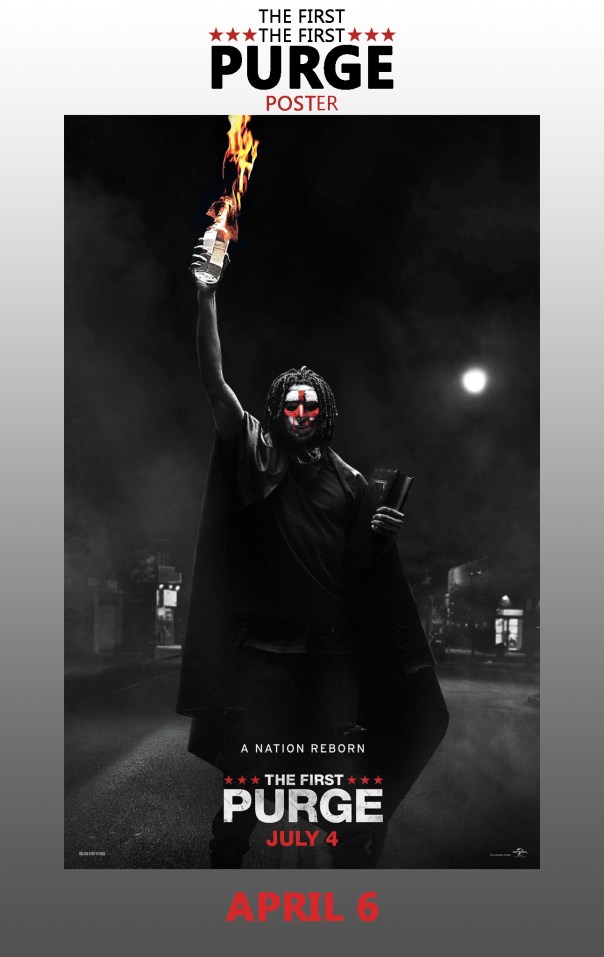
first purge poster

Low-budget, unexceptionally made, and absolutely vital. The First Purge takes the story of the Purge series back to the beginning, with a poor community composed of people of colour being savagely experimented upon for political purposes. Mike slightly had to drag José to see it, as it was showing only in single late-night screenings, but both were glad he did, as it’s perhaps the most direct and powerful critique of white hegemony that popular cinema has offered in recent memory.

We examine the imagery of the deliberate terrorisation of black communities in the USA. It draws on real-life attacks on black churches, Ku Klux Klan members wielding guns in pick-up trucks, and the resurgence of Nazis – one image of a blackface mask being removed to reveal an Aryan stereotype is particularly poetic. Mike finds that the film protects the white audience from their own complicity in the inequality portrayed, but it’s only a nuance, and as José says, we should be so lucky to have such flaws in most films! And José explains why films of this sort come along so rarely. (It’s not about risk. It’s about power.)

There’s simply so much food for thought and we urge you to see it.

The podcast can be listened to in the players above or on iTunes.

With José Arroyo of First Impressions and Michael Glass of Writing About Film.

Eavesdropping at the Movies 73 – Incredibles 2

inc

After a fourteen-year wait, The Incredibles are back! We discuss how well the comedy is directed, how full of ideas the action is, and our love of Edna Mode and the mad baby. José finds food for thought in the conceptualisation of the antagonist, while Mike makes sure the animation, somehow so often overlooked in animated films, is given its due. And we discuss the imbalance in the treatment of the two main characters, Mr. Incredible and Elastigirl.

The podcast can be listened to in the player below or on iTunes.

With José Arroyo of First Impressions and Michael Glass of Writing About Film.

Eavesdropping at the Movies: 66 – Solo: A Star Wars Story

solo_star_wars_story_box_office

I hem, haw and get all the actors’ names wrong. Mike is there to pick up the pieces and make lucid comments. We find much to mull over in Solo, which José finds the best Star Wars film since The Empire Strikes Back and Mike finds overlong and depressingly dull. Our discussions take in the merits and flaws of the film’s visual design, its relationship to the saga’s history and fans, Ron Howard’s earnestness, the way the film builds a lawless world to develop and reconfigure Han Solo, and more. Is it a textured film with interesting rounded characters played by good actors or is is dull and unstructured? Two very different points of view on the film.


The podcast can be listened to in the player above or on iTunes.

José Arroyo of First Impressions and Michael Glass of Writing About Film.

Eavesdropping at the Movies: 65 – Tully

tully

Charlize Theron stars in Tully, Jason Reitman and Diablo Cody’s fourth collaboration as director and screenwriter, as a mother of two with a third on the way, heavily put upon and struggling financially and personally, who hires a nanny to help her out at night. We find room for both praise and criticism, José in particular singling out Reitman’s direction for his ire and Mike disappointed in the film’s ultimate treatment of its central female friendship, but keen to discuss its portrayal of stress and mental illness.


The podcast can be listened to in the player above or on iTunes.

José Arroyo of First Impressions and Michael Glass of Writing About Film.

Eavesdropping at the Movies 63 – Custody

custody

This week we go arthouse and discuss Xavier Legrand’s first feature film, Custody (Jusqu’à la garde), though ‘arthouse’ perhaps only in the sense that it’s subtitled. In some ways, the film is shot in a realist style, halfway between British kitchen sink drama and the Dardennes’ more leisurely, microscopic style. The film revolves around a couple in the process of divorce battling for custody of their young son. The boy wants to stay with his mother. Has he been coached? Is his mind being poisoned against his father?

We discuss how the first section is basically an exposition of the law where the father is surrounded by women, how the film initially orchestrates the audience’s sympathy around the father, and how this changes as the film unfolds. Is the film a critique of male privilege? Why is it so unpleasant so watch? Is it material that television handles better? What’s the point of putting an audience through this type of experience? We both adore Denis Ménochet as the father but really praise the whole cast. José loved it; Mike did not. The conversation as to why this is so occupies much of the second half of the podcast.

The podcast can be listened to in the player above or on iTunes.

With  Michael Glass of Writing About Film

José Arroyo

Eavesdropping at the Movies – 53 – Ready Player One

IMG_0052.jpg

I was bored through most of it and actively irritated by the end of the film. Mike kind of liked it. We talked about references, about address — it’s aimed at boys but some confusion about which generation — the quality of the animation. ‘It’s like a kid’s movie used to be but just not aimed at you,’ says Mike. A work in which the maker of a video game is treated and read as the equivalent of the bible; a sad film indeed. To me further proof that Spielberg doesn’t quite rank with the greatest of filmmakers: incredible technical skills, a prodigy. But to what end? I found it full of pop-cultural references pop-culture geeks will delight in but ultimately dumb and empty. I can’t imagine what people who don’t have an encyclopaedic knowledge of music, film and video games of the last forty years will make of it. There’s no emotional resonance to this film at all; and its view of human nature and the way the world works is as banal as it gets. Brummies will be interested in seeing how their city is used to signify  a dystopic futuristic Columbus, Ohio. West Midlands News was delighted; more sophisticated viewers might get enraged. Throughout, Mike offers much more generous readings than the above.


The podcast can be listened to in the player above or on iTunes.

We appreciate your feedback so do keep on sending it.

José Arroyo and Michael Glass of Writing About Film.


Eavesdropping at the Movies: 52 – Annihilation


annihilationAlex Garland’s curious sci-fi adventure comes to UK cinemas – for one single evening. A disappointing theatrical release in the US made Paramount fear that the film wouldn’t make money elsewhere and thus sold it to Netflix, foregoing a theatrical release in most territories outside North America. But we waited for the special event to see it properly. And it was worth it, its stunning visual design singing on the big screen.

But what did we make of the rest of it? Has it stayed with us? Does it cohere? What would we have liked to have seen more of, what surprised us, what did it do well, how do we evaluate its representational strategies? No matter what we make of the details, it’s certainly deserving of a second look, and now we can be grateful rather than rueful that Netflix gives us that opportunity.

Also, Mike bangs on for a bit about Ex MachinaLifeAnomalisa, and The Beach.


The podcast can be listened to in the player above or on iTunes.

We appreciate your feedback so do keep on sending it.

José Arroyo and Michael Glass of Writing About Film.

Eavesdropping at the Movies 50 – Lady Bird

lady bird


Our 50th! We finally get around to seeing the one Best Picture nominee we were missing, Greta Gerwig’s Lady Bird. It’s been highly praised, but has the hype hurt it? We discuss its female-centric twists on coming-of-age teen movies, the mother-daughter relationship, its attitude to sex, and the Everyman Cinema in Birmingham, which we visit for the first time.

Recorded on 27th February 2018.


The podcast can be listened to in the player above or on iTunes.

We appreciate your feedback so do keep on sending it.

José Arroyo and Michael Glass of Writing About Film.

Eavesdropping at the Movies 46 –The Shape of Water (Guillermo del Toro, USA, 2017)

download-1

A discussion of the great Guillermo del Toro’s Shape of Water, a film full of what he’d describe as eye protein. It’s beautiful to look at and that visual beauty is shaped for meaning and feeling. We discuss how the opening shot evokes Sirk in Written on the Wind, Sally Hawkins’ performance; we have problems with the conceptualisaton of the Richard Jenkins character; note how the film, though it’s set in the Kennedy, era feels 30s. We discuss why all the musical clips are from Fox musicals of the classic era. In short, we discuss its characterisation, its performances, its cinematography, its relationship with the classic cinema and fairytales from which it builds. We use the word “beautiful” about two hundred times. Michael Shannon retains my vote for best actor of his generation in spite of playing a one-dimensional type rather than a fully rounded character. He conveys more with the planes of his face than other actors do with soliloquies. A fascinating but not perfect film.


The podcast can be listened to in the player above or on iTunes.

We appreciate your feedback so do keep on sending it.

José Arroyo and Michael Glass of Writing About Film.