Love in ‘Decision to Leave’, A Video Essay by Yewon Lee


Love in Decision to Leave:

Video Essay: 


Creator’s Statement:

The idea of the film building a dictionary between the audience and communicating through the common language to share each other’s understanding really struck me. As even from my first watch I found a strong connection to the film and was wondering why the film did so, I realised that Decision to Leave and Park Chan-wook was successful in communicating through the dictionary of the film built by connecting with the audience.


I was motivated to explore further on how the language was built throughout the film. As the theme of love and the melodrama is one of the key aspects of the film, I was intrigued to know how the film communicated the sense of love without the word ‘love’. Jeong Seo-gyeong, the co-writer of the film stated that ‘I wanted to write a melodrama without the word ‘love’. How would I say that I love someone without actually saying ‘I love you’? How could I make the audience hear the phrase ‘I love you’ with just actions and gestures?… So, Decision to Leave was an extended description of love, without the actual word ‘love’’. This almost felt like a challenge to find the moments of actions and gestures which the two protagonists of the film, Seorae (Tang Wei) and Haejun (Park Hae-il), had used to not only communicate between themselves but with the audience. The way Park Chan-wook created an erotic atmosphere to the film despite the lack of nudity or scenes of sexual acts between Seorae and Haejun emphasises how the common language built between the audience and the film was effective.


Park Chan-wook himself mentioned that he intended the film to be as romantic as mysterious it gets, which the intensity of the melodrama increases as the suspense intensifies. The ending of the film can be seen as the peak of its love language, with Seorae’s failure to leave Haejun and becoming the femme fatale of herself, and Haejun realising what Seorae meant by his confession. The film puts great attention to the idea of language and how we communicate with one another. Since language can be in various different forms, not only spoken but in body language and actions, Decision to Leave tackles this idea to communicate with the audience. The film is unlike the films which Park Chan-wook had been making. When his previous films communicated visually, expressing his stylistics of violence, sex and horror in an explicit way, Decision to Leave shows how the same themes can be communicated implicitly, without the visual spectacle.


My video essay focuses on the theme of love and how the language of love is created between Seorae and Haejun. It is split into two chapters, the love language of Haejun and Seorae, exploring the image systems and the motifs in the film where we can find how love is communicated without using the word ‘love’. Although I only introduced three themes for each character, there are more ways in which Park Chan-wook uses in order to implicitly show love and create melodrama. However, I focused on the idea of language as it is one of the most crucial themes in the film.

Yewon Lee

EL SANTO OFICIO/ THE HOLY OFFICE / THE HOLY INQUISITION(Arturo Ripstein, Mexico, 1974)

EL SANTO OFICIO/ THE HOLY OFFICE / THE HOLY INQUISITION (Arturo Ripstein, Mexico, 1974) is a more serious and austere film than we’re used to seeing from Arturo Ripstein, but at least as great as anything we’ve seen by him so far. A Jewish family fleeing persecution in Spain make a life in Mexico and prosper. That is, until the father dies. The family had sacrificed one of their male children to the Church as a cover-up for their own religious practices. Now a grown monk, that son returns to his father’s burial only to detect that they’re observing Hebraic practices. He denounces his own family to the Church, and the persecution begins. A great film about religious intolerance, patriarchal control, and colonial enslavement through the brutal enforcement of a particular ideology. Based on actual court transcripts, an austerely spectacular period film, with much greater production values than we’re used to seeing from Ripstein. We discuss all of this and more in the podcast below.

The podcast can also be listened to on Spotify here: https://open.spotify.com/show/2zWZ7Egdy6xPCwHPHlOOaT

and on itunes here: https://podcasts.apple.com/gb/podcast/first-impressions-thinking-aloud-about-film/id1548559546

José Arroyo

Eavesdropping at the Movies: 390 – Knock at the Cabin

Listen on the players above, Apple PodcastsAudible, Google Podcasts, or Spotify.

Like his previous film, Old, M. Night Shyamalan’s Knock at the Cabin is an intriguing, self-contained, efficient thriller – although not nearly as satisfying as it could be. The setup: A family staying at that classic American horror location, the cabin in the woods, is taken hostage by four invaders who’ve had visions of the apocalypse.

To say more would rob the film of some of its surprise, and its ability to keep you questioning what will happen is one of its pleasures – so think twice about listening to the podcast before you see it, because we spoil everything! There’s a lot to like, including its portrayal of a same-sex couple so unremarkable that the characters’ sexuality barely needs addressing (although more affection shown between them would have been welcome) and Dave Bautista’s calm but imposing presence as the leader of the intruders. But it’s so keen to have its sceptical protagonists arguing with what their opponents tell them that it doesn’t explore the dramatic and moral questions it has the opportunity to, and it’s too eager to be tasteful. When even José’s asking for gruesomeness you know you’ve shown too much restraint.

Knock at the Cabin is an interesting and engaging film but rather thin and could do with showing more bravery and style. Worth a look, though.

With José Arroyo of First Impressions and Michael Glass of Writing About Film.


Lily Edwardes-Hill on Black Swan (Darren Aronofsky, 2010)


Video Essay:

Creator’s Statement:

How Black Swan (Darren Aronofsky, 2010) uses mother-daughter relationships to establish itself as a ‘coming of age’ film


Black Swan (Darren Aronofsky, 2010) is a psychological horror, surrounding the story of a ballerina named Nina Sayers (Natalie Portman) as she goes on her journey to become the Swan Queen, a combination of both the white and black swan, in the New York City Ballet’s production of Tchaikovsky’s Swan Lake. We watch as Nina navigates her way through her desire for the role, aspiring for perfection. Her situation is further complicated by the overbearing relationship with her ex-ballerina mother, Erica (Barbara Hershey) and Thomas Leroy, her manipulative ballet director/teacher (Vincent Cassel). As the narrative progresses Aronofsky introduces more horror elements, as we watch, essentially, Nina’s descent into madness. Rivalry blossoms between Nina and her fellow dancer Lily (Mila Kunis) and this fuels Nina’s obsession with the role of the Swan Queen. We bear witness to Nina’s growth from her sheltered, almost child-like persona (the white swan) to an evil, seductive force (the black swan).


With the help of a previously unproduced screenplay centred around the haunting feeling of an understudy, akin to the legend around doppelgängers, Aronofsky brought his prior love for Swan Lake to the film creating the perfect twisted coming-of-age. The movie received five nominations at the Academy Awards, including Best Picture and Best Actress, which Portman won. Her performance plays a major role in the film’s success as she portrays a character who ultimately metamorphosises on screen. Her ability to play both versions of Nina’s psyche is paramount to the audience’s experience with the film, allowing for us to almost feel as though we are viewing more than one actress, and ultimately achieving the goal of portraying the takeover of the black swan.


Aronofsky cleverly uses the already known difficulty and brutality of ballet and its effects on the body to introduce body horror to the film in small increments, just enough for an eerie and nightmare-like atmosphere to develop while also having the plot based in some sort of reality. This warping of reality, again, allows us to enter the confused state of Nina Sayers and experience her reality alongside her, rather than being an omniscient audience. A scene in which Nina begins to pick at a loose piece of skin on her finger in the toilet of her announcement party, shows an example of the subtle body horror elements Aronofsky uses, as Nina pulls the string of skin all the way up her finger. To counter the subtlety of this scene, a later scene shows Nina in her bedroom as her legs and arms ‘break’ as she starts ‘becoming’ the Swan Queen, an example of Aronofsky using a much more extreme type of body horror as we near the films climax. This crescendo of physical torment wonderfully reflects Nina’s mental state at each point of the film.


The character of Erica Sayers is a perfect example of an overcontrolling mother who, due to the disappointment in their own life, attempt to vicariously live through their children. The basis of this can be seen in plenty of coming-of-age films, it being a very common trope, the mother-daughter relationship being something that film makers love to explore. What makes Black Swan so special is its way of twisting this type of coming-of-age that we are all familiar with and making it dark and gritty, subverting the presentation of this common relationship while also maintaining the basis of what we expect. Throughout the film it is not only important that we witness Nina’s transformational journey, but it is also arguably just as important to pay close attention to the changes in Erica. At the very beginning of the film, we are introduced to the relationship between Nina and Erica and up until Nina getting the role of Swan Queen. I would argue we view this relationship slightly differently than what we may perhaps view it as later, the act of her daughter acquiring the role being almost a catalyst for what’s to come, in reference to their relationship. Although overbearing, the way Erica acts around Nina in the beginning can still be viewed from a place of love and care, she wants her daughter to achieve great things as a ballerina, do things she did not get a chance herself to do in her youthful years. Once Nina does achieve the role she has been pushed towards, the way Erica acts starts to change. Part of Nina’s own journey after she claims the role of Swan Queen is to move away from her mother and become a more independent woman who acts more her own age, this desire to push away being an act seen in most mother-daughter relationships depicted in coming-of-age films.  This is something Erica did not anticipate or envisage in her ideal world where Nina gets to excel in her career whilst also remaining her ‘little girl’. We see plenty of examples of this, including an important scene where Nina defiantly says “NO” for the first time when asked by her mother to remove her clothes in order for her to check for self-inflicted scratches on her back. This scene also happens amongst a conversation about Erica’s past as a ballerina and perhaps the hidden resentment she holds for getting pregnant with Nina, fuelling this inner battle within the mother to both push her daughter further than she could achieve herself while also attempting to hold her back due to jealousy and regret. This sudden shift in their relationship means Erica’s actions and reactions become more from a place of panic and toxicity, and less so love for her daughter. A scene which can be almost pinpointed as a place of this sudden change is the two’s first scene together after Nina’s is told of her role in the production. When Nina arrives home, she is greeted by her mother and a cake to celebrate her new role, “It’s our favourite”, another instance where perhaps we are being shown Erica almost acting as if her and her daughter are a combined person. The non-diegetic sound of a metallic ding directly indicates the complete tonal switch in Erica’s mood, as Nina repeatedly refuses the cake, her mother’s face drops, correlating with the introduction of eerie sound. Erica immediately resorts to absolutes, “Fine, fine. Then it’s garbage.”, an extremely common defence tactic shown throughout the history of mother-daughter relationships, instead of reason and logic we witness panic and an attempt to disengage, the universal “I guess I’m just a bad mother then”. As soon as Nina hurriedly apologises, Erica switches back, this eerie atmosphere however still carrying through as we watch Nina lick icing off of her mother’s finger, clearly uncomfortable. It must also be mentioned that the small bathroom scene before this is the first scene we see where Nina uses space to represent her need for privacy, using the basket to block the door, something that escalates throughout the film, the climax being most definitely the sex scene between Portman and Kunis.


Nina’s desire for perfection is partly reinforced by her mother, “the dimensions of perfectionism include parental expectations[1], and this is yet another way in which the film stresses the tensions between mother and daughter. The final look they share as Nina is at the top of the podium says plenty, both a rebellious goodbye but also a sense of mourning coming from Nina as she ultimately ends her life, be that literally or metaphorically. Ultimately, Black Swan is a perfect combination of reality/fantasy, tension, and an insight into the emotional turmoil of a young woman, coming together successfully to create a final scene that leaves us with goosebumps and questions.


— Lily Edwardes-Hill


[1] Anshel, M. H., Kim, J. K. and Henry, R. 2009. Reconceptualizing indicants of sport perfectionism as a function of gender. Journal of Sport Behavior, 32(4): 395–418.

Movement in the Films of Guy Ritchie – A Video Essay by Jack Brazil


Video Essay: 

Creator’s Statement:

For almost 25 years, Guy Ritchie has been directing stylish feature films. Best known for his British gangster films, such as: Lock, Stock and Two Smokin’ Barrels (1998), Snatch (2000), Rock n’ Rolla (2008) and The Gentlemen (2019) as well as the Sherlock Holmes films starring Robert Downey Junior.

Ritchie is often criticised for his gonzo entertainment filmmaking and his inconsistent performance at the box office. His films have received – at best — a mixed critical reception across his careeer. As a result, Ritchie is not taken very seriously as a filmmaker.

The aim of this video essay is to demonstrate that Ritchie is very much under-appreciated as a director and has a unique style worth studying.

Richie’s stylish editing can be boiled down to the concept of a ‘fast & slow’ framework using a range of experimental formal elements (speed ramps, freeze frames, slow motion, intercutting, parallel action, and superimposition) to control the temporality of his sequences. It is Ritchie’s action scenes that best showcase this use of the framework, with careful consideration for shot length and manipulation of time through the use of editing & experimental formal elements.

Ritchie employs his framework to manipulate the passage of time in his scenes, creating pauses in action that encourage contemplation. To achieve this effect, he balances the use of a faster-than-average cutting rate with moments of stillness, seamlessly transitioning between the two speeds of cutting from one moment to the next. By leveraging this framework in tandem with his experimental formal elements, Ritchie generates a singular sense of motion and movement on screen. His meticulous attention to shot selection and average shot length (ASL) yields striking moments of spectacle and action that demonstrate his playful manipulation of film form.


In recent years, Ritchie has shied away from the style of action that put him on the map substituting fast and slow action for a greater focus on narrative cadence and control, with elements of action implemented throughout his films. I would like to see Ritchie return to his style of old and see more action films using the tried and tested fast and slow framework.


— Jack Brazil

Filmography

Lock, Stock and Two Smokin’ Barrels (1998), Dir. Guy Ritchie,Ska Films

Snatch (2000), Dir. Guy Ritchie,Ska Films, Columbia Pictures

Swept Away (2002), Dir. Guy Ritchie, Searchlight Pictures, Sony Pictures

Revolver (2005), Dir. Guy Ritchie, Lionsgate UK

Rock n’ Roller (2008), Dir. Guy Ritchie, Warner Bros. Pictures

Sherlock Holmes (2009), Dir. Guy Ritchie, Warner Bros. Pictures

Sherlock Holmes: A Game of Shadows (2011), Dir. Guy Ritchie, Warner Bros. Pictures

The Man from U.N.C.L.E (2015), Dir. Guy Ritchie, Warner Bros. Pictures

King Arthur: Legend of the Sword (2017), Dir. Guy Ritchie, Warner Bros. Pictures

Aladdin (2019), Dir. Guy Ritchie, Walt Disney Pictures

The Gentlemen (2019), Dir. Guy Ritchie, Miramax

Wrath of Man (2021), Dir. Guy Ritchie, Miramax

300 (2006), Dir. Zack Snyder, Legendary Pictures, Warner Bros. Pictures

Watchmen (2009), Dir. Zack Snyder, Legendary Pictures, Warner Bros. Pictures

Fight Club (1999), Dir. David Fincher, Fox 2000 Pictures, 20th Century Fox

Transformers (2007), Dir. Michael Bay, Paramount Pictures

Kingsman: The Secret Service (2014), Dir. Matthew Vaughn, Marv Films, 20th Century Fox

Kingsman: The Golden Circle (2017), Dir. Matthew Vaughn, Marv Films, 20th Century Fox


Music Videos

Hundred Mile High City, Ocean Colour Scene. 1997 Universal Island Records. Dir. Guy Ritchie


The Bomb! (These Sounds Fall into My Mind), The Bucketheads. 1995 Henry Street Music. Dir. Guy Ritchie


Deep, Marusha. Low Spirit Recordings 1995. Dir. Guy Ritchie

A Real Love, CB Milton. 1996 Cloud 9 Music. Dir. Guy Ritchie

Rave Can Can, DJ Jacques O. 1996 Kontor New Media Music.  Dir. Guy Ritchie

Upside Down, Joelle. 1995 Hansa. Dir. Guy Ritchie


Music

The Bomb! (These Sounds Fall into My Mind), The Bucketheads. 1995 Henry Street Music.

I Wanna Be Your Dog, The Stooges. 1969 Elektra/Asylum Records.

Diamond, Klint. 2000. Original Motion Picture Soundtrack.

Payback, James Brown. 1973 Polydor Records.

Fuckin’ in the Bushes, Oasis. 2000 Big Brother Recordings Ltd.

Che vuole questa musica stasera, Peppino Gadliardi. UMG (on behalf of Decca (UMO) Classics (CAM)); ASCAP, BMI – Broadcast Music Inc.

Get Down, Nas. 2002 Columbia Records


Other Sources

Powerbeats Pro Commercial (2019), Dir. Hiro Murai, Zambezi

Guy Ritchie Interview on Lock Stock with Charlie Rose https://youtu.be/biVd5r4i52A


Bibliography

Intensified Continuity Visual Style in Contemporary American Film Author(s): David Bordwell Source: Film Quarterly, Vol. 55, No. 3 (Spring 2002), pp. 16-28 Published by: University of California Press

Tasker, Yvonne. The Hollywood Action and Adventure Film, John Wiley & Sons, Incorporated, 2015. ProQuest Ebook Central, http://ebookcentral.proquest.com/lib/warw/detail.action?docID=7104343.


Interpreting Music Video, Popular Music in the Post-MTV Era. Brad Osborn. 2021.


Only Entertainment. Richard Dyer. 2002. pp.64-69


Andrew Kingston — ‘Filmic Space and its Applications’

Video Essay:

Creator’s Statement:

This video essay demonstrates how a filmic space can be utilised to create a historical time stamp. In the video I primarily analyse Adam and Paul (Lenny Abrahamson, 2004) and Rosie (Paddy Breathnach, 2018) and examine the differences between their spatial constructions. I observe the characters’ relationships with the filmic space and the construction of it in relation to framing, setting of real locations, alternative domestic spaces and public vs private image. The spatial construction in both films outlines how the characters are perceived by society and how they interact with their environment based on their living circumstances. When comparing these two spatial representations together, it exemplifies how the issue of homelessness on screen has developed in correlation with the escalation of the problem in reality.


Initially when I started to explore this topic, I wanted to primarily focus on how space is used in Adam and Paul to reflect the characters’ relationship with the city. When researching the topic however, I began to consider the various methodologies for applying space in film. For example, when reading Martine Huvenne’s article ‘Editing as an Audio-Visual Composition’[1] on Alfonso Cuarón’s Gravity (2014), it allowed me to understand how sound and editing become the space in that film. This was an important factor in helping my understanding of filmic space as a whole during my early research. At this time, I considered and edited extra footage on sound and editing as spatial representations. In the end, I decided to omit this from the final video footage, but it was a necessary part of the researching process. (See link below).


Conn Holohan’s Cinema on the Periphery, was a key element of my research and strongly influenced the final video. In this book, he states a quote from Edward Soja, ‘The geography and history of capitalism intersect in a complex social process which creates a constantly evolving historical sequence of spatialities, a spatio-temporal structuration of social life’.[2] From here, I recognised how the geographic location and the historical period of a filmic space are directly relevant to its social and ideological context. How real locations in film are reflections of this intersection between historical and geographical contexts and social-economic standings.

This shot from Rome, Open City (Roberto Rossellini, 1945) (fig.1) was the first film that I considered in analysing space as a visual time stamp. By considering this in relation to its spatio-temporal structure, I was able to recognise how Adam & Paul utilises the same methodologies in fig.2. Though social and economic backgrounds are vastly different, the spatial communication displays the city at a moment in time, thus creating this geographic and historical intersection that Soja was referring to.

The opening of the video essay outlines some of the different methods of applying space and how it can be utilised to serve both character and narrative. I demonstrate how multiple scenes are communicated to the audience based on their spatial constructions. I relate these scenes to Éric Rohmer’s theory of three types of space in film: Pictorial, Architectonical and Filmic.[3] This premise lays the groundwork for defining space in cinema and by doing so reinforces my analysis for the rest of this video essay.


The majority of the video essay examines how both Lenny Abrahamson and Paddy Breathnach utilise space to reflect the same issue of homelessness at separate periods of Ireland’s economic history. I look at how the space is presented in Adam and Paul and how it is analysed by scholars such as Conn Holohan[4] and Barry Monahan[5]. I compare this to how the space in Rosie (Paddy Breathnach, 2018) is presented and how it is analysed by Peter Bradhsaw[6] and I outline the reasonings for these differences in relation to Ireland’s economic standpoint at the time of each film’s release. By placing the films within their respective economic periods, I explore the reasoning for the spatial construction of each film. The characters and the writing of each film are the premise for representing the growing issue of homelessness in Ireland, but the spatial constructions are the methods of translating that representation to screen, doing so by exemplifying how the characters are perceived by the rest of the country, how they interact with their environment based on these perceptions and how that perception has shifted between the 14 years of their releases. It also examines how an alternative domestic space is created in both scenarios.


I finally solidify my argument, that it is in fact the spatial construction that creates this perception of the characters as opposed to the writing by going to the James Joyce Bridge in Dublin City Centre and recreating one of the scenes from Adam & Paul. By visiting the real location of the film, it enabled me to demonstrate how the framing and setting of the scene captures the characters’ relationship with the functioning city around them. By keeping every other aspect of the scene as similar as I can, (allowing for the differences in time of year, night vs day and professionalism of the production) I outline how the framing of the characters tells the story of how they are perceived by the city. By recreating this scene and shifting the angle of the camera I reinforce what is being communicated by each shift. Going to the real location was an exciting mode of research, which I felt was crucial, in order to finalise my argument.

— Andrew Kingston


 Bibliography


  1. Annette Kuhn and Guy Westwell, ‘Filmic Space – A Typology’ in A Dictionary of Film Studies, Osford University Press, 2012


  1. Conn Holohan, ‘The City Space’ in Cinema on the Periphery: Contemporary Irish and Spanish Cinema Rosa González (Irish Academic Press, 2010)


  1. Marine Huvenne, ‘Editing Space as an Audio-Visual Composition’, in Film Text Analysis, 1st Edition, Routledge, 2016.


  1. Monahan, Barry, ’Adam and Paul’, Estudios Irlandeses, University College Cork, 2005


  1. Patrice Rollet, ’The Filmic Space According to Farber’, in Negative Space. Manny Farber on the Movies. Expanded Edition. New York. Da Capo Press. 1998


  1. Patrick Keiller, ‘Film as Spatial Critique’ in The View From the Train: Cities and Other Landscapes (London: Verso, 2013)


  1. Peter Bradshaw, ’Rosie review – the heartbreak of homelessness’, The Guardian, 2019


  1. ‘Rosie’ in Sight & Sound. Derek O’Connor. Vol.29 Issue 4. April, 2019


  1. Seán Crosson, Mark Schreiber, ‘Q&A with Lenny Abrahamson and Mark O’Halloran’, Contemporary Irish Film: New Perspectives on a National Cinema, Seán Crosson and Werner Huber. Volume 102. 2011


Filmography


  1. 2001: A Space Odyssey. Stanley Kubrick. 1967. Stanley Kubrick Productions.


  1. Adam and Paul. Leonard Abrahamson. 2004. Element Pictures.


  1. James Cameron. 2009. 20th Century Studios.


  1. Boiling Point. Philip Barantini. 2021. Vertigo Films.


  1. City of God. Kátia Lund, Fernando Meirelles. O2 Filmes.


  1. Alfonso Cuarón. 2013. Heyday Films.


  1. The Two Popes. Fernando Meirelles. 2019. Rideback.


  1. Jeanne Dielman, 23 Commerce Quay, 1080 Brussels. Chantal Akerman. 1975. Paradise Films.


  1. La La Land. Damien Chazelle. 2016. Summit Entertainment.


  1. Modern Times. Charlie Chaplin. 1936. United Artists.


  1. Portrait of a Lady on Fire. Céline Sciamma. 2019. Lilies Films.


  1. Brad Bird. 2007. Walt Disney Pictures.


  1. Rome Open City. Roberto Rossellini. Minerva Film.


  1. Paddy Breathnach. 2018. Element Pictures.


  1. Safety Last. Fred C. Newmeyer, Sam Taylor. 1923. Hal Roach Studios.


  1. Steamboat Bill Jr. Charles Reisner. 1928. United Artists.


[1] Marine Huvenne, ‘Editing Space as an Audio-Visual Composition’, in Film Text Analysis, 1st Edition, Routledge, 2016.


[2] Conn Holohan, ‘The City Space’, in Cinema on the Periphery: Contemporary Irish and Spanish Cinema fd. Rosa González Irish Academic Press, 2010


[3] Patrice Rollet, ’The Filmic Space According to Farber’, in Negative Space. Manny Farber on the Movies. Expanded Edition. New York. Da Capo Press. 1998


[4] Conn Holohan, ‘The City Space’ in Cinema on the Periphery: Contemporary Irish and Spanish Cinema fd. Rosa González (Irish Academic Press, 2010)


[5] Monahan, Barry, ’Adam and Paul’, Estudios Irlandeses, University College Cork, 2005


[6] Peter Bradshaw, ’Rosie review – the heartbreak of homelessness’, The Guardian, 2019


The video essay may also be seen on You Tube here:

…and bonus footage may be seen here:

Luke Brown — ‘Shin Godzilla: The Return of a King’

Video Essay:

Creator’s Statement:

This video essay focuses on the ways in which Shin Godzilla returns the franchise to its Japanese origins after a 12 year absence of Japanese made Godzilla films. Released in 2016, Shin Godzilla was created in the aftermath of Gareth Edwards’ 2014 film Godzilla, which entirely relocated the narrative and the character from its Japanese origins to its new found American home. Due to the success of the 2014 American entry into the franchise, Godzilla’s position as a national icon was temporarily lost. While William Tsutsui attributes the continued success of Godzilla to “the ever shifting metaphor behind (it)”[1] the metaphorical nature of Godzilla appears to be largely lost within the American context. The big budget Hollywood versions of Godzilla forgo what Barak Kushner describes in reference to the original, its ability to act “like a social catharsis, aiding individuals in venting their long-repressed fears.”[2] Instead these modern interpretations seem to focus on action and spectacle. While this is still clearly present in Shin Godzilla, it is not foregrounded in quite the same way, due to the extensive political scenes that make up a bulk of the films run time.

In this video essay I posit that Hideaki Anno and Shinji Higuchi’s 2016 film does more than simply return the narrative to Japan, despite the fact that the film clearly stresses its Japanese location constantly. The film is a clear satire on Japanese politics, offering a return to the initially political nature of Honda’s 1954 film that is missing from the American offering to the Godzilla canon.  I also posit that the film offers an entirely unique representation of the character of Godzilla, while reclaiming much of what made it meaningful in its original context, such as its response to national tragedy.  The version of the kaiju present within this film is unlike any other, offering a uniquely terrifying display of a character many have come to know as a hero.

It is within Shin Godzilla’s national pride, and its wholly unique characterization of a well-known character, that I argue the film shines above the Legendary Pictures Godzilla films. It uses a knowledge of Godzilla’s past to set up a well informed and creatively open future for the franchise. The visual and narrative improvements over the previous Japanese installments in the franchise show how the cultural place of Godzilla has changed in the years between 1954 and 2016, and even between 2004 and 2016. Shin Godzilla has set out how Godzilla should be, using its past and Japan’s present to return Godzilla to its position as a Japanese cultural icon, functioning similarly to Honda’s social catharsis film from 1954 but in response to the tragedies of the modern time. The film uses the interactions between this understanding of the past, and awareness of the present, to offer up a new formula for kaiju movies, a deeply political artifact that can instill fear, grief, hope and joy throughout one film.

Bibliography

Kushner, Barak, “Gojira as Japan’s First Postwar Media Event”, in William Tsutsui and Michiko Ito (ed.), In Godzilla’s Footsteps: Japanese Pop Culture Icons on the Global Stage (London: Palgrave Macmillan, 2006), pp. 44

Tsutsui, William, Godzilla on My Mind: Fifty Years of the King of the Monsters (London: Palgrave Macmillan, 2004); quoted in Nathaniel J. Dominy and Ryan Calsbeek, “A Movie Monster Evolves, Fed by Fear”, Science Vol. 364, Issue. 6443 (31 May 2019) pp. 840-841.

[1] William Tsutsui, Godzilla on My Mind: Fifty Years of the King of the Monsters (London: Palgrave Macmillan, 2004); quoted in Nathaniel J. Dominy and Ryan Calsbeek, “A Movie Monster Evolves, Fed by Fear”, Science Vol. 364, Issue. 6443 (31 May 2019) pp. 840-841.

[2] Barak Kushner, “Gojira as Japan’s First Postwar Media Event”, in William Tsutsui and Michiko Ito (ed.), In Godzilla’s Footsteps: Japanese Pop Culture Icons on the Global Stage (London: Palgrave Macmillan, 2006), pp. 44

Cameron Smith: ‘ZOM/BEING: The paradoxical nature of the living dead in cinema’


ZOM/BEING: The paradoxical nature of the living dead in cinema

Video:

Video Essay – Creator’s Statement

1323 words.


ZOM/BEING: The paradoxical nature of the living dead in cinema is a video essay that aims to explicate the pleasures of the zombie film and illustrate how its residence in the horror genre has spanned decades and continues to be alluring for audiences. As Olney remarks, “we have always had a closer kinship with the living dead than with other horror-movie monsters”[1]: there is an intimacy between the human and the zombie. Of course, the zombie is often formerly human, but it is cinema’s personification, weaponization and eclectic representation of the iconography that renders the zombie a cinematic tool for filmmakers to exploit.


The video essay is structured around a central idea of paradox: the zombie exhibits a series of contradictions within their imagery and in the films they belong to. The unity of these contradictions is the essence of the zombie and what makes them so applicable to so many cultures and genres over so many years. The three parts of the video essay correlate to: their varying PACE, the SPACE in which they dwell in, and their expressive yet expressionless FACE.


PACE investigates the speed of the zombie, and how it can determine the pacing and tone of the film itself. The classical representation of the slow, bumbling zombie is concerned with the “contemplation of the horrific”[2]: the lack of speed forces audiences to gaze upon a deformed, damaged and deconstructed human body. The unbalanced gait, sombre expression and minimalist mannerisms are as distancing as they are inviting an identification. In Zombi 2, (1979, Italy, d. Fulci) Susan (Auretta Gay) is almost paralysed with fear as she is confronted by a zombie quite literally rising from its grave, and in a series of shot/reverse shots, exemplifies this sense of ‘contemplation’ and concentration on the horrors of the zombie. The slow zombie becomes a spectacle of sorts, especially in Fulci’s grotesque iteration where the decay and dirt are highlighted through invasive, uncomfortable close-ups with a fish-eye lens. It produces a reaction of revulsion in the human protagonists, and therefore in the spectators, who find pleasure in viewing such violence and bodily destruction[3].

Train to Busan’s (2016, South Korea, d. Yeon) high-octane chase sequence through the carriages of a moving train infested with fast, blood-thirsty zombies provides a stark contrast with the aforementioned ‘contemplation’ of slow zombies. The fast zombies are akin to animals on the hunt, desperately galloping through each-other for a taste of flesh. Shot with shaky camerawork and a frantic editing style like in Dawn of the Dead (2004, USA, d. Snyder), they evoke a horror of surprise and relentlessness that resonate with “spectators relating to the human protagonists and to their situation in the diegetic world”[4], rather than the easily overpowered slow zombies, who are often deemed less frightening by contemporary audiences than those who are fast. This paradox is even recontextualised in the ‘zom-com’, as Shaun of the Dead’s (2004, UK, d. Wright) gross-out humour often revolves around the slowness and clumsiness of the zombie whilst in Zombieland (2009, USA, d. Fleischer) Columbus’ (Jesse Eisenberg) extensive rules of how to survive the apocalypse includes stretching in preparation for running away from zombies.


SPACE in a zombie film is used both as a “barometer of cultural anxiety”[5] and as “wish fulfilment, catering to current fantasies about life in a postapocalyptic world without social structures and laws”[6]. Recalling the seminal zombie offering Night of the Living Dead (1968, USA, d. Romero) and using Hervey’s writing on Romero’s film, the sequence in which Ben (Duane Jones) borders up the decaying Pittsburgh house can be viewed as to represent a paranoid, violence-stricken nation. The Harris Poll, a survey established in 1963 to examine the behaviours and attitudes of American adults[7], states that by 1968 (the release of Night), the proportion of Americans that were “seriously worried about crime and violence” was at two-thirds, in comparison to two-percent in 1963. This idea of the zombie film as a ‘barometer’ for societal concerns is present here, and the nihilist end to the film in which protagonist Ben is mistaken for a zombie and is shot dead, evokes imagery of the assassinations and Civil Rights movement that defined the turmoil of the late 1960s in America.

This allegorical use of the zombie is juxtaposed with how the human protagonists act in the apocalypse, carrying out activities usually unavailable to them with no consequences for their actions- not even for violence. In some cases, zombie films allegorise contemporary social issues and on the other, they can gleefully provide a utopian world to become immersed in. In Dawn of the Dead (1978, USA, d. Romero), this means raiding department stores and playing endless games in the arcade- spectators watch vicariously and perhaps enviously at their freedom in usually-occupied, but now vast and barren spaces. Romero critiques this urge to consume by contrasting these tonally-light moments of wish fulfilment, with sequences like one towards the beginning of the film where low-income housing projects in Philadelphia suffer the effects of classism and racism within the government-enforced martial law, providing subtext for the ravaging apocalypse.


To discuss the zombie is to discuss ourselves, and this could not be more relevant than in the FACE section of this video essay. However, there is a sense of ‘othering’ in some filmic depictions of the living dead. By distancing the human protagonist from the zombie antagonist, filmmakers can enact a sense of ‘othering’, where the zombie is considered “the ultimate foreign other”[8], as displayed in World War Z’s (2013, USA, d. Forster) Jerusalem sequence. Hordes of zombies are indistinguishable from one another in these moments, there is a complete lack of individuality, before the film’s ending indicates that the human face is the polar opposite, or an enemy, to that of the zombie as the star image of Brad Pitt in a two-shot with a zombie scientist suggests separation rather than likeness.

In 28 Days Later (2002, UK, d. Boyle), the enigmatic Jim (Cillian Murphy) that timidly explores the empty streets of London in the beginning, brutally murders a fellow human in the film’s chilling finale. His face covered in blood is shot in murky shadows and through unclear camerawork as he gouges a soldier’s eyes with his fingers; an innate violence not too different from the vicious zombies of the film. Jim’s characterisation is ‘mirroring’ that of a zombie, so much so that Selena (Naomie Harris) nearly stabs him- unsure if her lover is truly her lover anymore. The mimicking of zombie traits suggests a cyclical attitude towards violence and its ubiquity and inevitability in humanity, even when it is faced with the insurmountable obstacle of a zombie apocalypse.

Romero’s depiction of Stephen’s (David Emge) descent in Dawn of the Dead (1978) allows for many interpretations, and by piecing two images of Stephen together as alive and dead, it encapsulates this video essay’s argument for paradox. There is an image of a human with piercing blue eyes plagued with fear whilst he furrows his brow and dons an aptly obnoxious leather jacket, living up to the character’s sarcastic nickname of ‘flyboy’. It clashes with an image of death personified: vacant eyes, a deathly grey complexion with the mouth ajar whilst wearing a regular, white collared shirt splattered in blood, a connotation of a conformist eventuality for the average American. It is an image intended to provoke contemplation. Has Stephen simply become a blood-thirsty zombie? Or has he become what he has always repressed? Does it represent the violent history of man? Or perhaps a guilty America in the years succeeding the end of the Vietnam War? A visualisation of the effects of toxic masculinity, or a stern warning of mindless consuming in a capitalist ideology? Is the transformation into a zombie truly a transformation, or is it a mirrored image of humanity at its most primal, or most pathetic, or maybe even at its worst?


by Cameron Smith


Filmography

28 Days Later (Dir. Danny Boyle, Prod. DNA Films, UK, 2002).

Dawn of the Dead (Dir. George A. Romero, Prod. Laurel Group, USA, 1978).

Dawn of the Dead (Dir. Zack Snyder, Prod. Strike Entertainment, USA, 2004).

Night of the Living Dead (Dir. George A. Romero, Prod. Image Ten, USA, 1968).

Shaun of the Dead (Dir. Edgar Wright, Prod. Studio Canal, UK, 2004).

Train to Busan (Dir. Yeon Sang-ho, Prod. Next Entertainment World, South Korea, 2016).

World War Z (Dir. Marc Forster, Prod. Plan B, USA, 2013).

Zombi 2 (Dir. Lucio Fulci, Prod. Variety Film, Italy, 1979).

Zombieland (Dir. Ruben Fleischer, Prod. Columbia Pictures, USA, 2009).

Bibliography

Dendle, Peter. ‘Zombie Movies and the “Millennial Generation” in Christie, Deborah, Lauro, Sarah Juliet (ed.) Better Off Dead (New York: Fordham University Press, 2011).

Hervey, Ben. Night of the Living Dead (Basingstoke: Palgrave Macmillan, 2008).

Olney, Ian. ‘Our Zombies, Ourselves’ in Zombie Cinema (New Brunswick: Rutgers University Press, 2017).

Pinedo, Isabel Cristina, ‘Postmodern Elements of the Contemporary Horror Film’ in Recreational Terror: Women and the Pleasures of Horror Film Viewing (New York: State University of New York Press, 1997).

Roche, David, ‘“That’s Real! That’s What You Want!”: Producing Fear in George A. Romero’s Dawn of the Dead (1978) vs Zack Snyder’s remake (2004)’, Horror Studies (2:1, 2011).

[1] Ian Olney, ‘Our Zombies, Ourselves’ in Zombie Cinema (New Brunswick: Rutgers University Press, 2017),

  1. 11.

[2] David Roche, ‘“That’s Real! That’s What You Want!”: Producing Fear in George A. Romero’s Dawn of the Dead (1978) vs Zack Snyder’s remake (2004)’, Horror Studies (2:1, 2011), p.82.

[3] Isabel Cristina Pinedo, ‘Postmodern Elements of the Contemporary Horror Film’ in Recreational Terror: Women and the Pleasures of Horror Film Viewing (New York: State University of New York Press, 1997).

[4] Roche, Horror Studies (2:1, 2011), p. 78.


[5] Olney, Zombie Cinema (2017), p.8.

[6] Ibid.

[7] Ben Hervey. Night of the Living Dead (Basingstoke: Palgrave Macmillan, 2008), p. 51.

[8] Olney, Zombie Cinema (2017), p. 8.

‘Time and Music in T2 Trainspotting’ by Leon Syla

Video Essay:

Creator’s Statement:

How does cinema capture time? How can time capture cinema? What effect does music have in showing the passage of time and forming a new world and narrative? Five years after the release of T2 Trainspotting I am still pleasantly surprised to discover the new and exciting ways that director Danny Boyle manipulates time and uses music to craft a story set two decades after its original that truly displays the effects of time. My video essay aims to answer these questions in relation to T2 Trainspotting through close textual analysis alongside historically informed analysis.

Before the title appears, the video begins with two versions of Iggy Pop’s ‘Lust for Life’, the original and The Prodigy remix, instantly providing viewers with the insight of how sound has changed over the last twenty years, as well as a chance to familiarise themselves with the film’s main theme. The video essay then dives into the ways in which T2 Trainspotting uses its past to create a refreshing and new world for its audiences, rather than use fan service and obvious call-backs as means of enticing viewers, as seen with films such as Star Wars: The Force Awakens. A close reading is applied to the opening scene, with particular focus placed on how time catches up to the main characters and how one can physically see these defects on the actors. Using a Kevin B. Lee desktop-documentary style of editing, I display Liam Gaughan’s quotation of how Boyle uses nostalgia not as a crutch, but as a tool, turning it into a weapon in the form of urgency that is used against the characters. (Gaughan, 2021: 1) Turning to another scene of close analysis, I observe the ‘1690’ scene and how Boyle uses the figures of Nationalists clinging to forgotten history as a means of forming a sense of identity and how the desperate attempt to cling to the past is futile. Beyond this, the Nationalists represent those who voted to ‘Leave’ during the Brexit referendum and Boyle’s stance on Brexit shines through in the way these characters are presented.

A significant portion of the video essay is dedicated to the discussion of freeze frames, and exploring how they literally capture time, something the characters cannot do. The freeze frames go beyond mere stylistic effect and highlight the desire to cling to moments that remind the characters of their past. Another method of preserving time arrives in the form of Boyle dating his film using contemporary technology and politics. Going beyond the realms of cinema, Boyle uses his film as a way to ‘freeze frame’ 2017 with his film. A direct quote from Boyle himself at the South By Southwest Film Festival in 2017 regarding how time can not only be extended or contracted, but can also be stopped and unlocked in cinema demonstrates the malleability of the form and how it can be used to great effect (Renee, 2017: 1).

Turning to music, one can observe how the film uses old and new sounds to reflect the characters’ positions in their lives, with them feeling comfortable in the music they remember and feeling confused and unfamiliar with the more contemporary music. A close look at High Contrast and The Prodigy’s songs reveal a comparison between their original sounds and the music that was chosen for the film, generating a sense of subversion within the film. The numerous stings heard throughout T2 Trainspotting also creates frustration for both the characters and the audience who can only hear edits of what they remember, and only hearing the full song by the end of the film once their journey is complete.

Matching the fast-paced editing of the film and the soft instrumental of Lou Reed’s ‘Perfect Day’ my video essay attempts to emulate the style of the film, while providing an informative and detailed understanding of how Boyle reshapes time and music, while also exploring how the two concepts operate in a realm beyond the screen.

– Leon Syla

Bibliography:

Gaughan, Liam. How ‘T2 Trainspotting’ Weaponizes Nostalgia to Become One of the Best Sequels of the 21st Century. Collider. May 25, 2021

https://collider.com/why-t2-trainspotting-is-a-good-sequel/


Renee, V. ‘T2 Trainspotting’ Q&A with Danny Boyle and Ewan McGregor: ‘This Better Not Be Shite’. No Film School. March 16, 2017

https://nofilmschool.com/2017/03/t2-trainspotting-qa-sxsw-danny-boyle


‘The Reality of Exit Through the Gift Shop’ by Tom Farrell

Video:

Creator’s Statement:

Exit Through the Gift Shop’ is Banksy’s 2010 entry into documentary filmmaking, and yet another instance of him painting over someone else’s business because the work just had to be seen.[1] The feature is made from many hours of golden footage of the meteoric rise (and arguably the subsequent fall) of the street art movement. A movement wherein artists made colour from a “legal grey” as Banksy himself considers their area of operation. Banksy has us watch as these artists are confronted by police, then watch how confused they are when they are eventually confronted by auctioneers. And as street artists begin to play the role of police in their own art form as soon as those auctioneers are involved.


Banksy has always mixed social criticism with bone dry humour. As he describes in his first book, “graffiti is one of the few tools you have if you have almost nothing. And even if you don’t come up with a picture to cure world poverty you can make someone smile while they’re having a piss.”[2] Exit Through the Gift Shop is his moving picture, enormously entertaining, with a clear attempt to this time critique the commodification of street art and the effect it has had on what art gets appreciated, and how.


This video essay seeks to establish important, somewhat complex context and explore why Banksy may have taken his own art in this direction, and how he chose to critique commodification. But this process is interrupted with the acknowledgement of popular speculation that the film was an elaborate hoax. Rarely does a film elicit this specific reaction, so Exit Through the Gift Shop is worth studying – what ought to be believed? And more easily answerable, how does this ambiguity operate in relation to the critique presented by the film?


This essay attempts to swiftly illustrate in clear audio-visual terms the lessons that can be taken from the documentary; that the ambiguous situation of the documentary, pointed in its critique, draws out a reconfiguration of art criticism – the means by which one assesses truth is not so different from that which assesses value. The unknowing regarding the film’s authenticity has a metatextual purpose. The viewer is placed in a very active position if the joke could well be on them. Only, film has been a game of deception between filmmaker and audience for a long time indeed. Despite its relative uniqueness. Banksy’s film is illuminated (becoming perhaps an essay film) in its (Schrödinger’s) placing in a historic catalogue of docufiction. These types of films “help to expand our understanding of what constitutes a documentary […] by forming a troubled relationship with the real.”[3] For me, they paradoxically draw attention to that which they could be defined as obfuscating – the boundaries of reality.


Additionally, the film is illuminated in its ambiguous situation in that it can inspire more than one distinct and detailed reading simultaneously. And to want to narrow the film to only produce one grounded reading of the facts would be like wanting to make the mystery box nothing more than the box – charmless and shallower.


A consequence of this illustration is being confronted with the awareness (reiterated by Orson Welles) that the map is not the territory and images are treacherous things.[4] That film is not reality and that really all films, all artworks, deceive on some level as constructions. A documentary filmmaker does not record, they interpret.[5] Perhaps a simple truth, but always a freeing, thought-provoking and creatively inspirational reminder.


  • Tom Farrell


‘The Reality of Exit Through the Gift Shop’ Complete Reference List


  • 24 Realities per Second, dir. Eva Testor, Nina Kusturica (Deckert, 2005)
  • Apocalypse Now, dir. Francis Ford Coppola (United Artists, 1979)
  • Banksy, Banging Your Head Against a Brick Wall (Weapons of Mass Distraction, 2001)
  • Banksy, Wall and Piece (Vintage, 2005)
  • banksyfilm, ‘Shredding the Girl and Balloon – The Director’s half cut’, YouTube, 17 Oct 2018, <https://youtu.be/vxkwRNIZgdY> [Accessed 5 February 2023]
  • Beardsley, Monroe, ‘Critical Evaluation: Reasons and Judgements’ in Aesthetics: problems in the philosophy of criticism (Hackett, 1981)
  • Blacksmith Scene, dir. William Kennedy Dickson (Edison Manufacturing Company, 1893)
  • The Blair Witch Project, Adam Wingard, Ben Rock, Daniel Myrick, Eduardo Sánchez, Joe Berlinger (Summit Entertainment, 1999)
  • Catsoulis, Jeanette, ‘On the Street, at the Corner of Art and Trash’, The New York Times, 16 April 2010, <https://www.nytimes.com/2010/04/16/movies/16exit.html> [Accessed 5 February 2023]
  • Children of Hiroshima, dir. Kaneto Shindo (1952)
  • Citizen Kane, dir. Orson Welles (RKO Radio Pictures, 1941)
  • City of God, dir. Fernando Meirelles, Kátia Lund (Globo Filmes, Miramax Films, 2002)
  • Cleo from 5 to 7, dir. Agnès Varda (Athos Films, Ciné-Tamaris, 1962)
  • Close-Up, dir. Abbas Kiarostami (Celluloid Dreams, 1990)
  • The Creators, ‘Krokite’, Kronkite (Bad Magic, 2000)
  • Docufictions: Essays on the Intersection of Documentary and Fictional Filmmaking, ed. by Gary D. Rhodes & John Parris Springer (McFarland, 2006)
  • Donato, Raffaele, ‘Docufictions: An Interview with Martin Scorsese on Documentary Film’ in Film History, Vol. 19, No. 2, Film and Copyright (Indiana University Press, 2007)
  • Ebert, Roger, ‘Is it a hoax if it’s also art?’, com, 28 April 2010, <https://www.rogerebert.com/reviews/exit-through-the-gift-shop-2010> [Accessed 5 February 2023]
  • Edelstein, David, ‘A Rich Satire About Street Art, Or Is It A Hoax?’, NPR, 16 April 2010, < https://www.npr.org/templates/story/story.php?storyId=126037446> [Accessed 5 February 2023]
  • Elvis, dir. Steve Binder (NBC, 3 December 1968)
  • Exit Through the Gift Shop, by Banksy (Revolver Entertainment, 2010)
  • ExtraCrispyNYC, ‘Shepard Fairey – What’s the deal with Thierry?’, YouTube, 21 April 2010, <https://youtu.be/4e-F4MsBx_I> [Accessed 5 February 2023]
  • Fallen Angels, dir. Wong Kar-wai (Kino International, 1995)
  • Felch, Jason, ‘Getting at the truth of ‘Exit Through the Gift Shop’’, Los Angeles Times, 22 February 2011, <https://www.latimes.com/entertainment/la-xpm-2011-feb-22-la-et-oscar-exit-20110222-story.html> [Accessed 5 February 2023]
  • F for Fake, dir. Orson Welles (Planfilm, Speciality Films, 1973)
  • ‘The Filmmakers’, com, Archived from the original on 27 September 2016, < https://web.archive.org/web/20160927140024/http://www.blairwitch.com/project/filmmakers.html> [Accessed 5 February 2023]
  • Fischer, Russ, ‘The Secret Origin Of ‘Exit Through The Gift Shop:’ Extortion, A Lawsuit And A Dilettante?’, com, 7 September 2011, <https://www.slashfilm.com/517441/secret-origin-exit-gift-shop-documentary-extortion/> [Accessed 5 February 2023]
  • Forrest Gump, dir. Robert Zemeckis (Paramount Pictures, 1994)
  • ‘Frequently asked questions’, co.uk, Archived from the original on 3 January 2012, <https://web.archive.org/web/20120103163406/http://www.banksy.co.uk/QA/qaa.html> [Accessed 5 February 2023]
  • Harakiri, dir. Akira Kurosawa (Shochiku, 1962)
  • Jeanne Dielman, 23 quai du Commerce, 1080 Bruxelles, dir. Chantal Akerman (Olympic Films, 1975)
  • Landesman, Ohad, ‘Aesthetics of Ambiguity in Docufictions’ in Contemporary Documentary, ed. Daniel Marcus & Selmin Kara (Routledge, 2015)
  • La Terra Trema, dir. Luchino Visconti (Compagnia Edizioni, Distribuzione, Internazionali Artistiche, 1948)
  • Life Remote Control, Mr. Brainwash (2011)
  • The Lighthouse, dir. Robert Eggers (A24, VVS Films, 2019)
  • Magritte, René, The Treachery of Images (Los Angeles: Los Angeles County Museum of Art, 1929)
  • Massive Attack, ‘Atlas Air’, Heligoland (Virgin Records, 2010)
  • Massive Attack, ‘Psyche’, Heligoland (Virgin Records, 2010)
  • Moana, dir. Frances H. Flaherty, Robert J. Flaherty, Monica Flaherty Frassetto (Paramount Pictures, 1926)
  • North by Northwest, Alfred Hitchcock (Metro-Goldwyn-Mayer, 1959)
  • On the Bowery, dir. Lionel Rogosin (Film Representations Inc., 1956)
  • ppmc, ‘Sotheby’s Auction of Banksy’s Devolved Parliament. £8.5 million plus premium (9.8 mil all in!)’, YouTube, 3 October 2019, <https://youtu.be/sWFHwAAU1YA> [Accessed 5 February 2023]
  • Pulp Fiction, dir. Quentin Tarantino (Miramax Films, 1994)
  • Randy Writes a Novel, dir. Anthony Warrington (2018)
  • The Red Shoes, dir. Emeric Pressburger, Michael Powell (General Film Distributors, 1948)
  • Ryzik, Melena, ‘Riddle? Yes. Enigma? Sure. Documentary?’, The New York Times, 13 April 2010, <https://www.nytimes.com/2010/04/14/movies/14banksy.html> [Accessed 5 February 2023]
  • Sardonicast, ‘61: F for Fake’, 1 June 2020 <https://sardonicast.fireside.fm/61> [Accessed 5 February 2023]
  • Shelton, Jacob, ‘Is ‘Exit Through The Gift Shop’ An Actual Profile Of Mr. Brainwash, Or Is It A Practical Joke?’, com, 14 January 2020, <https://www.ranker.com/list/exit-through-gift-shop-documentary-or-prank/jacob-shelton> [Accessed 5 February 2023]
  • Sidelnikova, Yevheniia, ‘“Exit through the gift shop”: the endless joke of Banksy the Trickster’, com, 14 June 2020, <https://arthive.com/publications/4429~Exit_through_the_gift_shop_the_endless_joke_of_banksy_the_trickster> [Accessed 5 February 2023]
  • Sky News, ‘Mr Brainwash ‘honouring’ top artists by reproducing their work’, YouTube, 3 October 2021, <https://youtu.be/TEtM8j1VZcE> [Accessed 5 February 2023]
  • Sontag, Susan, Against Interpretation (Penguin, 1966)
  • Sotheby’s, ‘Bidding Battle Boosts Banksy to Four Times its Estimate’, YouTube, 8 October 2020, <https://youtu.be/F_kKHQ8CD1o> [Accessed 5 February 2023]
  • Tabu: A Story of the South Seas, dir. F. W. Murnau (Paramount Pictures, 1931)
  • They Live John Carpenter (Carolco Pictures, Universal Pictures, 1988)
  • The Tonight Show, Season 7, Episode 203 (NBC, 6 August 1999)
  • Waking Life, dir. Richard Linklater (Fox Searchlight Pictures, 2001)
  • Walker, Alissa, ‘Here’s Why the Banksy Movie Is a Banksy Prank?’, Fast Company, 15 April 2010, < https://www.fastcompany.com/1616365/heres-why-banksy-movie-banksy-prank> [Accessed 5 February 2023]
  • WhitewallGalleries, ‘Introducing Mr Brainwash’, YouTube, 25 March 2021, < https://youtu.be/JtPT2faxSlg> [Accessed 5 February 2023]
  • The Wild Bunch, ‘Creation’, The Wild Bunch (Ariwa, 1984)
  • The Wild Bunch, ‘Friends and Countrymen’, Friends and Countrymen (4th & Broadway, 1988)
  • Zabou, ‘Robin Hood’, Zabou, 2018, <https://zabou.me/2018/06/22/robin-hood/> [Accessed 5 February 2023]
  • Zahi Shaked, Israeli tour guide צחי שקד, מורה דרך, ‘Bethlehem and Bankasi – “Rage, Flower Thrower” or “FLower Bomber” by Banksy’, YouTube, 19 Feb 2018, <https://youtu.be/_aSLH9yNOd0> [Accessed 5 February 2023]


[1] Exit Through the Gift Shop, dir. by Banksy (Revolver Entertainment, 2010)

[2] Banksy, Banging Your Head Against a Brick Wall (2001), p. 5

[3] Ohad Landesman, ‘Aesthetics of Ambiguity in Docufictions’ in Contemporary Documentary, ed. Daniel Marcus & Selmin Kara (2015), pp. 13

[4] René Magritte, The Treachery of Images (Los Angeles: Los Angeles County Museum of Art, 1929)

[5] Raffaele Donato, ‘Docufictions: An Interview with Martin Scorsese on Documentary Film’ in Film History, Vol. 19, No. 2, Film and Copyright (Indiana University Press, 2007), pp. 199-207


The video may also be seen on vimeo here:


The Place Without Limits/ El lugar sin limites (Arturo Ripstein, Mexico, 1978)

A film that shocked and delighted with the unexpected; a film that makes one re-think a history of queer representation and 70s cinema. A transnational project in the sense that it’s based on a Chilean novel by José Donoso, with a script on which Manuel Puig (Argentina) collaborated and producedin Mexico. It brings to mind Tennessee Williams and Puig’s own Kiss of the Spider-Woman. It’s a funny tragedy, a critique of machismo featuring one of the most fearless queens in the history of cinema. Every Arturo Ripstein film we’ve seen so far seems the best one yet. We discuss this and much more in the accompanying podcast.


The podcast may be listened to here:


The podcast can also be listened to on Spotify here: https://open.spotify.com/show/2zWZ7Egdy6xPCwHPHlOOaT

and on itunes here: https://podcasts.apple.com/gb/podcast/first-impressions-thinking-aloud-about-film/id1548559546

If after listening to the podcast you want to pursue an interest in the film and on Ripstein you may be interested in Catherine Grant’s excellent essay on the film, which may be accessed for free here: https://reframe.sussex.ac.uk/mediatico/files/2014/01/Becoming-Arturo-Ripstein-GRANT-Mediatico-JANUARY-2014-1.pdf?fbclid=IwAR3c8KlZMblRSAAbe-LC_24UfBJa3DfChhvpnxyKy50BdtJR1-WgJprbrvc

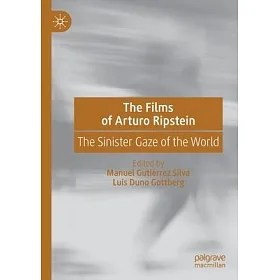
The essay was first published in Spanish at REVISTA IBEROAMERICANA in 2002; published at Mediático in 2014; republished in The Films of Arturo Ripstein
The Sinister Gaze of the World
Ed by Manuel Gutiérrez Silva and Luis Duno Gottberg in 2019):
The Place Without Limits is currently available to view on MUBI,
José Arroyo

Thinking Aloud About Film: La viuda negra/ The Black Widow (Arturo Ripstein, Mexico, 1977)

We continue our exploration of the Arturo Ripstein films currently available on MUBI with a discussion of The Black Widow/ La viuda negra. The film is based on Debiera haber obispas/ There Should Be Female Bishops, a novel by Rafael Solanas. It’s a film we urge all of our friends interested in exploitation cinema to see. From a producer/audience point of view, the film is all about showing as much of the female star’s body in as many sexual poses as possible. Arturo Ripstein has bypassed and exceeded the expectations of both producers and audiences by providing a film that is a corrosive critique of the pieties of bourgeois life, of the malignant influence of class and of the hypocrisies of the Church. There’s a very powerful moment where the protagonist, punitively shunned by the whole village, dons a priestly cassock to reveal all their secrets and condemn them all to hell. It was made in 1977 and perceived as so blasphemous that it was originally prohibited release. It was released five years later to much acclaim and many Ariel nominations, the Mexican equivalent of the Academy Awards, with Isela Vega winning for best actress. We loved Castle of Purity and think La viuda negra even better. Why this is so is the subject of the podcast.

The podcast may be listened to here:

The podcast can also be listened to on Spotify here: https://open.spotify.com/show/2zWZ7Egdy6xPCwHPHlOOaT

and on itunes here: https://podcasts.apple.com/gb/podcast/first-impressions-thinking-aloud-about-film/id1548559546

For those of you interested, Dolores Tierney informs me that ‘This book chapter (by Sergio de la Mora) from Latsploitation has a good bit on La viuda negra: Isela_Vega_article

José Arroyo

Thinking aloud About Film: El Castillo de la pureza/ Castle Of Purity (Arturo Ripstein, Mexico, 1972)

I’ve been wanting to see Arturo Ripstein films for decades and never had the opportunity. Now MUBI is showing five of his films and, on the basis of El Castillo de la pureza/ The Castle of Purity, I plan to see them all. The film is based on a real story – not unlike that of the Wests or Joseph Fritzl – of a man who keeps his family locked in the house to protect them from being morally corrupted by society even as he – the only one allowed outside – indulges in every perversion the outside world allows him. When he comes home – the family, who’ve been working all day manufacturing the rat poison that is their living – gets all his self-hatred projected onto them, keeping them off-balance and under his thumb. The shadow of Buñuel overhangs this film – Ripstein had been his assistant on The Exterminating Angel, which bears some resemblance to this film, and Claudio Brook (Simon of the Desert) and Rita Macedo (The Criminal Life of Archibaldo de la Cruz)  – the stars – also performed for Buñuel. A beautifully designed film, with a textured creepiness that envelops the family, one that is not just due to the rain and shadows that seep right into every corner of the home (the outside world is always sunny and bright) but a moral murkiness, a corrosive poison that is the result of that imperious patriarchal insistence on ‘purity’. A marvellous film. We discussed all the above and more in the podcast.

The podcast can also be listened to on Spotify here: https://open.spotify.com/show/2zWZ7Egdy6xPCwHPHlOOaT

and on itunes here: https://podcasts.apple.com/gb/podcast/first-impressions-thinking-aloud-about-film/id1548559546

José Arroyo


Eavesdropping at the Movies: 388 – The Fabelmans

Listen on the players above, Apple PodcastsAudible, Google Podcasts, or Spotify.

Steven Spielberg’s long-awaited semi-autobiographical reminiscence of his childhood is here, and it’s perfect. Too perfect. José swoons over the way The Fabelmans transports him to its place and time and shows love and understanding to everybody it depicts, but has to admit that a few rougher edges here and there would have done it a favour. There’s only so much drama in the life of Spielberg’s young avatar, Sammy Fabelman, and that which there is is on the tame side. But Spielberg’s love for his parents is obvious and appealing, as is his love for cinema, which he’s unafraid to get specific about – the sequences that show Sammy making and screening films convey an interest in the aesthetics, technicalities, and effects of film, rather than giving it the far vaguer “magic of the movies” treatment such “love letters to cinema” often offer.

The Fabelmans is as unwilling to explore the dark side of humanity as we’re used to Spielberg being, but it avoids his proclivity for schmaltz, and José loved it. So there.

With José Arroyo of First Impressions and Michael Glass of Writing About Film.

Eavesdropping at the Movies: 387 – Babylon

Listen on the players above, Apple PodcastsAudible, Google Podcasts, or Spotify.

A film Mike was doing his damndest to avoid seeing but eventually agreed to, Babylon is an epic period comedy-drama about the excess and industrialisation of Hollywood in the ’20s and ’30s, and an epic bomb at the box office. Its aesthetics, characterisations, use of race and class, vulgarity, set pieces, bizarre ending and more are up for discussion. Did Mike have as terrible a time as he anticipated?

With José Arroyo of First Impressions and Michael Glass of Writing About Film.


Three Shorts by Charlotte Wells

A discussion of the three shorts Charlotte Wells made before Aftersun: Laps (2016), Tuesday (2016) and Blue Christmas (2017). All were made while she was studying for an MA in film in New York, two of them sharing some themes with Aftersun. We discuss the way she sets up tension and meaning without dialogue and how this in turn helps create an air of mystery or uncertainty. She has an intuitive feel for the medium; the compositions, the lighting, the rhythms of a scene, and the editing all help create a textured world, full of understanding and feeling. In Laps she conveys a claustrophobic sense of sexual harassment that’s gendered, perceptive, critical. Through editing we see bare skin touching bare skin, without permission and without anyone else noticing We feel the horror of being in such a situation. Tuesday could almost be set after the holiday in Aftersun. In Blue Christmas, after the Elvis Presley song, we see her skill with actors, especially children. We discuss whether the film is more conventional or merely with a greater focus on narrative? All the interrelationships crackle. I love films by young people in love with cinema and the potentialities of the medium, and Charlotte Wells is clearly one of them, already mining a personal vein in a distinctive style and with a particular point of view. They’re marvellous and highly recommended.


Tuesday is available to see on MUBI: https://mubi.com/films/tuesday-2015?fbclid=IwAR0wGlhQ4-DUYBNMvKDTTOkB0LLkAGIQW4Lh568_iwM1ZfeVWBMBFgbVM2Q


Blue Christmas and Laps may be seen on Charlotte Wells own website: https://charlotte-wells.com/?fbclid=IwAR3K0NmpqTZXdKHszrxJ0hV3PfVB4tnSS9F6k1onY3PVn9afSadKuxZzL7U

The podcast may be listened to here:

The podcast can also be listened to on Spotify here: https://open.spotify.com/show/2zWZ7Egdy6xPCwHPHlOOaT

and on itunes here: https://podcasts.apple.com/gb/podcast/first-impressions-thinking-aloud-about-film/id1548559546

José Arroyo


Thinking Aloud About Film: Aftersun (Charlotte Wells, 2022)

Are the most interesting British film directors currently working women? Charlotte Wells’ textured, precise and poetic Aftersun begs the question. Clearly influenced by Lynne Ramsey (and Chantal Ackerman), and working in the same indie vein as Andrea Arnold, Wells has an eye for the original expressive image that can externalise interior states. She’s got a feel for rhythm too and alternations between movement and stillness, through editing and simple diegetic movement, is what help the film evoke mood and feeling as powerfully as it does. Aftersun is a beautiful and touching film about memory and relationships between fathers and daughters, overhung with depression but laced through with a love that keeps trying to break through the sadness. Paul Mescal and Frankie Corio are terrific in the central roles. We discuss all of this and more in the podcast.

The podcast can also be listened to on Spotify here: https://open.spotify.com/show/2zWZ7Egdy6xPCwHPHlOOaT

and on itunes here: https://podcasts.apple.com/gb/podcast/first-impressions-thinking-aloud-about-film/id1548559546

This is the mix of “Under Pressure” combined with the film’s soundtrack as used at the end of the film, put up on youtube by the soundtrack composer Oliver Coates

José Arroyo


José Arroyo In Conversation with Matthew Hays on ‘Queer Film Classics”

I talk to Matthew Hays about Queer Film Classics, a series of books modelled on the BFI series, where a writer gets to discuss a single film at book length, the difference being that these are ‘queer’ as well as ‘classic’. Matt is, along with Thomas Waugh, the co-editor of the series, first for Arsenal Press and currently for McGill-Queen’s University Press. The conversation touches on the concept behind the series — what is queer? What is classic?; the rationale for selection of individual titles, and what he’s learned from the close to two decades he’s been co-editing the series, eventually to comprise approximately 40 titles, and including books on films as diverse as Scorpio Rising and I’ve Heard the Mermaids Singing, Boys in the Sand and Death in Venice, Orlando and Zero Patience …. and many, many others.

The conversation may be listened to as a podcast here:

The podcast can also be listened to on Spotify here: https://open.spotify.com/show/2zWZ7Egdy6xPCwHPHlOOaT

and on itunes here: https://podcasts.apple.com/gb/podcast/first-impressions-thinking-aloud-about-film/id1548559546

It may also be seen on YouTube here:

José Arroyo


Thinking Aloud About Film: Black Girl (Ousmane Sembène, France/Senegal, 1966)

A discussion of Ousmane Sembène’s BLACK GIR/ LA NOIRE DU  (France/ Senegal, 1966), a rich and poetic evocation of post-colonial subjectivity. A young girl (M’Bissine Thérèse Diop) goes to work as a nanny for a French family in Dakar and then joins them in France later to continue working for them. But the job has changed: instead of being a nanny, she ends up cooking, cleaning, washing. She feels herself imprisoned in the room, turned into a thing, fetishised as a display: a slave. Outside of her country and away from her family, community and lover, she’s constantly reminded of her outsiderness, subjectivised into subalternity. In French the film’s title has connotations lost in English: the black girl of, the black girl from; connotations of outsiderness, exclusion and possession, whose black girl is she that is not from here? The white family is confounded by her unhappiness and has no idea what is wrong with her. For Sembène, she’s a symbol for the country and for post-colonialism in general. But is this enough? Sight & Sound pollsters thought so and ranked it one of the best 100 films of all time. The Film Foundation’s World Cinema Project thought it important enough to fund a restoration with the Cineteca di Bologna. The film is available through Criterion, the BFI, and there is a very good version on You Tube. We found it fascinating but preferred Sembène’s later Mandabi.


The podcast can also be listened to on Spotify here: https://open.spotify.com/show/2zWZ7Egdy6xPCwHPHlOOaT

and on itunes here: https://podcasts.apple.com/gb/podcast/first-impressions-thinking-aloud-about-film/id1548559546

Hamish Ford has written a fine piece on the film for the 2023 Cinema Reborn catalogue which may be accessed here:


Listeners interested in finding out more about Sembene might start here:

ineworld.co.uk/films/beast-2022/ho00008844#/buy-tickets-by-film?in-cinema=birmingham&at=2022-08-28&for-movie=ho00008844&view-mode=list

José Arroyo