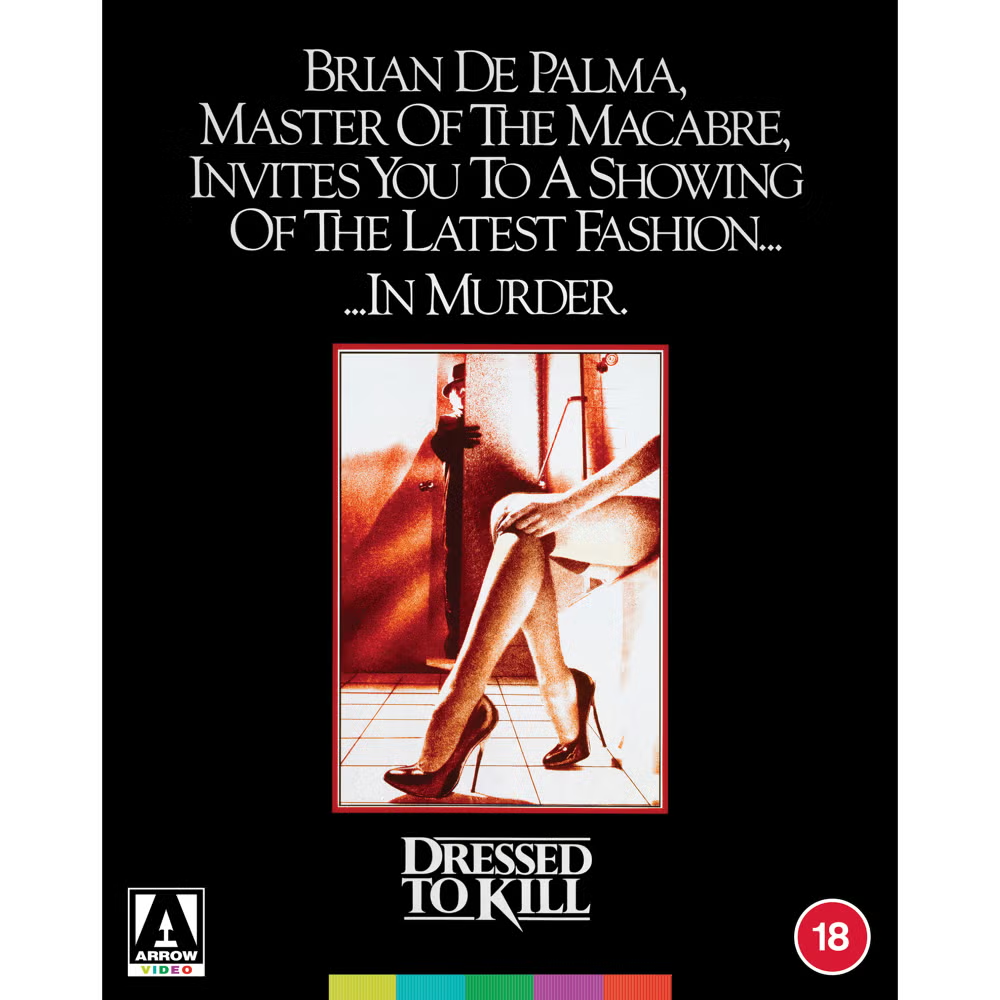
When Dressed to Kill (Brian de Palma) first came out I remember feminists being outraged that a woman was punished for being sexually active, first by being shown to get syphilis from her pick-up and then by being brutally slashed with a razor in a lift. The gay press in turn denounced it because the slasher was a trans person. Representation was then a cornerstone of identity politics. Of the film, I mainly remembered Angie Dickinson looking absolutely gorgeous in that opening scene, and later absolutely glam with that flowing white coat in the brilliant sequence in MOMA, no dialogue, all the suspense created by by the use of the room separators in the museum amidst the flowing steadycam shots. Seeing it last night I noted that the blu-ray has two extras praising the treatment of trans people in the film; and undress, ogle and kill has become a cornerstone of De Palman’s cinema (and indeed of entire genres), though the frankness of the opening scene with its frontal nudity and more than a suggestion of masturbation still startled. The film now seems to me a mise-en-scène of an adolescent boy’s fantasies and an exploration of those fantasies through extraordinary mise-en-scène. I bet De Palma dreamt of undressing Anglie Dickinson since she played Feathers in Rio Bravo (Howard Hawks, 1959); he’s spoken of how as a teenager he was a science nerd like the one Keith Gordon plays here; and of course the young boy ends up in bed with the pretty prostitute at the end of the film, a source of male fantasies since the beginnings of literature. Issues of representation still rankle a bit (the above, and the group of black men chasing after Nancy Allen in the subway still make me uneasy) but the film gets to something deep and complex about sexual terror (from women, men, boys; iin relation to others but also fears about themselves. It seems to me a great film. Michael Caine is superb as the analyst who can’t resolve his own mental health issues; and I’m in love with Nacy Allen, seeing her in so many De Palma films recently; her warmth, sexyess, likeability, her ability to suggest an ordinary person. I wish she’d been more and better used in the cinema of that period. The Arrow UHD looked magnificent.
José Arroyo