Tag Archives: Angie Dickinson

Dressed to Kill (Brian de Palma, 1980)

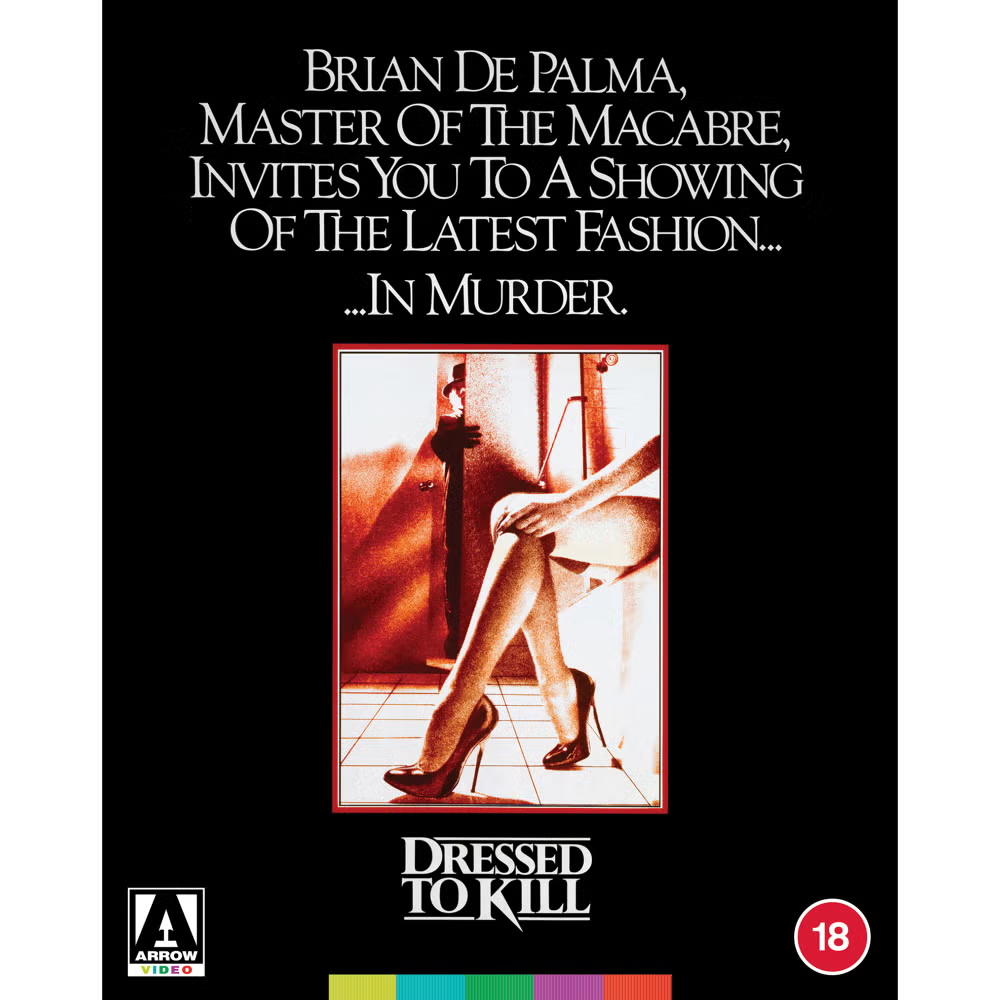
When Dressed to Kill (Brian de Palma) first came out I remember feminists being outraged that a woman was punished for being sexually active, first by being shown to get syphilis from her pick-up and then by being brutally slashed with a razor in a lift. The gay press in turn denounced it because the slasher was a trans person. Representation was then a cornerstone of identity politics. Of the film, I mainly remembered Angie Dickinson looking absolutely gorgeous in that opening scene, and later absolutely glam with that flowing white coat in the brilliant sequence in MOMA, no dialogue, all the suspense created by the use of the room separators in the museum amidst the flowing steadycam shots. Seeing it last night I noted that the blu-ray has two extras praising the treatment of trans people in the film; and undress, ogle and kill has become a cornerstone of De Palman’s cinema (and indeed of entire genres), though the frankness of the opening scene with its frontal nudity and more than a suggestion of masturbation still startled. The film now seems to me a mise-en-scène of an adolescent boy’s fantasies and an exploration of those fantasies through extraordinary mise-en-scène. I bet De Palma dreamt of undressing Anglie Dickinson since she played Feathers in Rio Bravo (Howard Hawks, 1959) –Janet Leigh in Psycho (Alfred Hitchcock, 1960) is another clear referent; he’s spoken of how as a teenager he was a science nerd like the one Kieth Gordon plays here; and of course the young boy ends up in bed with the pretty prostitute at the end of the film, a source of male fantasies since the beginnings of literature. Issues of representation still rankle a bit (the above, and the group of black men chasing after Nancy Allen in the subway still make me uneasy) but the film gets to something deep and complex about sexual terror (from women, men, boys; iin relation to others but also fears about themselves. It seems to me a great film. Michael Caine is superb as the analyst who can’t resolve his own mental health issues; and I’m in love with Nacy Allen, seeing her in so many De Palma films recently; her warmth, sexyness, likeability, her ability to suggest an ordinary person. I wish she’d been more and better used in the cinema of that period. The Arrow UHD looked magnificent.


José Arroyo

James Cullen on Even Cowgirls Get the Blues: The Gus Van Sant Podcast No. 7

I wanted to talk to James Cullen on Even Cowgirls Get the Blues because of his untrammelled love for the film, his enthusiasm, and the wide array of references he brings to this very intelligent appreciation of the film: Tim Burton, Bergman, Araki, Godard, Tarantino, Erika Tremblay, New Queer Cinema, A24 films, Brokeback Mountain (2005), Indigenous Cinema, New French Extremity, and more, .

In the podcast below we discuss why James sees the film as part of an unofficial trilogy alongside Drugstore Cowboy (1989) and My Own Private Idaho (1991); how the film may be seen as a thesis on the queer American road movie; What does it mean to do a queer female-focused road movie? A queer Western? What are the problems of finding a visual grammar for beat novels, acknowledging that ‘beat’ itself is a very masculinist concept? James sees the film as laudably unserious, a story about finding freedom that destroys all sense of coherence; comedic, silly, with a touch of magical realism; a film that destroys all sense of heteronormative experience, throws it in Hollywood’s face, and might give you tonal whiplash in the process; a film in which Van Sant tries to reinvent himself and fails, yet in the process creates his new style.

Amongst many other reasons, James loves the film because it is  ‘Against all the heteronormative expectations we have from cinema as a medium. None of these A24 Neon filmmakers could make anything like this. There’s an audience for this film, it’s going to come from somewhere, sometime; and I want to be part of that audience’

And I want to be in the audience listening to James speak about it.

The podcast may be listened to here:

The podcast may also be listened to on: Spotify here: https://open.spotify.com/show/2zWZ7Egdy6xPCwHPHlOOaT

and on itunes here: https://podcasts.apple.com/gb/podcast/first-impressions-thinking-aloud-about-film/id1548559546

A previous podcast with Lisa Purse may be listened to here:


The Gus Van Sant Podcast No. 4: Lisa Purse on Even Cowgirls Get the Blues (1993)


José Arroyo

Eavesdropping at the Movies: 362 – Dressed to Kill


Listen on the players above, Apple Podcasts, Audible, Google Podcasts, or Spotify.

Problematic and protested against upon its release in 1980, and remaining so today, Dressed to Kill is nonetheless stylish and engrossing, showing off some truly great filmmaking. We talk Psycho and cinema’s transgender villains, why Nancy Allen should have been a star, Brian De Palma’s greatest deaths, and the version of Michael Caine that José doesn’t like.

With José Arroyo of First Impressions and Michael Glass of Writing About Film.