Jingyi Zhang on Parasite

Just when you thought you knew everything there was to know about Parasite: a  video essay which succeeds in showing how camera movement and the recurrence of strongly symbolic images are deployed to demonstrate distinctions between classes in Bong Joon Ho´s Parasite. 


The Revelry in the Basement: Bong Joonho’s Parasite and Class discussion in films


With an explicit use of camera language and recurrence of strongly symbolic images, Bong has made a clear distinction between the two classes. I want to examine closely at the oriented camera angles, distinct lighting for each layer of space, meticulous design of spaces (with a reference to Bong’s previously internationally-well-known work, Snowpiercer, which has divided classes into three horizontal layers, while Parasite does the same thing vertically.)[1], and how people’s movements and interactions are limited and altered in the closed environments, leading to a discussion about the borderline between the classes, which Bong refers as smells.

Clothes, language and environment etc. are some of the more commonly used referents to iconographically denote class in film[2], since smell is a more abstract sense that cannot go through the screen for people to feel, but, in Parasite, Bong consistently brings up the discussion about smell, as a referent of the insuperable gap between the classes, and eventually, what triggers the poor to murder the rich is the simple action of the rich covering up the nose. What is the smell of the poor essentially? Are the characters aware of the smell because there is truly a smell of the damp semi-basement and the crowded subway, or their natural instincts and psychological suggestions imply so? There is more to question about.

While Snowpiercer has a more romanticized ending that a dystopia film could possibly have, in which the extremity of class struggle takes place on a train, isolated from reality, and ends with a destruction of orders, Bong pursues a more realistic and neutral approach in Parasite. Bong himself has described Parasite as “a comedy without clowns and a tragedy without villains.” The name of the film, Parasite, also indicates a more mutualistic and symbiotic relationship between the two classes, rather than an absolute predominance of one over another. There is no overthrow or elimination of any class reached upon the denouement, because the fact of class solidification remains, not just in the film, but as a continuation into the actual social status in South Korea.

Bong uses many class-specified actions to make the audience sympathetic towards the destitute Kim family: Mrs. Kim(Jang Hye-jin) folds pizza boxes for a living; Mr. Kim (Song Kang-ho) , unemployed; their daughter and son cannot afford going to university despite their intelligence; the tramp pees outside their window; the whole family scrambles around the house to find perfect spots to steal Wifi from their neighbors. It seems like the extreme of ignominy, but also the truest and simplest living condition a family in the lower class could possibly have. However, the audience are also unable to stand in total opposition to the wealthy Park family as the poor continuously take advantage of the rich’s innocence and their reliance on nepotistic relationship.

Some critics have described South Korea as a capitalist country in economy, a socialist country in social structure, and a communist country in mindsets, which might provide an explanation to the existence of the third class like the housekeeper of the rich, Moon-gwang (played by Lee Jung-eun), who has stayed in the luxurious villa even before the Park family moves in.[3] She is also the housekeeper of the previous owner, a famous architect. She stays in the house and accompanies the rich long enough to gain an illusion that she also belongs to the upper class, but her husband trapped in the basement continuously reminds her of the poverty and darkness. The sense of in-betweenness might be a more relatable feeling for most of the modern Koreans. Up until 2017, over 860000 people were still living in semi-basements in urban areas. They enjoy a little bit of sunshine from the small windows, but they also suffer from inundation when a storm comes. Shoplifters by Hirokazu Koreeda and Burning by Lee Chang-dong are usually being brought up in discussion with Parasite.[4] As the only few of the internationally recognized Asian films in recent years, these three have a realistic touch on the marginalized group without exception, and the issue of social solidification never seems to be resolved in any of them.

The film’s first significant climax takes place when the Kim eventually occupy the house for a hilarity when the Park are away, which I found an amazing resemblance in Luis Buñuel’s Viridiana, in which the beggars also makes the house a mess when Viridiana and Jorge are absent. The social phenomenon of class solidification also seems to osculate in the two cross-time films, both winning the Palme d’Or at the Cannes Film Festival. Buñuel’s rather aggressive perspective towards the upper class was due to an almost authoritarian control of the church in 1960s Europe.

It seems to be a mutual false fantasy of the poor to enjoy the transient indulgence, and it generates a sharp contract with the birthday party of the Park’s little son in the latter part of Parasite. The rich always try to remain a superficial elegance, while the lower class often do their utmost to threaten and trample on each other if possible. They mock and despise the rich, because of their impuissance to break the boundary between classes, and they pry into each other’s secrets, and treat each other with malevolence.

Regarding a more general theme that the two films share, I’d like to cite Pam Cook’s idea of gendered power relations, not just within family structures, but in a broader context.[5] Maternal figures, although seem to be apotheosized or given a priority in a societal sense, ironically still being the vulnerable ones, and this is mainly due to their disadvantage in sexual relationship. Viridiana, although being introduced as a Mother Maria-like figure, trying to bring redemption to the homeless, becomes a victim, who is almost being raped by who she offers food and job, to indicate the collapse of religion.  Mrs. Park, as the hostess of the family, is almost in charge of everything, while her husband is absent from the kids’ education and daily life or the management of different housework, but when they are having sex on the couch, she begs Mr. Park to buy her drugs. Both female figures are innocent and powerless, and unable to take part in a bigger struggle.

Last but not least, Bong uses many symbolisms throughout the film, and they further serve the idea of class struggle. The smallest son of the Park family, Park Da-song, is the first to recognize the similar smells of the Kim family and the first to decipher the Morse code from underground, and such sensibility and consciousness are attributed to his experience as a boy scout, and such experience has made him almost obsessive with the Indian icons. Ostensibly, it is Bong’s salutation to his idol, Akira Kurosawa’s 1963 film, High and Low, in which a similar Cowboy and Indian’s game is played among the kids. Being put in the content of Parasite, it seems more like a metaphor of imperialism. The process of gradually replacing ‘the natives’ is similar to colonization, and in a broader sense, capitalism and class distinction that the upper-class advocates is a result of globalization.

The rock that Ki-woo’s rich friend gives him as a gift also changes from a meaningless decoration, to a symbol of luck, to a burden that reminds them about the poverty, to a threat to their own life and eventually becomes the weapon to kill, but what it essentially means is still a question I want to explore.


Bibliography

Bui, Hoai-Tran, Bong Joon-Ho Breaks Down That ‘Mission Impossible’ Scene in ‘Parasite’, https://www.slashfilm.com/parasite-scene-breakdown-bong-joon-ho/?fbclid=IwAR3S6o6ALxiVacDvlNCnRtc7tjtmLGhjKnh4k4t_FSa1IwRMfixs6k8U1Jk

Chen, Brian X., ‘Parasite’ and South Korea’s Income Gap: Call It Dirt Spoon Cinema, https://www.nytimes.com/2019/10/18/movies/parasite-movie-south-korea.html?module=inline

Pam Cook, The Cinema Book, 1985

Hayward, Susan, Class, Cinema Studies: The Key Concepts (2017), p.85-87

Lovelace, Grace, ‘Parasite’ Is ‘Snowpiercer’ For Families Across The Economic Divide, https://www.romper.com/p/parasite-is-snowpiercer-for-families-across-the-economic-divide-19198994

O’Falt, Chris, Building the ‘Parasite’ House: How Bong Joon Ho and His Team Made the Year’s Best Set, https://www.indiewire.com/2019/10/parasite-house-set-design-bong-joon-ho-1202185829/

Seong-kon, Kim, Is Korea a capitalist country? http://www.koreaherald.com/view.php?ud=20141118001115


Filmography

Snowpiercer. Dir. Bong Joonho. South Korea. 2013

Parasite. Dir. Bong Joonho. South Korea. 2019

Viridiana. Dir. Luis Buñuel. Spain, Mexico. 1961

Shoplifters. Dir. Hirokazu Koreeda. Japan. 2018

Burning. Dir. Lee Chang-dong. South Korea. 2018

High and Low. Dir. Akira Kurosawa. Japan. 1963

[1] Chris O’Falt, Building the ‘Parasite’ House: How Bong Joon Ho and His Team Made the Year’s Best Set, https://www.indiewire.com/2019/10/parasite-house-set-design-bong-joon-ho-1202185829/

[2] Susan Hayward, Class, Cinema Studies : the Key Concepts(2017), p.85

[3]Kim Seong-kon, Is Korea a capitalist country? http://www.koreaherald.com/view.php?ud=20141118001115

[4] Brian X. Chen, ‘Parasite’ and South Korea’s Income Gap: Call It Dirt Spoon Cinema, https://www.nytimes.com/2019/10/18/movies/parasite-movie-south-korea.html?module=inline

[5] Pam Cook, The Cinema Book, 1985

https://vimeo.com/user70827005/review/414425105/437624ba98

A note and gif on The Scalphunters (Sidney Pollack, 1968)

The Scalphunters


The Scalphunters is anti-racist Western directed by Sidney Pollack. Burt Lancaster is the trapper whose furs, a whole winter’s work, get stolen first by Apaches, then by a gang of scalphunters led by Telly Savallas. Ossie Davis is the runaway house-slave hoping to get to Mexico and freedom. They have great chemistry and are very funny together. The film begins with Burt rescuing Ossie but planning to sell him, to them after a fight, encased in a mud that metaphorically erases their colour differences, sharing a horse and continuing in their quest to get the furs back. Shelley Winters plays the Western equivalent of a gangster’s moll, a completely stereotypical part, and is rather miraculous with it: nothing has dated about her performance except her hairdo. This gif, your daily Burt, is from near the end of the film:


Burt-and-Ossie

Burt Lancaster, Audrey Hepburn: The Unforgiven

Burt-funforgiven

Conor Ryan on Bojack Horseman: Why The Long Face?

Conor Ryan on Bojack Horseman and Mental Health: the creator´s statement, in conjunction with the video essay, both below, combine for a truly illuminating and perceptive work.


Creator Statement

This video essay explores some of the ways Bojack Horseman engages with conceptions of mental health. I have used an exploration of the sitcom genre to mirror how the series’ subversion of these tropes is reflective of its unique approach to mental health. There are many ways in which the series engages with mental health and mental illness and thus I have specifically focused on how the series handles an individual’s personal experience with, and responsibility for, their mental health. The ideas of responsibility and consequence are of particular note as they are overtly linked to the traditional stylings of the sitcom. Similarly, I have for the most part kept my discussions on the sitcom centred around animated, adult comedies as these are most immediately relevant to Bojack as well as frequently embodying exaggerated versions of the tropes and conventions that I discuss.


It is important to note that during the process of writing and editing this video, the final season of the series was released. While some of the clips I have drawn on and use to support my argument are from this season, I have not had time to fully consider and engage with the implications the show’s ending has for my argument. As such, this video essay predominantly addresses the first five seasons of the show.


In discussing narrative complexity, Jason Mittell makes the argument that The Simpsons is overtly conscious of its episodic form, embracing an “excessive and even parodic take on the episodic form, rejecting continuity between episodes by returning to an everlasting present equilibrium state of Bart in the fourth grade and general dysfunctional family status”(Mittell 33). Mittell is concerned with the implications this “reset” (Mittell 34) has for narrative engagement and satisfaction however my focus on Bojack’s representation of mental health has relocated my understanding of this to its effects on character. Ideas of growth and consequence have clear relevance to mental health, yet both are effectively impossible within the traditional sitcom form. This conflict is at the heart of how Bojack Horseman presents mental health and positions its characters in direct opposition with the diegesis of the series.


I wanted to propose the concept of hyper-seriality with this video essay. Just as Mittell argued the forced reset to a status quo enabled a kind of absurdist reflexive comedy, the absolute commitment to carrying over any and all consequences from previous narratives as embodied by Bojack Horseman is equally capable of drawing out comedy. Jeremey Butler describes how serialised characters “carry a specific, significant past” (Butler 44) and the characters of Bojack Horseman are constantly trying to escape that past. While Bojack undoubtedly draws on hyper-seriality for comedic purposes, the lasting impact these events now possess, invariably has dramatic consequences. This enables the show to subvert much of what is traditionally considered problematic about the sitcom genre. Ronald Berman describes how “The predicament of sitcom is that it exploits social issues without making sense of them. It leaves itself without a punch line” (Berman 18). Given the way Bojack so overtly engages with the social issues at the core of its narrative, its differences in both form and content are readily apparent and enable it to build a nuanced take on the genre.


While there are many facets to how the series depicts mental health and mental illness, I wanted to focus on the idea of responsibility as I felt this was the series biggest departure from traditional representations, as well as being directly linked to its subversion of the sitcom. One of the more problematic trends with regards to mental health in film and television is the frequent demonisation of mentally ill people, with mental illness and poor mental health often being framed as the excuse for an individual’s violent actions. While there is not an inherent problem with depicting mentally unstable people in media, it tends to become problematic when the text does not engage fully with the implication that people suffering from mental illness inevitably become violent or ostracised. In a study on the effects of film and television in regards to the perception of mentally ill people, Wahl and Lefkowits found that “Portrayals of mentally ill people as violent and dangerous, of mental health professionals as unable to protect the public from such threats, do appear to encourage harsher beliefs, or at least consistently harsher statements, about mentally ill people and their community care” (Wahl, Lefkowits, 526). This position also normalises the idea that people are then at the mercy of their own mental illness and thus without responsibility for their actions. Bojack’s engagement with these ideas and questioning to what extent the individual is responsible for managing and maintaining their own mental health, is a significant departure and one of the more important ways it explores discourses around mental health. This also links very clearly to my aforementioned discussions on the series hyper-seriality as consequence and responsibility are key tenants of that mode.


The introduction of Camus’s take on Sisyphus toward the end of the essay was intended to cast a new light on the implications of the shows comments on responsibility. There is an implication in the sentiment I express that by being responsible for ones own mental health, the individual is entirely at fault and thus should deal with it by themselves. This is obviously problematic and not what the show is expressing in its comments on responsibility and so I used Camus’s philosophy to highlight how the shows sentiments of self-improvement and understanding can be read as ways to deal with mental wellbeing in a healthy way.


Bojack Horseman tackles mental health and mental illness in a considered and comprehensive way. The series does not pretend to have answers to the wider social issues these conceptions of mental wellbeing take on and instead leaves the spectator to draw their own conclusions from its representations. The resonance of this show is emblematic of the fact that these questions need to be asked and the discourse the series has built is significant in its own right.


Conor Ryan

Word Count: 1002


Bibliography

Berman, R. (1987). Sitcoms. Journal of Aesthetic Education, 21(1).

Camus, A. (1942). The Myth of Sisyphus. France: Éditions Gallimard, pp.1-24.

Chaney, J. (2019). Raphael Bob-Waksberg on Beginning BoJack Horseman’s Ending. [online] Vulture. Available at: https://www.vulture.com/2019/10/raphael-bob-waksberg-bojack-horseman-ending-interview.html [Accessed 4 Nov. 2019].

Chater, A. (2020). From Real Housewives to The Brady Bunch: Bojack Horseman Finds Its Place. Kino: The Western Undergraduate Journal of Film Studies, 6(1).

Chi, T. (2019). Is Addiction a Mental Illness? | Talkspace. [online] Talkspace. Available at: https://www.talkspace.com/blog/addiction-mental-illness/ [Accessed 4 Nov. 2019].

De Koster, L. (2018). Animals and Social Critique in BoJack Horseman. MA. Ghent Univerity.

Diefenbach, D. and West, M. (2007). Television and attitudes toward mental health issues: Cultivation analysis and the third-person effect. Journal of Community Psychology, 35(2), pp.181-195.

A quick note on revisiting Visconti’s The Leopard

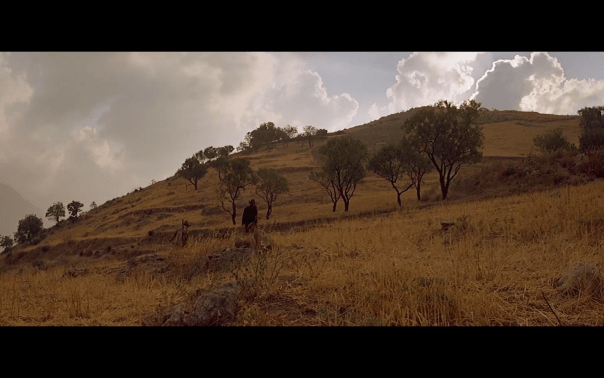
The Leopard is so beautiful and resonant to me. It really is every frame a painting, but also so much more than that. A simple image of Lancaster and Serge Regianni, in long shot, walking down a hill after the hunt, as shot by Giussepe Rottuno, is enough to move me. I thought it beyond great the first time I saw it, so I can´t honestly say it gets better with each viewing, but my understanding of it does, though, like with all great works of art, it´s so rich it always remains that little bit out of my reach.

Screenshot 2020-05-02 at 07.00.10Screenshot 2020-05-02 at 07.00.21Screenshot 2020-05-02 at 07.00.30Screenshot 2020-05-02 at 07.00.38


The landscape above moves me, partly because it reminds me of my childhood, but partly also because they are so beautifully lit. The screen-caps above don´t do justice to the gorgeous blu-ray I saw, with the gradations of light and the dense texture of the image.

Screenshot 2020-05-01 at 13.38.13Screenshot 2020-05-01 at 13.39.53Screenshot 2020-05-01 at 14.26.39


The mise-en-scène of the ball sequence, almost the last third of the film, is exquisite. If you look closely, it´s beautifully lit, shot in depath, with each minor bit part player offering major characerisation. It´s a thing of wonder.

José Arroyo

Burt Lancaster ‘to-be-looked-at-ness’

Burt’s was a career and a persona characterised by ‘to-be-looked-at-ness,’ even at the age of fifty, as here in The Leopard , and on to almost old age.

burt-leopard

Eavesdropping at the Movies: 227 – Southland Tales

Listen on the players above, on Apple Podcasts, or on Spotify.

A film many have heard of and few have seen, Southland Tales is writer-director Richard Kelly’s infamous difficult second album. Six years after his eventual cult hit Donnie Darko, this sprawling, confusing mess of an end-of-days parable was released to thunderous bafflement and almost no box office. We dive in and find that perhaps all we needed was to give it thirteen years to breathe.

There’s no defending much of the film’s execution. Kelly’s visuals are functional at best, almost never expressive, and rather obvious, there’s an abundance of plot that feels at once over- and under-developed, and there’s no emotional way in to significantly connect with any character. But Southland Tales is chock full of ideas and ambition, and there’s much to respond positively to. José considers how its critique of American culture continues to resonate today; Mike suggests that alongside M. Night Shyamalan’s The Village, it captures the state of mind of post 9/11, pre-financial crash, perpetually warring, deeply conservative and fearful America. Kelly may show little instinct for visual expression, but his ability to cast well and get the best out of his actors is remarkable, and for José, Justin Timberlake and Dwayne Johnson have never been better. And we consider the use of Revelations in the voiceover, and wonder where Seann William Scott has been for the last ten years.

For a Saturday night in, it’s tough to recommend Southland Tales. As a sizzlingly ambitious attempt to combine just about every worry it was possible to have in mid-2000s America into a grand work of sci-fi satire, it’s fascinating and worth your time. Its reach far exceeds its grasp, but that’s so much more appealing than the other way round.

With José Arroyo of First Impressions and Michael Glass of Writing About Film.


Eva Kastelic — Avatar: The Last Airbender, An Example of Pastiche or a Case of Cultural Appropriation

A video essay by Eva Katelic on TV and on animation, one that asks a question worth asking — is Avatar pastiche or cultural appropriation? — and that mobilises a whole array of audio-visual sources and techniques to help provide an answer. Also, great fun to watch.


Avatar: The Last Airbender (2005-2008)


From the anime inspired, bright coloured animation to its bold, yet realistic, fighting styles, I believe that what truly sets the show apart from other kid’s series is its skilful interweaving of varying cultural artistic practices under a single story.


The show is set in an alternate universe that is comprised of four nations, the fire, water, air and earth nations. What differentiates this animated world from ours is that certain characters, called benders, have the power to control the elements to their will. There is only one person who is able to control more than one given element and that is the Avatar. The Avatar is destined to restore peace and balance amongst the nations which have been at war for the past 100 years. There is always only one avatar in the world at any given point in time and as soon as one dies the next one is born, this is called the avatar cycle. The next avatar in the avatar cycle is a young airbender called Aang. Aang wakes after being frozen in an iceberg for the past 100 years and, upon awakening, is burdened with the task of mastering all forms of bending to end the 100-year war. The overarching goal of defeating the fire lord remains the same throughout all three seasons. The series is a classic coming of age story which follows Aang on his journey of defeating the fire nation throughout all three seasons. During Aang’s journey the audience discovers the carefully constructed world which the show is set in. We discover the oddly realistic fighting styles, abstract yet grounded architecture and the prominent cultural norms which shape the avatar’s world.


The video critique delves into the dialectical tension between pastiche and cultural appropriation within the diverse cultural references of the Tv series Avatar: The Last Airbender. I delve into the show’s incorporation of the style of popular Japanese animation, how the show blends together diverse architectural styles, how the show’s simplification of respected cultural figures such as the Dalai Lama is a case of cultural appropriation and how Avatar’s inclusion of diverse Kung Fu fighting styles is a respectful pastiche to the art of fighting. I conclude with the fact that, although the avatar takes some forms of cultural appropriation, it predominantly celebrates the varying cultural art forms in what can be labelled as pastiche. Prior to delving into a detailed analysis of the show I delineate what exactly I mean by the terms pastiche and cultural appropriation within this context.


Pastiche carries with it a number of connotations, derived back from its Italian origins. In the words of Ingeborg Hoesterey, the opinions of pastiche art fluctuated between positive and negative ones over the years[1]. However, pastiche, in the context of contemporary film has come to hold a positive connotation and this is evidenced by numerous film critiques found online today. [2]  Similarly, the phenomenon of cultural appropriation can be viewed differently depending on the context, however, I view cultural appropriation as bell hooks views the “acknowledgment of racial difference”[3], a hegemonic commodification of the ‘other’ [4]. I outline the inherent juxtaposition between the two and question whether the Avatar series falls on the positive side of pastiche or the negative one of cultural appropriation. The aforementioned is evidenced by Avatar’s anime-like animation style (which celebrates the art of Japanese anime and thus falls on the side of pastiche), the creative adaptation of real world architecture, the incorporation of varying kung fu fighting techniques (both forms of pastiche) versus the simplification of cultural figures such as the Dalai Lama (an example of cultural appropriation).


[1] Hoesterey, I. (2001). Pastiche. Bloomington: Indiana University Press.

[2] CrackerJacked (2017). Pastiche: Great Artists Steal. Available at: https://www.youtube.com/watch?v=JpHE7vXE3-A [Accessed 15 Dec. 2019].

[3] hooks, b. (2014). Black Looks. Routledge, pp.0-212.

[4] Ibid.

Bianca Giacalone — The Erotics of 8 1/2

Lovely, observant, exuberant, and illuminating video essay by Bianca Giacalone , in an experimental vein, that deploys Sontag´s work on Interpretation to attemtt to ‘reveal the sensuous surfaces’ of the film, and with an extended Creator´s Statement whose reading is an essential component of understanding and enjoying the viewing:


THE EROTICS OF 8 1/2


“To enter the theatre is to enter a woman, to surrender, happily, yet with a touch of fear and the excitement of anticipation to viscosity, liquidity, milkiness”[1] writes Sam Rohdie when describing what cinema represented for the great cineaste Federico Fellini.

“To film, to look, to see are erotic acts”[2] he reiterates.

What both the writer and the filmmaker mean by “erotic” does not relate though simply to the field of the sexual, even if the imaginary of the Italian director has often been particularly suggestive in that direction. The stance on erotics is more akin to the origin of the word Eros in Ancient Greece (especially the Platonic conception of it) and Susan Sontag’s theories as delineated in her essay Against Interpretation.


Eros, one of the many terms used to describe the concept of love, is the type of passionate love born out of attraction, out of the appreciation of beauty (particularly of a person). As written by Plato in his Symposium, eros helps the soul recall knowledge of beauty, and contributes to an understanding of spiritual truth.

Loyal to the heritage of the Classics, Sontag aligns with that perspective and configures Erotics as an alternative method to modern hermeneutic interpretation, which instead reappropriates the value and power of the sensory experience of the work of art.


Fellini’s grandest, most imaginative, allusive and vivid work of art 8 1/2 is a visual quest for the hidden essence of things, for something higher and able to purify a sick spirit from the effects of a depraved modern lifestyle. Erotics are what move the film, what fuel its soul.

This video essay attempts to “reveal the sensuous surface”[3] of the film, by slowing down key moments of the film, enabling the viewer to unashamedly lust for their undeniably voluptuous formalism and calmly absorb their epiphanic and cathartic power.


Lo-fi hiphop music is used in the video to reconstruct the rhythm of selected scenes, in order to recreate their emotional effect and to immerse the viewer in the aesthetic experience of the film. This contemporary and now widely popular type of music, alternatively called “chillhop”, is indeed composed “specifically to activate neurone activity associated with focus, meditation and relaxation”[4] and has also been defined “[…] like music for daydreaming”[5]. The subtle analog feel also channels a tender sense of nostalgia, fitting with the sensibility of Fellini’s cinema and the themes analysed, while at the same time using its electronic elements to re-contextualise the film in a modern key.


The introductory section of the video essay serves the purpose of establishing how Fellini visually translates the sensorial experience of purity, luminosity and clarity in the film through the point of view of the main character Guido (Marcello Mastroianni), once again playing the director’s alter ego after the worldwide sensation La Dolce Vita (1960). Throughout the whole video we just briefly see Guido in order to align ourselves with his perspective and with his position as external observer in his own chaotic world (while being one of the very atoms that compose and cause that confusion).

Brian Eggert, in a Deep Focus review of the film, writes that “whenever Guido’s reality becomes too much to bear, he escapes into a memory or a fantasy that eases his current predicament”,[6] a situation parallel to the director’s in his real life.


As a matter of fact, in the scene chosen to explain this dynamic, the nauseating confusion of his reality is interrupted by a mystical vision: Claudia Cardinale, slowly floating towards him in a candid dress and offering him sacred curing water with a soft, loving smile, like a beneficial, soothing balm.

To watch 8 1/2 is to watch this vision, again and again, appearing out of nowhere like a reassuring magician inviting you to his circus, a beautiful stranger in a hotel lobby and the ghost of a loved one. Gasping for a second, getting teary-eyed all of a sudden and then breathing out, returning to reality. Most of the times, not logically understanding what has just been witnessed. As if our mind visualised a primordial safe space.


Consequently, the main body of the essay depicts these poetic moments, revealing a pattern that connects them all and helps the audience associate them with purity, beauty and truth.

The Director of Photography Gianni Di Venanzo and the Art Director Piero Gherardi dressed the film in a tailored black and white, a bold and voluntary choice in a period when the technique was at its last moments. In this way, “black and white becomes its own idea”[7] and consciously dramatises contrast.

The recurrent use of white cloths, veils and other items of clothing, so starkly luminous against brooding darkness and cluttered kaleidoscopic designs, makes Fellini’s thematic obsessions visually rhyme. Childhood, religion, women and death are beautifully connected in a white fluid dance. Sensual like the body of a beautiful woman, yet tender and reassuring like a child or an old cardinal being taken care of and wrapped in warm towels. Carnal and at the same time spiritual.

This simple trope, is something the director carried with him even in his works in colour, like in the 1962 The Temptation of Dr. Antonio (in which a billboard version of Anita Ekberg holds an inviting glass of milk, both sin and salvation), or most prominently in the baroque Juliet of the Spirits (1965), with its iconic finale in which Giulietta Masina accepts the benevolent presence of spirits in her life, walking out of the gates of her house and cage in a white dress against the vastity of florid woods, expressing an incomparable sense of freedom and liberation.

For how naive and unpretentious as a filmic choice this may appear, Fellini’s genius and virtuosity consists in showing how a white veil framing a woman’s face can express a multitude of meanings and yet exude always the same particular sense of melancholy (as we see in parallels between the characters of the wife and Claudia), charging the intensity of the medium to give the viewer “not a verbal idea but an emotional-packed visual experience”.[8]


To quote again Sontag, these images have a “pure, untranslatable, sensuous immediacy”.[9]

Magically, it appears that the purpose of her approach to art ultimately coincides with the resolution of the film: both converge on finding acceptance of the mystery and the magic at the basis of artistic intuition, acceptance of the non-rational, of the perceptible yet inexplicable.

We must not demand more from a work of art than its sensuous momentum, just as we must not question the irrational beauty in our lives. Peter Bondanella, writing about the “Celebration of Artistic Creativity” in 8 1/2, reinforces this vision. “Fellini’s cinema in general, and 8 1/2 in particular, argue that art has its own imperatives, that it communicates a very real kind of knowledge aesthetically (and therefore emotionally) rather than logically, and that this form of knowledge has its proper and rightful place in human culture”.[10]


The ending sequence of the video essay marks the realisation of self-acceptance, recreating the mystic moment in Guido’s mind as he imagines the “beautiful creatures” that populate his reality and fantasy, looking even more beautiful, purified in his mind. All the people Guido “wasn’t able to love” walk together towards the sea, without a real destination but all in harmony and sheer joy.

These images are beauty, truth and soul. They feel good. All a viewer has to do is take in their curative effect.

The video ends on Anouk Aimée, whose role in the film is Guido’s wife Luisa, as she bravely walks up to the camera showing the turmoil in her expression as she elaborates her feelings, processing her forgiveness for her husband and learning with him to accept the uncertainties of a life together, both with the joys and the pain it will bring.

“Transparence means experiencing the luminousness of the thing itself, of things being what they are”.[11]


At the beginning and towards the end, two moments of the film are shown integral and with their original audio, not reconfigured through the use of music or editing. The first shows Guido sharing with his magician friend Maurice, a strange private thought expressed in the form of a silly phrase. “Asa Nisi Masa”, the magician assistant’s writes on the blackboard. “What does it mean?” Is the question we are left with before starting the analysis, with a tone of irony. By the end we get to see what the protagonist meant with his quirky expression, as a memory comes to life: a safe, happy childhood in the remote Italian countryside, sharing whispered jokes and tender kisses under warm white blankets.

The words come up again, through the mouth of a cousin, as a magic formula that will make everyone rich if said at the right hour. The catchy joke stands for something more: result of a word game similar to pig latin, its root is “anima”, the Italian word for soul, spirit, conscience, another wink at Fellini’s restless preoccupation with the illogical.

It is not a surprise that that thought lingers in Guido’s mind, since it represents what he yearns the most and what the film wants to achieve: a symbiosis with the magical, so strong in its ingenuity to wipe away any intellectual uncertainty. While he is asked constantly throughout the film, and not with the irreverent yet kind tone of Maurice, what his thoughts and ideas mean, to what ideologies and philosophies they adhere to, all Guido (and correspondently also Federico behind the real camera) wishes to express is “something simple and useful for everyone”, “one that can be seen and embodied on the screen but not easily explained by rational discourse”.[12]


Through the erotic process of watching 8 1/2, we learn “to see more, to hear more, to feel more”[13], to accept the unfathomable, the mysterious, the poetic and the beautiful. In film and in life.

That is the legacy that the magnificent Fellini has bestowed upon us, and it is imperative to cherish it now more than ever for the 100th Anniversary of his birth.

Grazie Maestro.


Bianca Giacalone


BIBLIOGRAPHY


Bondanella, Peter (2002), The Films of Federico Fellini, Cambridge University Press Cambridge

Costello, Donald P. (1983), Fellini’s Road, University of Notre Dame Press: Notre Dame, Indiana

Eggert, Brian (2015) THE DEFINITIVES: Appreciations and critical essays on great cinema – 8 1/2, Deep Focus Review, https://deepfocusreview.com/definitives/8-12/


Geduld, Carolyn (1978) Juliet of the Spirits: Guido’s Anima, in Federico Fellini: Essays in Criticism ed. by Peter Bondanella, Oxford University Press: Oxford


Hyman, Timothy (1978) 8 1/2 as an Anatomy of Melancholy, in Federico Fellini: Essays in Criticism ed. by Peter Bondanella, Oxford University Press: Oxford


Kezich, Tullio (2002) Federico Fellini: His Life and Work, translation by Minna Proctor (2006), I.B. Tauris: London and New York


Miller, D.A. (2008), 8 1/2, BFI Film Classics: London

Perry, Ted (1975) Filmguide to 8 1/2, Indiana University Press: Bloomington

Rohdie, Sam (2002), Fellini Lexicon, “(The) Eye”, p.54, BFI Publishing: London


Seppala, Timothy J. (2018) The science behind the ‘beats to study to’ craze

https://www.engadget.com/2018/07/23/the-science-behind-beats-to-study-to/?guccounter=1&guce_referrer=aHR0cHM6Ly93d3cuZ29vZ2xlLmNvbS8&guce_referrer_sig=AQAAAE8PK7_TPAqrwDmjg_T5q0F-7eTw5iytXBXulnzxBLEMZBW9DXnCfuT0Peh0TFzt60gFi88BSci5F6YGkEcn-8sfwBNsvO8fPfbM3-IzqQvs06Dx6N-jenQkXdY8MJbrx9rnNUhyOG59gj5bdpWeVmHlUpfId6obe5Dbd6BstyKa


Sontag, Susan (1964), Against Interpretation, p.13, Penguin Classics: London

FILMOGRAPHY

La Dolce Vita (1960)


Boccaccio ’70 (1962), dir. Vittorio De Sica, Federico Fellini, Mario Monicelli, Luchino Visconti


8 1/2 (1963)


Juliet of the Spirits (1965)


[1] Rohdie, Sam (2002), Fellini Lexicon, “(The) Eye”, p.54, BFI Publishing: London

[2] Ibid.

[3] Sontag, Susan (1964), Against Interpretation, p.13, Penguin Classics: London

[5] Woods, Kevin in Seppala, Timothy J. (2018) The science behind the ‘beats to study to’ craze

[6] Eggert, Brian (2015) THE DEFINITIVES: Appreciations and critical essays on great cinema – 8 1/2, Deep Focus Review, https://deepfocusreview.com/definitives/8-12/

[7] Miller, D.A. (2008), 8 1/2, BFI Film Classics: London

[8] Bondanella, Peter (2002), The Films of Federico Fellini, Chapter 4 “8 1/2: The Celebration of Artistic Creativity”, p.114 Cambridge University Press Cambridge

[9] Sontag (1964), p.9

[10] Bondanella, Peter (2002) p.114

[11] Sontag (1964), p.13

[12] Bondanella (2002)

[13] Sontag (1964)

Eavesdropping at the Movies: 226 – Twentieth Century

Listen on the players above, on Apple Podcasts, or on Spotify.

A prototypical screwball comedy, 1934’s Twentieth Century sees John Barrymore delightfully chewing the scenery as a pompous theatre impresario who discovers and makes a star of Carole Lombard’s lingerie model. Having separated after several successful years, the former power couple meet by chance on the luxury Twentieth Century train, and it all kicks off as schemes are put into action, conflict erupts, and some religious bloke keeps putting stickers that say “REPENT” on everything he sees.

Barrymore is sensational, sending theatrical types up and orating floridly and dramatically, while Lombard clashes with him spikily. We consider how well Twentieth Century fits into the screwball genre – the dialogue is snappy and witty, the situations farcical, the relationships barbed, although it’s less of an even two-hander than you might expect, the focus heavily on Barrymore. Mike argues that the chemistry between the couple doesn’t play as enjoyably as intended, and that the bits of business on the fringes, and the knowing weariness with which Barrymore’s two assistants handle their jobs, are where the real joy lies. And José effusively compares Barrymore’s ability to move between stage and screen to Laurence Olivier’s, another actor renowned as the greatest of his day, but who appeared fussy and busy on film.

While it’s no new discovery, Twentieth Century holding places in the National Film Registry and the history of film comedy, it’s a new one for us, and a corker.

With José Arroyo of First Impressions and Michael Glass of Writing About Film.

A quick note on Circus of Books

circusof books


A straight couple take over a gay book shop/sex shop as a business. They become the biggest distributors of gay porn in the country — Blueboy, Honcho, Mandate.They start distributing Matt Sterling films and hosting Jeff Stryker sign-ins. The shop becomes a community hub. They´re at the center of the 80s obscenity wars and get charged by the FBI. They´re also there offering support during the pandemic. And with all of that, the mother still has trouble accepting her gay son. Circus of Books is social history, very moving …. but …it certainly gives one a lot to think about. It´s on Netflix.

José Arroyo

Joe Humfrey – Understanding Slowness Through the Cinema of Gaspar Noé

Lovely video essay, which I think I only grasped after second viewing and after reading the Creator´s Statement (below), which does what it´s supposed to do, i.e. create a context for viewing. The video essay is an ambitious one which faces and surmounts two very difficult tasks: it cannot reproduce the experience of any of the films mentioned as some of those takes would be longer than the essay itself, and the cinema of Gaspar Noé and ‘Slow’ cinema seem on the surface incompatible. Original and intriguing work.

José Arroyo


PURPOSE


For this video essay, I wanted to explore Gaspar Noé’s ‘Climax’ in relation to Slow cinema. The interest in this argument stems from a desire to help audiences re-evaluate their perceptions of slow cinema and reframe their understanding of the medium. I find it to be an unfortunately neglected and unfairly criticised style of filmmaking and one that with a different perspective can be appreciated far more by audiences. My idea came from thinking that by bridging a connection between two seemingly opposing styles of cinematic language it would help in changing perceptions by offering an entirely new lens to the form. The particular reasoning behind the connection of Slow Cinema and Gaspar Noé is that whilst the two styles seemingly exist at opposing ends of a cinematic scale, I find both to be quintessentially underlined by a fundamental desire to work on creating an experientially based journey as opposed to typical narrative cinema. Furthermore, I believe the two work by delivering a unique empathetic quality, an empathy which demands the audience to share the characters’ emotional turmoil by creating a discomfort in the viewing experience. Whilst video essays on Slow Cinema are sparse, I found the pre-existing examples seem to aim at presenting their content to people who are already audiences of the genre. I felt that by including and analysing around Gaspar Noé, the video could aim at attracting new audiences rather than informing pre-existing ones.


Whilst Slow Cinema and Noe’s films obviously have attributes outside of these traits, I find these to be the two most compelling and perhaps important qualities of their work. However, I do find it necessary to state that this video essay is not categorising Climax as Slow Cinema. Whilst aware of the immense disparity between the two styles, the use of Climax as an example was certainly not to try and make a claim to reconsider Climax as Slow Cinema. It was rather to further an appreciation of Slow Cinema in an attempt to create a new and engaging comparison that would hopefully help bring new perspectives to audiences and perhaps new audiences to the genre. With this also comes the recognition of the various definitions of slow cinema and the vast difference in interpretations. This video essay does not want to disregard research, ideas and interpretations of purposes around slow cinema, whilst many fascinating ideas around the form exist, including discussions around relaxation, politics and society (issues that mostly do not exist in Noe’s work), whilst aware of these, I felt that the nuances of these arguments would have distracted from the purpose of the piece – an attempt to fuel an appreciation of slow cinema rather than extensively defining what is already a heavily contested form. Whilst I find a lot of the writing on slow cinema to be fascinating, extensive and informative, I find that to portray the argument for an appreciation and connection to Noé’s cinema, I had to often omit these complex nuances and work on explaining and offering an analysis through the perspective in which I find to be the fundamental viewing experience of these films.
CREATION


One of the key ideas around the creation of this piece was emphasising tone. Throughout the essay I wanted the structure and progression to, at least in some form, reflect slow cinema itself. Obviously, this becomes challenging when to truly experience the slowness of this cinema, each clip could have existed at the length of the essay itself. However, I found that by choosing clips with very little progression and still holding them with a fair length, it is very easy to imagine the progression of the clips. Therefore, whilst the cutting is far slower than most video essays and holds less material, I believe this was a necessity for the work, especially in highlighting the experience of slow cinema. Another important creative choice in terms of emphasising tone was the voice-over – whilst the somewhat subdued and slow voiceover often led to having to omit ideas or information, I found that it was important to instead reflect the quietude of stillness in slow cinema. The essay focuses on ideas of tone and emotion to try and replicate Slow Cinema. The aim of this was to create an immersion in the video itself and a reflection of the genre rather than to indulge copious and condensed information at the expense of style, experience or tone. This emphasis on tone was aimed at allowing the clips to merge into one another and for the similarities to be recognised by the viewer themselves. This idea of tonally reflecting slowness is alluded to further in lines which often repeat throughout, such as the concept of excess and minimalism, ideas around empathy and the denotation of ‘This is Slow Cinema.’ Whilst I worry that this may not achieve its desired outcome, my ambition was to subtly reflect what feels like the ongoing repetitive nature of Slow Cinema, whilst also using repetition as a device of my argument.


I also found it important to often let the films speak for themselves and to grab the audience’s attention in reflection on the narration. The narrations whole purpose is to aid an appreciation of Slow Cinema as opposed to merely reflecting my own. Therefore, by allowing moments of uninterrupted viewing, the audience is able to indulge in the artwork of the directors and their films, ultimately there is no better explanation of Slow Cinema than the films themselves. This idea of holding the shot is most prominent in the final clip’s long run time: by using a clip from Climax to ultimately conclude the piece after the proceeding clips of Slow Cinema, I wanted the argument to stand for itself. I felt the clip feels as if it could easily be another scene from a Slow Film. It also connects to many of the ideas I’d previously mentioned, and this is especially coordinated with the bridging of Debussy’s music which runs between. Although I briefly speak over the clip, I wanted many of the connections and ideas of the essay to be allowed for the viewer to interpret, understand and think about as the essay concludes within the stillness. Ultimately, the argument is not a definitive one but like the cinematic style, should offer room for contemplation.
Another important aspect in any video essay is the combination of self-analysis in addition to the use of relevant literature. Whilst various texts on slow cinema exist, there is little on the work of Noe or Climax and no writing on a connection between the forms. For the essay, I wanted to be able to use literature to contextualise and explain slow cinema, whilst producing my own analysis to build the connection between the two. I found that this mergence of literature and analysis allows for the video essay to both reflect my original thought but also an important definition and explanation on the form by experts in the field. I wanted the literature to spark an interest and understanding, whilst the analysis and connection to offer an original perspective.


In terms of the structure, I decided to both begin and end with various clips of slow cinema. I wanted to be able to show a variety of images from slow cinema to allow the viewer to have a wide understanding of its style and it’s variations, for this reason I made sure to not use the same director twice and also to create a varied exposure across many different directors, subjects and national cinemas. I wanted the opening scenes to be informative and show what slow cinema is, whilst the final scenes were aimed to reflect on the analysis and conclude the argument. By bookending the video essay with clips from slow cinema, I wanted to try and create an idea of progression in the understanding and appreciation of how the clips work. I also found that by inputting the analysis of Climax in between this, it simultaneously presents the clear disparity between the work, whilst hopefully allowing my argument to also work in persuading audiences into understanding how the disparity is not as vast as one may think. By doing this, the video essay has a clear narrative structure and I hope that this structure worked in allowing for a progression of the idea and allowed for audiences to leave with an enhanced understanding or appreciation of Slow Cinema.


Joe Humfrey


FILMOGRAPHY


Akin, Fatih, The Edge of Heaven (Germany: Anka Film, 2007)


Diaz, Lav, From What Is Before (Philippines: Sine Olivia Philipinas, 2014)


Tarr, Béla, The Turin Horse (Hungary: T. T. Filmműhely, 2011),


Weerasethakul, Apichatpong, Uncle Boonmee Who Can Recall His Past Lives (Thailand: Kick the Machine, 2010)


Frammartino, Michelangelo, The Four Times (Italy: Invisible Film, 2010)


Noé, Gaspar, Climax (France: Wild Bunch, 2018)


Noé, Gaspar, Love (France: Wild Bunch, 2015)


Noé, Gaspar, Enter the Void (France: Wild Bunch, 2009)


Noé, Gaspar, Irreversible (France: Studio Canal, 2002)


Haneke, Michael, Hidden (France: France 3 Cinema, 2005)


Costa, Pedro, In Vanda’s Room (Portugal: Contracosta, 2000)


Akerman, Chantal, Jeanne Dielman, 23 Commerce Quay, 1080 Brussels (France: Paradise Films, 1975)


Tsai, Ming-liang, Vive L’Amour (Taiwan: Central Motion Pictures, 1994)


Hu Bo, An Elephant Sitting Still (China: Dongchun Films, 2018)


BIBLIOGRAPHY


Gronstad, Asbjorn, Film and the Ethical Imagination (London: Palgrave Macmillan, 2016)


Jaffe, Ira, Slow Movies: Countering the Cinema of Action (New York:  Columbia University Press, 2014)


Gibbs, John and Douglas Pye, The Long Take: Critical Approaches (London: Palgrave Macmillan, 2017)


Ann Doane, Mary The Emergence of Cinematic Time – Modernity, Contingency, the Archive (Cambridge: Harvard University Press, 2002)


Song Hwee, Lim Tsai Ming-Liang and a Cinema of Slowness (Hawaii: University of Hawaii Press, 2014)


Agacinski, Sylviane, Time Passing: Modernity and Nostalgia (New York: Columbia University Press, 2003)


Sinople, Taylor, ‘Stray Dogs Review’, The Focus Pull, October 14 2013 <http://www.thefocuspull.com/features/review-stray-dogs/>

[accessed 12 November 2019]


De Luca, Tiago, and Nuno Barradas Jorge, Slow Cinema (Edinburgh: Edinburgh University Press, 2015)


Tino Muchina – Austin Powers

A lovely appreciation of Austin Powers by Tino Muchina that very cleverly adopts and reproduces its insouciant tone: Short, sassy, cheeky, smart and delightful:


Creator´s Statement:


I am interested in the conventions of cinema and the way the parody/spoof film subvert the tropes and codes of cinema and replicate them creating new meaning. The horror genre especially uses parody with repeated cinematic codes and indicators to portray what is ‘scary’, the Scary Movie films by the Wayans brothers especially succeeded in highlighting the repetitive nature of the genre but also shed light on the humour in these conventions and found a way to entice audiences into the spoof genre over a number of years. Jay Roach’s Austin Powers is famous in spoofing the early James Bond films as well as other films of its time and the recognisability of these intertextual references have rendered the film iconic even today; nearly two decades later. The way in which the film deals with the action/spy genre in a comedic yet celebratory nature is undoubtedly reason for its success.


Austin Powers: The Spy who Shagged me (1999) is a comedy/parody written by Mike Myers; who also stars in the film as Austin Powers and as his nemesis Dr. Evil and insider spy Fat Bastard. The film has a wide range of intertextual references modelling it as a film that is in dialogue with the history of cinema but also as one that works with and against the codes and conventions of the film form. The story follows international spy Austin Powers as he returns to 1969 where Dr. Evil prepares to destroy the world with a laser on the moon and Powers’ task is to stop him and retrieve his mojo that has been stolen. As well as the obvious homage and spoofing of the James Bond franchise, I also find it to be a commentary and celebration of society and film history. Jim Jarmusch speaks of not “concealing your thievery” but instead celebrating it which is what I feel the film especially does in terms of its parody style but also in regards to the swinging 60’s. I will also explore the female spy figure, metafiction within the film and duplicates in the film versus the originals all surrounding the issues of imitation and mimicry versus that of homage and celebration.


One particular strength of the film is in the way the spoof form allows it to be self-reflective of cinema and the perhaps the worn-out forms in which it tells its stories. I am especially interested in reading Austin Powers as a postmodernist film as outlined by Linda Hutcheon’s theory as opposed to that of Frederic Jameson. Specifically, in that Hutcheon suggests that postmodernism works through parody to “both legitimize and subvert that which it parodies.” In this way, the way in which Austin Powers rather ridiculously makes light of the spy film genre and the events around the time at which the film was set can be read in this postmodernist way.  In this way, it’s not within the films storyline that I find merit, I find the film especially succeeds in its humour at times and the way in which they can laugh at society and at cinema itself. The film is especially interesting in its use of duplicates throughout which can be read as being reflective of what the parody film is- the correlation between the original and the copy. The most obvious representation of this is in the cloning of Dr. Evil with Mini Mi, who have become iconic figures in popular culture today. Something can be said about the way the film especially focuses on duplicates in this way and can be highlighting the films own use of mimicry and the copying of other films and film styles.


The way in which the film is in dialogue with the history of cinema is ever present throughout. It effectively opens with a homage to Busby Berkeley’s ‘By a Waterfall number’ from the 1933 musical Footlight Parade. Images of Powers surrounded by synchronized swimmers are very playful yet effective in replicating that of Berkeley’s choreography. Further highlighted through the use of the bird’s eye view.

Familiar imagery such as this continues to be featured throughout the rest of the film. Perhaps the most famous, being that of Felicity Shagwell (Heather Graham) as she emerges from the sea in a direct mirroring of Ursula Andress’ Honey Rider in Dr No (1962). Indicative of the films spoof nature, it is at this point that the camera pans across to Austin Powers who is identically dressed in a provocative nature in the same white bikini set.


A particular interest of mine is the way the film represents the female spy figure, especially through their innate sexual interest in Austin Powers as though he’s irresistible. It is clear he is a heart throb which is ironic due to his appearance as he’s been deliberately made to look repulsive; especially by means of his dirty, brown and pronounced teeth, which are used as a visual gag throughout the film and his overtly hairy chest. The teeth also provoke this feeling of British-ness as it is a stereotype commonly associated with the British. This is indicative of the spoofing of male protagonist conventions. However, I am also interested in the girls overtly sexualised names suggestive of the spoofing of a number of the bond girl names. The three featured girls in the film named: Felicity Shagwell, Ivana Humpalot and Robin Swallows have perhaps taken inspiration from the girls of the James Bond franchise: Octopussy, Pussy Galore, Holly Goodhead and Xenia Onatopp.


Although aesthetically the film does not achieve much cinematically in the traditional sense in terms of cinematography and complexity of a film plot, for me, Austin Powers succeeds as a piece of art despite lacking these qualities. Its way of using the form of parody to twist conventions but also to provide a means by which audiences do not have to take the film seriously but can instead laugh at the irony of what is being presented is integral to entertainment and to cinema. “Parody is thus effective, paradoxically wearing the mask of that which is seeks to undermine.”- Linda Hutcheon. There are a multitude of films that the film refers to and the ways in which the film employs them implies a celebration of cinema and of the tropes we have become accustomed to.

Tino Muchina

Alex Hobbs — Mandy, The Film Concert

Over the next ten days or so I shall be posting a wide range of video essays. The series begins with this superb work from Alex Hobbs


Mandy: The Film-Concert – Creator’s Statement

This video essay explores the use of music and sound in Mandy (2018) in order to gain a greater understanding of how modern film scoring and sound design can be used to extract and/or enhance a film’s deeper themes and meanings.

I was particularly drawn to the term ‘film-concert’ – originally coined by Laurent Jullier – after reading Emilio Audissino’s definition:

“the sound track embraces the viewer and occupies the frequency spectrum almost entirely; coming out from loudspeakers, the sound track plunges the audience into a sound atmosphere from which it is impossible to escape.”[1]

The idea of an immersive and overwhelming ‘aural experience’[2] intrigued me, and it seemed like the perfect way to approach a film as atmospheric and experiential as Mandy. Yet, upon further reading, I was surprised to see that Audissino was actually using the rise of the film-concert as an example of how contemporary film scores are lacking in complexity and originality. Although I agreed with his argument that “Film music is now more about designing soundscapes rather than composing music”,[3] I took issue with his overall attitude towards these developments, which seemed to be primarily based in a nostalgia for classical Hollywood. Additionally, his suggestion that film scores have to “cope with a thicker and louder texture of sound effects”[4] inherently implies that film music is artistically superior to other sound elements, something which I strongly disagreed with.

Consequently, even though my video essay is largely focused on the narrative themes within Mandy, I decided to begin the essay by framing it as a counter-argument to Audissino: a case study of a film-concert which utilises all elements of the soundtrack as a narrative tool. Hopefully, by starting with this context, the viewer will be encouraged to consider the wider implications of a collaborative approach to film music and sound design. This is partly why I put so much emphasis on the role of Jóhann Jóhannsson – who composed all of the original music for Mandy and spoke several times about how “this idea of a score being just an orchestra playing from notes is just very old fashioned.”[5]

I was also inspired by Phil Witmer’s article, in which he interprets Jóhannsson’s score as an expression of director Panos Cosmatos’s “anti-masculine mission”[6] at the heart of Mandy. In turn, I also chose to focus on the gender politics of the film’s narrative, which I then related to larger concepts within music theory and aspects of the sound mixing which Witmer did not cover. However, after watching other successful video essayists online such as ‘Lessons from the Screenplay’, ‘Nerdwriter’ and ‘Every Frame A Painting’, I knew that I wanted to keep my video essay as accessible and entertaining as possible. So, while I do approach the more technical aspects of music composition, I always try to pair these segments with a visual aid to keep the viewer engaged. Furthermore, although I did decide a voiceover was necessary in order to discuss my topic with the level of depth and detail I wanted, I have tried to avoid talking over a clip if I really want the viewer to listen to the sound design of a specific scene.

Finally, it is worth mentioning that I purposefully chose to structure my essay into four movements – reflecting the structure of a symphony – and named three of them after the different components of sonata form (exposition, development and recapitulation). Although this is primarily a stylistic choice, I do believe it brings a sense of cohesion to the essay by making its central purpose clear: to appreciate the role of sound and music in film.

[1] Emilio Audissino, John Williams’s film music: Jaws, Star Wars, Raiders of the Lost Ark, and the return of the classical Hollywood music style, (Madison, Wisconsin; London: The University of Wisconsin Press, 2014.), p. 197.

[2] Emilio Audissino, ‘John Williams and Contemporary Film Music’, in Coleman and Tillman (eds.), Contemporary film music: investigating cinema narratives and composition, p. 223.

[3] ibid.

[4] ibid, p. 224.

[5] Chris O’Falt, ‘Jóhann Jóhannsson’s Fight to Be Visionary, From His Film Scores to His Directorial Debut — Interview’, IndieWire, (12 February 2018) https://www.indiewire.com/2018/02/film-composer-johann-johannsson-interview-experimental-score-music-1201927641/, accessed 1 November 2019.

[6] Phil Witmer, ‘Nicolas Cage’s Slasher Freakout “Mandy” Makes Prog Rock Kick Ass’, Vice, (11 October 2018) https://www.vice.com/en_uk/article/evwk84/nicolas-cages-slasher-freakout-mandy-makes-prog-rock-kick-ass, accessed 21 January 2020.

Eavesdropping at the Movies: 225 – Stranger on the Third Floor

Listen on the players above, on Apple Podcasts, or on Spotify.

A 62-minute-long, 1940 B-movie whose director you haven’t heard of and whose top-billed star has barely ten minutes of screen time, you’d be forgiven for thinking that Stranger on the Third Floor is nothing remarkable, but its reputation precedes it: Here we behold, if the legends are true, the first film noir.

José, a lover of noir, both likes and dislikes this line. On the one hand, it enjoyably disrupts what is already a fairly shaky narrative of noir beginning practically overnight in 1941; on the other, noir is a term that encompasses many visual styles, stories, character types, associated genres and influences, and artistic movements like this develop gradually, not immediately. But this taxonomic discussion says nothing of Stranger on the Third Floor‘s quality.

And for a good fifteen minutes or so, that quality is not promising, but the film explodes into life upon the protagonist’s descent into a hallucinatory nightmare brought on by guilt and fear. It’s José’s first time seeing the film, and immediately he proclaims its dream sequence as one of cinema’s greatest. And throughout the film, before, during and after this central visual treat, there is conveyed a vivid sense of the difficulties of life in Depression-era America, alongside a severe critique of the absurdity of a justice system that can be relied upon to offer nothing of the sort. All of which is to say nothing of Peter Lorre, who imbues his titular stranger with both understandable threat and surprising empathy.

So, Stranger on the Third Floor, The First Film Noir, is rather more than an historical curio. It embodies stylistic and thematic developments that were taking place in American cinema of its era, though the question of what counts as first is best left to those who think it’s even deserving of an answer, let alone possible to establish one. It’s a film that is on its own terms deserving of your attention, and in between its B-movie cheapness and clunkiness, offers something truly great.

With José Arroyo of First Impressions and Michael Glass of Writing About Film.

Day 10 — A Chairy Tale (Claude Jutra, Norman McLaren, Canada, 1957)

Last day: I was nominated by Andrew Grimes Griffin – One movie poster a day for 10 days. The no explanation bit is annoying people so:
I grew up in Canada, which was then a colonised country, at least culturally. Most of the media we had access to was American with bits of British and French, all avidly consumed, thrown in. So animation, experimental cinema, documentary, often but not exclusively through the NFB, had a different level of importance to us. They offered spaces where different identities could be imagined, reflected, explored and artists could try out different means of expressing what seemed an overall national project, reflected in many guises: ‘Who and what are we? What is Here?’. So I wanted to reflect that in my list, and A Chairy Tale was my choice. I, and probably a whole generation of us, saw this at school. No poster. It wasn’t commercial. But a great collaboration of two great loves of mine, Norman McLaren and Claude Jutra, with Evelyn Lambert doing the stop-motion animation. The music features Ravi Shankar on sitar & Sri Chatur Lal on tabla. It can be seen below:


José Arroyo