Ceesepe R.I.P

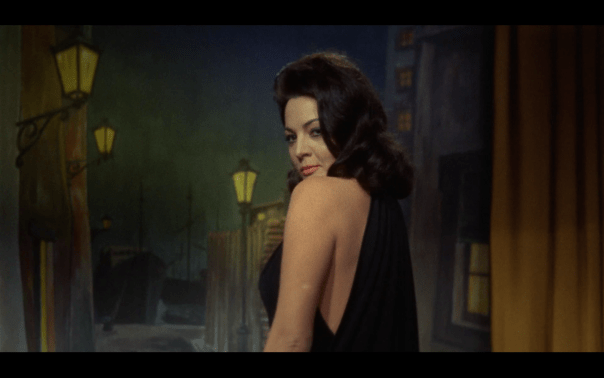
Carlos Sánchez Pérez, the celebrated painter, illustrator and graphic designer best known by the sounds of the first letter of each of his names, (Ce, ese, pe) — Ceesepe, — died of Leukemia in Madrid on the 7th of September. RIP. Ceesepe was the painter of the scoundrelous (is that a word?: ‘el pintor de lo canalla). He did the great credit sequence for Almodóvar’s Pepi, Luci, etc, the posters for Labyrinth of Passion, Entre Tinieblas and The Law of Desire.


His images are a vivid conjuring of the Spain of ‘La movida’ covering as they did albums, comics, advertisements for bands, all the night life of the Madrid of the period.

His work was even sought after outside Spain:

ce4

This is one of my favourite alternate posters he did for Law of Desire:

la-ley-del-deseo-iii

José Arroyo

A quick note on Ekaterina (TV Series, Russia, 2014-)

Ekaterina_(TV_series)

Those of you who are interested in historical drama might be interested in Ekaterina, a dramatisation of the transformation of a young and unimportant German Princess into Catherine the Great,  on Prime. It covers the same story and period as Von Sternberg’s The Scarlett Empress. It’s got excellent production and a charismatic cast with Empress Elizabeth (Julia Aug) foregrounded here much more than in other narratives. What made it so interesting for me is that it’s Russian; it was ostensibly a big hit there and much talked about. It’s interesting to see the story of Catherine the Great’s seizing of the Russian throne from a Russian point-of-view and difficult to see some of the faults outside that context; the patriotism is tied to a particular rough type of masculinity; the villain of the piece is Fredrick the Great (Hartmut Kurg), made villainous through his sodomy and his love of culture; likewise Peter III (Alexandr Yatsenko) is seen to be too interested in the arts, too unpatriotic and not masculine enough to inherit the throne. So all the homophobia etc of the culture is subtly evident throughout the work, but very glamorous and enjoyable to see in spite of that; and certainly informative.Marina Alexandrova gives a great star performance as Ekaterina: charismatic, beautiful, glamorous but also capable of conveying subtle, wide-ranging and even simultaneous and contradictory registers of emotion. She’s great.

The series is directed by Alexandr Baranov and  Ramil Sabitóv; and written by Arif Eliev and Elena Palmer

José Arroyo


Eavesdropping at the Movies: 89 – Searching


You wait all day for a new type of film and then two turn up at once. Hot on the heels of Unfriended: Dark Web, which we discussed a few weeks ago, is Searching, another desktop film (as we’re calling them). John Cho plays a father whose teenage daughter goes missing and conducts a search for her using her laptop and an old family PC.

It’s formally a little different from Unfriended, and we consider that even more formal difference might have suited the story. But the form does allow the film to cleverly and subtly address themes of generational difference and familial disconnection, and the drama the film builds is deeply involving.

We also remark upon the film’s surprisingly unique and welcome depiction of an Asian-American family, and Mike misremembers the origin of the term “woman in the fridge”.

The podcast can be listened to in the players above or on iTunes.

With José Arroyo of First Impressions and Michael Glass of Writing About Film.

Eavesdropping at the Movies: 88 – Red Sparrow

We catch up on home media with an erotic thriller that, while it fails to titillate, offers a fascinating portrayal of totalitarianism, sexuality, control and ownership of the female body and the way power is expressed through it, revenge, and more. Jennifer Lawrence stars as a ballet dancer forced into working for the state as a honeypot, tasked with seducing Joel Edgerton’s CIA operative for the purpose of smoking out his mole.

We are in agreement on the extravagant thrill of the opening, and the electifying darkness of the sex school’s complex dynamics and brutal methods. Mike is less interested in what occurs when the action moves into the field, and holds out hope for an ambitious (and insane) conclusion; José, more realistic, expounds on why the film’s developments should be interesting enough for Mike as they are. The plot grows convoluted, the visual design less expressive, but ultimately we love what Red Sparrow offers and wish we’d caught it when it was at the cinema.

The podcast can be listened to in the players above or on iTunes.

With José Arroyo of First Impressions and Michael Glass of Writing About Film.

Eavesdropping at the Movies: 87 – The Happytime Murders


Raunchy, vulgar, adult puppet comedy. You’d think it’d be right up our street. But The Happytime Murders is incompetent, embarrassing and infantile, with almost no comic instinct – the couple of moments that drew laughs from us did so primarily through sheer insistence and excess. Mike tries to reckon with what the difference is between the likes of this and something like Team America: World Police, which he likes but is superficially similar. José can’t comprehend how simply bad the filmmaking is. A conversation about Melissa McCarthy ensues, with differing opinions on her talent, but her box office appeal is not in question – at least until now.

The podcast can be listened to in the players above or on iTunes.

With José Arroyo of First Impressions and Michael Glass of Writing About Film.

Rocio Durcal films demarcate Spain’s transition to democracy.

Posting this merely to record a vivid illustration of changes in Spanish culture after the death of Franco in 1975. The first Rocio Durcal film on the left if from 1971, the one on the right is from 77. A lot happened very quickly.

José Arroyo

Eavesdropping at the Movies: 86 – The Equalizer 2


Quiet, meditative, sensitive, gradual. Not the first words that come to mind when considering 2014’s vigilante thriller The Equalizer – though they do apply at times – but certainly descriptors of its sequel, which we loved. Denzel Washington’s ex-spy, Robert McCall, who had managed to extricate himself from a life of state-sanctioned violence and murder, now works as a vigilante for hire, an avenger, conducts himself as a role model, mentor, and cheerleader for those whose lives with which he comes into contact.

We discuss The Equalizer 2‘s ethos of personal responsibility and self-improvement, and its meditative tone. José orates on his love of Denzel and his position as perhaps the most significant figure of black masculinity throughout the history of cinema. Mike adores Antoine Fuqua’s aesthetic of long lenses, shallow focus and moody lighting; a visual sensibility that looks wonderful and intimidating on the big screen, but somehow makes small screens seem big too.

While it’s certainly cut from the same cloth as the first film, The Equalizer 2 is more confident to bask in contemplation and even a kind of plotlessness, and it’s not quite what you’d expect. We think it’s great. Worth seeing while it’s in cinemas.

The podcast can be listened to in the players above or on iTunes.

With José Arroyo of First Impressions and Michael Glass of Writing About Film.

Pecado de amor (Luis César Amadori, Spain/Italy, 1961)

pecado de amor

Pecado de amor is camp enough at the beginning: Sara Montiel is Sor Bélen, a nun in a woman’s jail. A young female prisoner tries to commit suicide, and by way of comfort, Sor Bélen recounts her own past as Magda Béltran, cabaret singer and baddest woman in Madrid.

Screen Shot 2018-08-30 at 10.15.35.png
Terence Hill acting under the name of Mario Girotti

Magda’s story is thus told in flashback. We see her trifling with the affections of a young man, Ángel (a very young and handsome Terence Hill acting under the name of Mario Girotti here), so in love with her he forges his father’s name on a check to buy her an expensive bracelet. She has trouble offloading him. The father, Adolfo (Reginald Kernan) gets involved, tries to buy her off, but falls in love with her instead when he discovers she’s really a nice woman from a humble background trying to do her best to raise an illegitimate daughter.

Screen Shot 2018-08-30 at 10.19.29.png
A woman of the people, but fully coiffed and in fur.

She’s about to achieve happiness with Adolfo when the manager of her nightclub and semi-pimp gets involved and she shoots him in self-defence. She’s taken to jail and at her trial denies knowledge of Adolfo so as not to ruin his career and social position. She expects to be in jail for a long time and gives her daughter up for adoption. Adolfo, however, comes to her defence. But it’s too late. She’s free but has now lost her daughter, her lover and her career and is forced to go outside Spain to seek work, an opportunity to see her garnering applause in the great capitals of Europe.

Screen Shot 2018-08-30 at 10.21.37.png
Jailbird Sara


In Greece, she reunites with Adolfo, they cement their love but then he disappears suddenly. It turns out his wife, who’s been in a sanatorium in Switzerland for all these years, has recovered; and moreover it’s Adolfo who adopted her daughter and raised her to be a lady.  This is all too much for Magda. The nuns taught her to pray when she was in jail; and now she decides to find comfort in God.


If the beginning was camp, I nearly fell off my chair at the end (see above) where Sor Bélen is in Church, surrounded by a glorious choir, singing at her daughter’s wedding, as she stifles a sob whilst the camera cuts to her former young lover now married and with his wife, then to his father, the man she loved but can’t have, and then to a stained glass window in Church. The official sinner of the Spanish cinema of those years thus comes face to face with all her sins, in church, even as she gets redeemed and sanctified by a holy spirit voiced by the choir and pictured by the icons in the stained glass window. It’s as great an ending as Barbara Stanwyck’s in Stella Dallas, though this one will make you laugh rather than cry (but in a good way).

Like all Montiel vehicles post-El ultimo cuplé, the film is a musical melodrama. This one has great songs such as Gardel’s ‘El dia que me quieras’. Like other of her films such as El ultimo tango, Montiel does a number in drag, here Pichi (see clip above), which allows the film to show Sara to us as sinner, nun AND pimp; and as her stardom became international, she sang in other languages (here Sous les toits de Parisin French and Tinaini in agape in Greek); and as her stardom became international and the budgets of her films increased, there are little travelogue montages of beautiful and exotic places most of her audience couldn’t then actually visit but possibly dreamed of seeing (here mainly the Greek islands).

One of the IMDB comments notes that, ‘Maybe I saw another version, or the soundtrack is wrong, but I would like to make note that, in this movie, Montiel never sings “Madreselva” (she does in an album appropriately titled “El Tango”) neither (does) she sing(s) “Under the roof of Paris” since she did that in “La Violetera” (in Spanish for the Spanish version, french in the french version). This is not important but accurate.’ But for the sake of accuracy, I’d like to say that my version of Pecado de amor definitely contains both numbers, the first as part of her international tour (see the [suggestive] image on the left), and the second whilst in Greece (image below right).

In an hommage to Montiel from the TV series, ‘El Legado de…’ one of the commentators notes that one of the keys to Montiel’s appeal is that women liked her as much as men. Men may have been drawn to her sex appeal but women loved the clothes (some here by Balenciaga), the jewels, the hair-do’s, and the working out of so many sufferings women were earlier, then and later, condemned to. So many of her films are like a continuation of the ‘fallen women’ cycle of American films of the thirties but in gorgeous Eastmancolour and with highlights of music from the ‘Great Hispanic Songbook’. But unlike in America, in the Spain of the late fifties and through the sixties, sin had to be paid for not only by suffering but by, as we can see in one of the campest endings of all time, Christian redemption.

As I’ve noted before in relation to some of her other films, Montiel breaks the unspoken rule that the actor must never look directly at the camera and often does so in some of her numbers. See example below:

Screen Shot 2018-08-30 at 12.16.24.png

José Arroyo

La dama de Beirut (Ladislao Vajda, Spain/France/Italy, 1965)

I love musicals and I thought I’d seen every variant. But a musical melodrama about sex trafficking in the Middle East is a new one on me. Thoroughly Modern Millie (George Roy Hill, USA, 1967) was made later, a comedy, and the white slavery is something that happened to Mary Tyler Moore rather than Julie Andrews.

In La dama de Beirut, Sara Montiel is Isabel Llanos, a cabaret singer only recently sprung from jail for a crime she did not commit and on probation. Xandro ‘The Greek’ (Alain Saury) and Gloria (Magaly Noël), see her perform in a cheap dive in Barcelona, like what they see, and offer her a contract. She doesn’t have papers but they arrange to get her a false passport and get her on a boat to Beirut. There she meets and falls in love with Francis (Giancarlo de Luca). But when she arrives in Beirut it’s clear that she’s meant to be performing in a whorehouse and that singing is not the only service she’s expected to render.

Much of the film is about how the women around her are treated (drugged or beaten into performing) and deal, or fail to deal, with the circumstances they find themselves in: one of the younger girls commits suicide. Isabel, however, lets herself be picked up by an elderly gent, Dr. Costello (Fernand Gravey) a distinguished doctor, who will not only help her escape but get her to Paris and arrange a television appearance which will lead to her triumph at the legendary L’Olympia. Even better, he turns out to be the father of Francis, the handsome playboy she fell in love with on the boat.  You couldn’t make this up, except, and of course, someone did.

marcelino pan y vino

Ladislao Vajda the legendary Polish director who worked mainly in Franco’s Spain and directed one of the great hits of the period, Marcelino pan y vino (1955)about a young boy who talks to Christ, directs this briskly, with attention to the film’s main selling points: Montiel, the sound-track, and the production values.

la dama de beirut soundtrack

It’s now clear that all of Montiel’s films of this period, amongst the most successful and international in the history of Spanish cinema, follow a formula: The films are all musical melodramas rather than musical comedies. The story is strung along a series of songs chosen with great care and taste and with a best-selling sound-track in mind (see above): they include some of the great classics of the Spanish-speaking world and beyond; in this film: Perfidia, Frenesï, En Secreto (Cada noche un amor), Perdida (mulher de Ninguem), Les feuilles mortes, etc); that some of those songs will be about Spanishness (La Española, Adios Granada). That each of the songs turns into a very distinct type of number.

As you can see in the example above, where Montiel sings Perdida, most of it is shot in close-up, with Sara in 3/4 shots favouring the left side of her face. Much of the number takes place with Montiel in front of an audience shown through back-projection so that she seems to jump out of the screen, and with so much light on her face she stands out burning bright. During the number there will be cuts to Montiel in full-figure plans Américains, sometimes placed amongst the orchestra, that serve no other purpose than allow the audience to see her dress, usually cut to favour her legs. Once in a while she’ll do a little shimmy, but she really can’t dance. The focus on the close-up, most unusual in musical numbers, creates the affect of a dream-like self-absorption and narcissisim that invites devotion and worship, and as history demonstrates, has succeeded in obtaining it. Sometimes, and most unusually, Sara will also look directly at the camera (see below), as if she’s not only singing to the audience within the narrative, but directly to the viewer, to you. I’ve not seen this used so consistently, almost a trope in her films, in any other type of musicals.

Screen Shot 2018-08-28 at 11.36.09.png
Sara looks at the audience

The film has a whole host of ‘attractions’ for audiences of the period: the Balenciaga dresses Sara wears in the Spanish portions of the film, on location filming in Barcelona, Tangiers (passing for Beirut) and Paris, then the epitomy of all that was liberal, elegant and sophisticated (see below).


Screen Shot 2018-08-28 at 11.44.53.png
Sara, now free, and after her triumph at L’Olympia, walks through the Arche du Triomphe, with her love ten steps behind her, as is right.

The co-stars- —  Giancarlo Del Duca, Fernand Gravey, Alain Saury — are of course their own ‘attractions’ but I want to here single out Magaly Noël as the vicious Madam/ White Slaver Magaly Noël, who first rose to fame performing the great ‘Fais-moi mal, Johnny’ with Boris Vian (see clip below). Still no one should kid themselves: Sara’s films are all about Sara: singing, with new hairdos, couture clothing or risqué showbiz costumes, looking as glamorous as a whole team of people can make her and surviving what fortune throws her way in what then passed for glamorous and exotic locations in and out of Spain.

Of the film, Sara Montiel writes in her memoirs, ‘I re-encountered my first director, Ladislao Vajda, in La dama de Beirut. Vajda was one of the best directors in the history of Spanish cinema, and his films are the proof. Unfortunately, he died half-way through the filming and his assistant Luis María Delgado, took over the shooting. It’s not bad but is missing greatness.’


José Arroyo

Eavesdropping at the Movies: 85 – Dial M for Murder 3D

It’s Eavesdropping’s first anniversary and we celebrate with a film Mike’s been looking forward to seeing for almost a decade. Alfred Hitchcock’s Dial M for Murder was released at the tail end of the short-lived Fifties 3D craze, and has rarely been seen in that format (even at the time). But it rolls around every so often and this week came to the Electric, so we jumped at the chance to see it.

A dialogue-heavy chamber piece, Dial M for Murder might not seem the obvious choice for the spectacle of 3D, but it’s for this reason that we find it interesting. José, who has seen it before in 3D, recalls his previous impressions of the importance of items – the keys, the handbag, the scissors – and how the stereoscopy relates to it. Mike, who wrote on 3D film at university and has defended it ever since, places Dial M for Murder in context, comparing it to both 3D of the time and today, suggesting how it was ahead of its time.

Away from the 3D, we find the film slight, a trifle, though enjoyable throughout and respectful of the audience – the film’s methodical nature is lovely. We find some of the performances disappointing, and one in particular delightful. We’re glad we saw it, even though José’s spectacles were broken.

José’s note on Dial M for Murder can be found here: https://notesonfilm1.com/2013/08/07/a-note-on-dial-m-for-murder/

Recorded on 23rd August 2018.

The podcast can be listened to in the players above or on iTunes.

With José Arroyo of First Impressions and Michael Glass of Writing About Film.


Vértigo (Antonio Momplet, Mexico, 1946)

vertigo

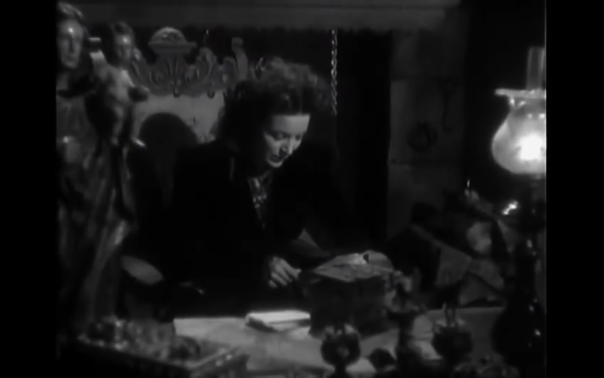
The lesser, and less well-known Vertigo, a maternal melodrama from Mexico. As the credits unfold Mercedes (María Félix) is shown coming out of a Church in a wedding dress, though she tells her Nana that to her she’ll always be the Niña Mercedes, her little girl; in the first two minutes of the film, she has a baby, buries her husband and takes control over the large land-holding that the off-screen narrator tells us will cause her so much pain and so many tears. A minute after that, Mercedes’ daughter Gabriela (Lilia Michel) is off to school and Felix is shown old, hair humbly braided in the back of her head, with a shawl and wearing glasses. A minute after that, the daughter is back with a fiancée, Arturo (Emilio Tuero) ready to get married. The daughter convinces the mother to get rid of her mourning, and then the real trouble begins.

Screen Shot 2018-08-23 at 09.23.05.png

Out of her drab mourning clothes Mercedes looks, well like María Felix, and of course Arturo is overpowered by his desire for her. She finds herself responding as well. Meanwhile, the letters to the lawyers never seem to get there, the wedding dress doesn’t arrive, the wedding keeps getting more delayed, until one day by the river, a shot of crashing torrent of water from the nearby waterfall informs us that Arturo and Mercedes have had sex, even whilst Gabriela is wondering why  the arrangements for her wedding are taking so long.


The dialogue is a combination of bad melodrama — -‘I don’t want to live chained to a lie’; ‘let’s love for a moment that must last us a lifetime’ – and folk sayings in Spanish that are taken as wisdom: ‘Speak. Don’t keep the words inside until they bite your soul’; ‘boda retrasada, boda quebrada/ a wedding delayed is a broken wedding’; ‘Happiness if for those that find it’; ‘What fault have I of what life has made of me?’; ‘Sooner or later everything arrives in this life, even that which we don’t want to..’


When Gabriela confronts he mother about the delays to her wedding and tells her that it’s poisoning her life, Gabriela responds with: What do you know of a poisoned life, a life without hope without promise, what know you of bitterness and pain’. And the daughter responds with ,’You don’t’ know what it’s like to love someone as I love Arturo’. But, of course, she does. She goes to church to pray for guidance, ‘Don’t let me arrive at desperation, destroy this fire that consumes me.’ She decides to do the right thing and tells Arturo he must marry her daughter. ‘My daughter is once more my daughter; I can look her in the eye).

Screen Shot 2018-08-22 at 17.31.06.png
framed by Virgin and child

Arturo, however, doesn’t feel the same way. He pretends he’s ill with fever, and on a rainy night when something needs to be fetched, he lets his intended go via a bridge that he knows is faulty and will collapse, which is what happens. After her daughter’s burial, people start shunning her at church, she begins to lose employees who now don’t want to work for her. She thinks it’s abut gossip regarding her affair with Arturo. When her old Nana tells her there are whisperings all over town, she doesn’t let her speak, saying only ‘You too have come to judge me?’ A priest in Church appears to announce that ‘Let he who is without sin cast the first stone’. But then, as she’s meeting with potential buyers for that rich land she herself can no longer get anyone to work, she finds out the truth, and tells them ‘we have the duty to repair that which needs repairing’ referring not to the un-mended bridge that killed her daughter but to Arturo. He returns just as she’s reading his love letters to her. The villagers have found he’s back, know the truth and are out to lynch him. But, in a great ending, framed at the beginning by an icon of virgin and child (see clip below), she asks him to close the door of the hacienda, takes out a gun and kills him herself. The last line in the movie is ‘The justice of God has been done in this house; now let the justice of men be done’. To have sex with your daughter’s fiancée is bad enough but she draws the line at murder.

Screen Shot 2018-08-22 at 16.51.24.png
Only God can judge her

Vértigo is another of those María Felix films that seems relatively unskilled but remains riveting. And not only for her presence. Whilst watching it,  I was trying to think of why this film, so choppy and clichéd, a trite melodrama in which one sees the plot coming a mile away, nonetheless retains its power. Sometimes it shows  things so outrageous one bursts out in laughter (the waterfall sequence). Then, one imagines what an audience in the mid 40s trying to make sense of the meaning of one’s life and actions through the film might get out of it, and one sees the film slightly differently.

Screen Shot 2018-08-23 at 10.53.56.png
Offering God’s Justice in her house before giving herself up to the laws of men.

Cheap as the film is, and short as it is (about 1h10mins) it’s a total morality tale about what is right and wrong, about knowing that and still not adhering to social convention because one’s desires don’t always fit into the socially prescribed box, about understanding and forgiving that; about drawing lines between different kinds of transgressions (desire vs. murder); about the difference between law and justice; about what community can and can’t offer and how variable each of those offerings might be over time. In other words these films deal with issues that continue to matter to people and in which the filmmakers find a  form through which to directly communication with their audience. It’s its own form of achievement.

A very young María Felix plays a mother of a full grown daughter much earlier than her Hollywood counterparts; She’s the mistress of transgression not only in her films but extra-diagetically. In fact Emilio G. Riera, according to Paco Ignacio Taibo in Maria Felix: 47 pasos por el cine, ‘expressed a general sentiment with an amusing phrase: Here melodrama finds a new sub-genre; that dedicated to showing how María Félix’s beauty is in fact a calamity foisted onto the human species’ (Taibo, p.80).

José Arroyo


La devoradora (Fernando de Fuentes, Mexico, 1946)

María Felix is Diana de Arellano, a man-eater, an adventuress, a bad woman, voracious for sex, jewels and money; and without feeling. She’s going to marry Don Adolfo Gil (Julio Villarreal) because he’s rich. It’s a plus that he’s old and with a heart condition: he won’t last long. Whilst she’s stringing the old guy along, she can’t quite get rid of the young kid she’s also seeing, Pablo (Felipe de Alba).

When her maid asks her to choose, she tells her she won’t let go of either; she wants the young one, and the old one is convenient. She’s so untroubled by her plan that, on the eve of her wedding she remains blissfully asleep, surrounded by silk and satin. Her maid has trouble waking her up but is so devoted, she takes the grapes and lovingly feeds her as she dreams, an opportunity to photograph Felix looking glamorous and sensuous (see clip below), and a camp moment to rival Mae West’s ‘Eulah, peel me a grape.’


It’s only when the maid informs her all her new wedding purchases have arrived that she gets excited and out of bed.  But just as she’s about to look at her wedding dress, Pablo comes and threatens her with a gun. She dares him to kill her and he ends up shooting himself. If he’d been a man rather than a kid, she’d have killed her instead of himself, she later says. She calls her fiancée and asks him to bring a doctor, Miguel de Uribe (Luis Aldás), who turns out to be his nephew. She’s so bad that even as they wait for help, and with the corpse next to her not yet cold, she can’t help imagining how beautiful she’s going to look once she puts on all her lovely new things.

They’ve got to get the body out of his flat without anyone seeing them but first they go to a nightclub to show themselves in public. The song they hear is Agustin Lara’s great ‘Aventurera,’ sung by Salvador García

‘Vende caro tú amor, 
aventurera 
Da el precio del dolor, 
a tú pasado 
aquel, que de tus labios, 
la miel quiera 
Que pague con diamantes su pecado 

Sell expensively your love,

Adventuress

Give the price of your pain

To your past

He who wants the honey of your lips

Must pay your sin with diamonds

Must pay your sin with diamonds.

Miguel keeps looking at Diana, telling us and her, that he knows the truth about her and that truth is being sung to us now. She sees him looking at her massive diamond engagement ring and knows exactly what he’s thinking of her (see clip above). When they return, Maria and the nephew get rid of the corpse in the outskirts of town but he’s lost his hat. Whilst he goes out to search for it, she drives off, leaving him to walk alone through the city where he might be seen. When he returns, she tells him the reason for leaving him was she couldn’t trust herself with him. They make love and she offers to keep on seeing him on the side whilst she marries his uncle. She needs luxury, comfort, lots of money (see clip below).

The nephew’s aghast at what a bad woman she is and goes to confess to his uncle. In the meantime, she calls her fiancée and tells him that the nephew made a pass, is drunk, and besotted with her. The fiancée confronts the nephew but his heart begins to act up in the middle of the confrontation and the nephew decides to lie in order to save the uncle’s life.  Miguel also tries to give himself up but the police, rightly thinking he’s trying to impede the wedding, tell him they’ll follow up on the investigation in due time. Miguel thus goes to kill Diana, who, beautiful and already in her wedding gown, dares him to. But Miguel is not a kid like Pablo. He shoots and kills just as the police arrive to question Diana. The film ends with a pan across Diana’s luxurious apartment which rests on her face as the notes to ‘Aventurera’, previously heard in the nightclub scene, play over the last shot

A poorly made film, a male fantasy, a representation of female power in which the protagonist uses all the stupid clichés believed of women by a certain type of man to trick them into doing her bidding. Heartless, selfish, using men only to further her true love, the finer and more expensive things in life, María Félix is beautiful and magnetic. The whole film is so excessive it’s camp. Yet, one can also easily understand from this trashy, lurid film why Félix was an object of veneration; why hers is such a powerful star persona; in fact it’s one of the key films that cemented  it. She’s a beautiful woman who dares what others won’t: living out the audience’s fantasies in silk sheets and satin pillows. Why can’t one have sex AND money. Why should she have to pay with her life over a young fool that shot himself for love?  For the rest of her career, the man-eating femme fatale would be the first thing one thought of  when her name was brought up. This was one of the key films that, for better and worse, cemented that view. Very bad and hugely entertaining.

José Arroyo


Incantesimo tragico/Oliva/ Hechizo Tragico/Tragic Spell (Mario Sequi, Italy/France, 1951)

A film sold under many names and not a real success under any of them. A Gothic melodrama from Italy. María Félix is the beautiful Oliva, from a well-to-do family. Her widowed mother has chosen an aristocrat for her to marry, old, ugly and very rich. But on the annual feast day in which women are allowed to choose who they dance with, thus announcing their intended, she goes for Pietro (Rossano Brazzi), the King of the pickaxe, a well to do tenant farmer, who dreams of finding a way to bring to life the dry and rocky hills around his land.  ‘Will you know how to forgive me,’ she asks him on their wedding day. The film will tell us at the end.


When Pietro takes Oliva to his grandmother to get her blessing for their wedding, she judges Oliva, pretty …but too pretty. On the night that Pietro’s father Bastiano (Charles Vanel) returns from the jewellers, where he’s gone to get Oliva her wedding pearls, thunder and lighting waylay him into a deserted castle (see clip above). The thunder opens up the earth and he there finds a disused Roman temple, full of cobwebs, with mice running around, and in a tomb he finds a legendary treasure, ‘Il Tesoro dei Guarcialupi’ . He goes to his mother for advice and she tells him that gold calls to gold, it’s the demon’s opera. One of the jewels has an image of a beautiful woman, it’s a cursed image, and he must go immediately to the Chapel on the Mount and offer all of it to the Virgin so that she may protect him and his family from the curse. But Bastiano is greedy and doesn’t listen.  The rest of the film is precisely about the unfolding of that curse.

Félix once more plays a woman who destroys everything she comes into contact with. Rosanno Brazzi, often so dull, here at least looks soulful and handsome. Charles Vanel is hard, menacing, sober – completely great – as the father who thinks his son is out to assassinate him and kills him first. The film is beautifully shot by Piero Portalupi, immaculately lit, and with some interesting imagery. But it never quite comes to life. The Gothic elements are well imaged (see clips above but also image below) and there’s an interesting dream sequence (see clip immediately above) which also announces the beginning of the curse taking action. But the film creates little tension or suspense. Massimo Serato is Berto, Pietro’s brother and also in love with Olivia, It’s a well-made film but rather lifeless and much less enjoyable than mediocre films from the height of her Mexican period like La Devoradora which are made with less skill but imbued with a pulp, lurid life that makes them great fun to watch.

Screen Shot 2018-08-22 at 09.26.57.png

José Arroyo


Eavesdropping at the Movies: 84 – BlacKkKlansman

A lively debate on  BlacKkKlansman, Spike Lee’s comic drama based on the true story of Ron Stallworth, a black police officer who infiltrated the Ku Klux Klan in the 1970s. With limited time, we dig right in. We discuss the film’s point of view on culture and cinema; John David Washington’s performance, the influences we can see in it, and whether a more charismatic star might have made the film even more powerful; our attitudes to Lee’s pamphleteering and the pros and cons of propagandistic cinema; the film’s direct address of Trump’s America and its tragic, somewhat surprising ending; and more.

We question whether the film’s comic treatment of David Duke, head of the KKK, carefully undercuts our delight in mocking him or dangerously indulges it. Duke is rendered a figure of fun in some notable and hilarious scenes, but the film ensures we recognise that he has never gone away. And Mike is particularly affected by Adam Driver’s character, a Jew in name only who, through being threatened by the KKK and confronted by Ron, is forced to reckon with his identity and the fact that it’s been easy for him to ignore it for most of his life. (The Howard Jacobson article he references is linked here: https://www.theguardian.com/world/2018/apr/07/howard-jacobson-jews-know-what-antisemitism-is-and-what-it-isnt-to-invent-it-would-be-a-sacrilege)

As we acknowledge in the podcast, we unfortunately missed the first few minutes of the film, which is only one reason we want to see it again. Mike is bursting with thoughts and can’t get them all out; Jose vacillates on the film’s artistic value, though not its cultural value. There’s much, much more to consider in BlacKkKlansman than we were able to in this podcast and we shall return to it.

The podcast can be listened to in the players above or on iTunes.

With José Arroyo of First Impressions and Michael Glass of Writing About Film.

Eavesdropping at the Movies: 83 – Mamma Mia! Here We Go Again

It’s been out for four weeks and finally we decide to grapple with Mamma Mia! Here We Go Again. Mike has just recently caught up with the first film, a jukebox musical that José disliked, and both are disappointed with the sequel’s lack of skill or even instinct as to what makes a musical actually work. Mike points out some elements of story structure he found original, and Jose is impressed with how the film juggles its vast cast of characters, but they disagree on Cher. (Spoiler: José really loves Cher.)

Neither comes away really having enjoyed the film, though neither is really the target audience either. But there’s fun to be had in critiquing it!


The podcast can be listened to in the players above or on iTunes.

With José Arroyo of First Impressions and Michael Glass of Writing About Film.

Eavesdropping at the Movies: 82 – The Darkest Minds


There’s a lot to remark upon in The Darkest Minds. It’s a story of a society broken down by fear of children and a group of young survivors negotiating their own development and making their way towards liberation. It is representationally interesting, the central character a young black girl through whose eyes the film is filtered.

Depictions of children being rounded up into concentration camps disturbingly echoes the actions of ICE under the Trump administration, not to mention countless other examples of segregation and incarceration of peoples throughout history. The central theme of a young woman making herself invisible in order to satisfy others and smooth her path through life is worked through intelligently and tragically.

It’s visually uninspiring, and lacks charm and flair, but The Darkest Minds is an interesting and heartfelt teen movie for an increasingly enlightened young audience.

The podcast can be listened to in the players above or on iTunes.

With José Arroyo of First Impressions and Michael Glass of Writing About Film.

Les heros sont fatigués/Heroes and Sinners (Yves Ciampi, France/W. Germany, 1955)


A young and sexy Yves Montand and the ever beautiful María Félix in Les Héros sont fatigués/ Heroes and Sinners (see below). As you can see from the posters above, the filmmakers hoped the sex would sell the film’s more complicated themes of de-colonisation in Africa, German unification, European conciliation, and what happens to men after the struggles they sacrificed their lives to are ended. A melodrama/adventure film/ political statement that does not quite fully work but that is so fascinating I plan to watch it again. María Felix is introduced being pushed around by her partner, a former collaborator and anti-semite, for sleeping with black men. Curd Jürgens won the best actor prize for his performance at the Venice Film Festival that year for this film. Gert Fröbe is at least as good as a concentration camp survivor.

Screen Shot 2018-08-12 at 15.02.35

Frantz Fanon would publish Black Skins, White Masks in 1952; Ralph Ellison’s Invisible Man also came out in ’52; Aimé Césaire Discours sur le colonialism in ’55; Chinua Achebe’s Things Fall Apart in ’58. This film is made amidst ideas on race and colonialism that were live in that period, by filmmakers who were actively engaged, who contributed to the development and dissemination of political and aesthetic ideas, from the left, in the public sphere of post-war France.

Director Yves Ciampi had made a famous film on the Liberation of Paris, Les compagnons de la gloire — La division Leclerc dans la bataille, headed the Film Technicians Trade Union, and would go on to marry Japanese actress Keiko Kishi. One of the writers, Jacques-Laurent Bost, might be more famous to cinéastes today as the brother of Pierre Bost, the screnwriter François Truffaut singled out for his ire in ‘Une certain tendance du cinéma Francais’. But those more familiar with French culture would know him as the war correspondent hired by Albert Camus to cover the fall of Berlin. He was at the liberation of Dachau and was one of the first people to write about the Holocaust. He was also, along with Jean-Paul Sartre and Simone de Beauvoir, a founding member of Le nouvel observateur, a key member of that particular group of existentialists and the lover of Simone de Beauvoir. Montand was for most of his life a life-long leftist, closely associated with the communist party, and his brother Julien Livi was a member of the Communist party, one of the leading post-war Trade Unionists and Genera Secretary to the ‘Fédération du Commerce, des Services de de la Distribtuion (CGT) de l’alimentation’ from 1956 to 1979. Even María Félix, who seemed to skate elegantly over politics and had seemingly had no qualms about working in Fascist Spain or Peron’s Argentina just a few years earlier, was then involved with Jean Cau, Sartre’s former secretary and a writer who’d published Maria-Nêgre, a novel about the tragic love affair between a black GI and an Italian girl set during the libertion of Naples and published in 48.


The filmmakers lean left, most of them with personal experience of racism,  and perhaps because of that the film engages with and dramatises  issues of racial relations in a post-colonial setting with a seriousness and relative depth that is rare in cinema, particularly the cinema of that period. As the title card that precedes the film (above) tells us: ‘This film is set in in one of the black republics of Africa. In these republics, young and independent, a black elite educated abroad has introduced a language and way of life far removed from African morays. In spite of that, these countries have preserved most of their ancestral traditions.’


Les heros sont fatigués is ostensibly an adventure story about a former flier now stuck piloting merchandise across Africa, who gets his hands on a shipment of diamonds, and decides that selling them for himself might be his ticket back home. But the colonial structures and relationships of this former British colony keep getting in the way. In the first few minutes of the film, Michel Riviére (Montand) hitches a ride to Free City, the capital, stops off at the house of the only contact he has and this is what we’re shown (see clip below): the camera follows him into the house, what we hear is American blues, one of the young women working is topless,  the young child is naked, there’s a rooster on top of the fridge. It all looks ‘pittoresque,’ othered, overly atmospheric, and arguably racist in  the way it fails to distinguish between black American and African cultures.  But then, listen to the head of the household’s speech. ‘He was nothing more than a thief…We have no need of your kind here. Our country is young and we are free. Can’t you understand?’ Visually and aurally the film gives mixed signals. But there’s no misinterpreting the speech, one that frames the rest of the film just as powerfully as the text before the film’s beginning excerpted above.


María Félix gets a great introduction — her transgression here is that she has a black lover, Sidney (Gordon Heath), and without hiding it from her partner either. But the scene illustrates why in order to understand the power and force of María Félix’s stardom, one has to see her in her Mexican films. There she’s presented as a force of nature, a beauty both indigenous and rare with a touch of the divine and more than soupçon of devilry. She’s ‘Woman’ in all her many guises and everything happens around her. Here, she’s the illustration of a theme.

As you can see in the clip below, we see her through Montand’s look. He goes to the door, moves towards the window and spies on François (Jean Severin) screaming at Manuella ‘You’re white. You belong to us’. ‘Shut up stupid’. The fight continues in voice-over but the camera follows Montand as he now goes into the bar and asks if they have a room. ‘If she lets herself be touched by her Negro, I’ll shoot her and him with her.’ Then note how everyone’s gaze turns to Montand, François moves to occupy the space between Manuela and Michel. And then in the next shot, she moves in between the two men, foreshadowing what is inevitable, ie, the two stars of the film start a love affair,  as François says, ‘She’s sleeping with black men. Can you imagine? Her!’ And then another character, who we will learn is a Republican ex-combattant from the Spanish Civil War, intervenes and says of François. ‘He’s got a good stomach. In France he ate jews; here it’s Blacks’, thus linking  them together in the film’s thematisation of race. I wanted to draw attention to this because it’s Félix’s introduction; and in many ways it’s very powerful. But the focus is almost entirely on Montand or on the question of miscegenation and racism. She barely gets a word or a look in.


The themes of colonisation in its changing forms is shown in different ways. At the very beginning as Michel enters free city, we see a big billboard advertising Coca Cola (see frame grab, below left). Later on when Sidney (Gordon Heath) enters the bar to propose marriage to Manuella and François reaches for the gun, its symbolically shown to us as surrounded by American dollars (see frame grab, below left). One empire has left but another is taking over with a different form of colonisation but just as murderous. One of the characters says ‘there’s only two white women here and they’re both colonised by blacks.’ But that’s missing the point, which is that one master is giving way to another, and that Coca Cola can serve one empire just as military presence did a previous model.


Like in Clouzot’s The Wages of Fear — Montand’s first big hit in the movies — much of the narrative here revolves around a bar in which  series of outcasts stuck in a third-world country pass the time and scheme on how to get out. But Les héros sont fatiguées is more overtly political: François Severin (Jean Servais) is the collaborationist judge who helped send Jews to the gas chambers;  Hermann (Gert Fröbe) is a former German politician sent to a concentration camp by the Nazis for his politics, now stuck repairing watches in Africa; there’s also more than a hint that Pépé (Manolo Montez) fought on the losing side of the Spanish Civil War (see the posters around his bed, bottom left); and of course Wolf Gerke (Curd Jürgens) Michel’s equal and opposite, is revealed to be a former Luftwaffe flyer (see the image of the lighter, below right), who fought on the opposite side.


The film offers a conciliation between Hermann and Wolf, they both dream of German re-unification. And the last image in the film will be that of Wolf and Michel supporting each other as they make their way out of the country and into a new life as partners (see below).

Screen Shot 2018-08-12 at 15.27.33

I was very intrigued by the scene below, as structurally and thematically complex one. In the scenes at the bar Michel and Wolf have a deal going but Michel is hoping to double-cross him by escaping on a boat. Wolf and Hermann, previously poles apart in politics, use Christmas as an occasion in which to offer a toast for peace and for German unification. It’s also where Manuella has to tell Michel that François has sabotaged their escape plans and hopes to find another solution by visiting Sidney, her black lover and a powerful person in the country’s new order. It’s a bit after this that Michel and Wolf will realise their commonality in spite of having fought against each other in the war and bond.

The scene cross-cuts between the bar inside, the populace at large celebrating in their own indigenous customs; and the Europeanised hoi polloi adopting foreign customs in dress and dancing. It’s the last bit, where Manuella goes into the haute-bourgeois black party that intrigues me, partly because it must have been so rare to see in the cinema in 1955. Here the tables are turned. Manuella, who started off life as a Consul’s daughter, is here looked upon as the outsider, slightly trashy, out of place and possibly not knowing her place. It’s where Sidney throws Manuella physically out of the party and Villeterre (Gérard Oury), the fixer who’s arranged to buy Michel’s diamonds at a fixed price, tells Sidney, ‘Come on, come on my friend. Make a gesture. Be jealous, by all means. But don’t be racist.’ How are we meant to look at this scene? Are we meant to be with Sidney and the black bourgeoisie?; are we meant to look down on them?; are we meant to think they’re gotten too big for their britches, have forgotten to be African and badly imitating a culture that doesn’t suit them? I’m not sure. Yves Ciampi is not a good enough director to be both clear and complex in his filming of the scene. But for me this is the scene the film is worth seeing for.

There are other attractions of course, Maria Felix exhibiting a degree of flesh that must have been shocking then. She’s constrained by being limited to only one outfit but she does what she can for her fans by making her hair do the work expected of stars (see below right). Montand is very sexy also. Curd Jürgens and Gert Fröbe are excellent. The score, featuring some of the biggest hits of the era (Edith Piaf et) is a delight. The fim’s aims and its politics are admirable. But it’s well filmed without being exciting (The Wages of Fear is a useful contrast here as well). It’s also a bit muddled in that it loses the action/adventure strand of the film in its attempt to include the politics and the picturesque. And yet, without being great, it’s interested me enough to write 2,000 words on it.


José Arroyo


Eavesdropping at the Movies: 81 – Unfriended: Dark Web

Designed entirely to simulate the desktop interface of a Macbook, Unfriended: Dark Web enthusiastically adapts modern fears of surveillance and digital stalking to the horror genre (drawing on the style of 2014’s Unfriended, to which this is a sequel). It’s a stylistic achievement that never once feels unconvincing, even if the route the plot takes is far from unpredictable.

We discuss the way the film hides its most graphic elements and is able to create tension and horror from the very opposite, and the wonderful evocation of distracted attention, with the main character jumping between Skype, Spotify, Facebook and more, that remarkably never becomes overwhelming or incomprehensible. Some of the performances aren’t the best, and we each found the film uninvolving at different points and for different reasons, but generally speaking we enjoyed the film’s experiment and found it interesting.

We also discuss the two producers, each of whose names caught our eyes, and how Dark Web fits in to the current cinema programme.

The podcast can be listened to in the players above or on iTunes.

With José Arroyo of First Impressions and Michael Glass of Writing About Film.

My Man and Gay Divas

In  La Violetera (Luis Cesar Amadori, 1958) Sara Montiel’s rich aristocratic lover (Ralf Vallone) leaves her when after the death of his brother he inherits lands and title, must protect the family name, and can no longer afford to be seen with a lowly seller of violets/ music hall singer. She runs off and of course ends up triumphing in all the great capitals of Europe. The film offers a montage of her singing different songs across different capitals and in Paris the song she offers is ‘Mon homme’, which she begins singing in Spanish and then switches to French to flatter her audience.

Watching her sing the song made me wonder if there is an international repertoire that gay divas have in common. The song was introduced by Mistinguette in 1920. Arletty,  the glorious gay diva who, after being tried as a collaborator for having a Nazi lover during the occupation famously retorted, ‘My heart is French but my ass is international,’ also covered it. The song is basically sets to music the indelible character in Marcel Carné’s Hôtél du Nord minus  the ‘atmosphere, atmosphere!’: ‘on the ground we argue, she says in the film, but in bed we communicate, and on the pillow we understand each other’ (see excerpt below):


If you understand French, it’s worth listening to the two French versions side by side.

The song was made famous in America by Fanny Brice in 1921 and was such a hit she  even starred in a film by that name in 1928. It was famously revived for Funny Girl by Gay Diva extraordinaire Barbra Streisand below. Again it’s worth comparing Brice’s version to Streisand’s (below):

Another such comparison is that of the Billie Holiday and Diana Ross versions. Diana, or Miss Ross to you, had famously played Holiday in Lady Sings the Blues. And Holiday’s great version of the song, had been a big hit in the thirties without quite eclipsing Brice’s version in the culture at large. It’s again instructive to look at these two versions together. Ross looks completely glam, interacts with the audience, says how hard the song is for her to sing. She takes the audience through the mechanics of the song. Her voice is unique, instantly recognisable, one of the great glories of American pop. But I don’t believe a word she says; and neither does she. ‘I hate that line’ she says after singing ‘He Beats Me too’.  Compare it to Holiday’s version below. It brings up all kinds of feelings, confused and contradictory ones, about a person and a way of life that can’t be contained by camp. The hurt bursts through.


Now let me take you to what started this off in the first place, Sara Montiel’s version. As you can see below, if it was difficult to believe what Ross was singing in the clip from Vegas above. Montiel doesn’t even try to communicate what the song is saying. Her number is so far removed from what Billie Holiday is conveying that it’s as if  from a parallel universe. With Montiel, it’s all about the dress, the hairstyle, the gestures; it’s all about her; and about inciting audience adoration. It’s all artifice, exaggeration, style, decorative beauty. Camp. ‘My job is not to be a good singer or a good dancer or a good actress. My job is to be a star’. And as you can see, the clip below puts you in no doubt of that fact. There’s nothing there about a woman who loves a man so she’s willing to share him, or get beaten up by him. He wouldn’t dare. That downtrodden woman in the song is transformed into an object of admiration and worship. She glistens, she beckons, she offers looks. It has nothing to do with the truth of the song. Montiel transcends hurt and oppression with gorgeous gowns and glamour. Glitter eclipses hurt.

José Arroyo

Piel Canela/ Cinnamon Skin (Juan José Ortega, Mexico, 1953)

There were so many rats in the hovel Marucha (Sara Montiel) grew up in that they chewed off half her face. Being ugly means she’s the victim of men’s callousness. This has made her embittered and turned her into a gangster’s moll. She’s got a lovely figure though and can still shake a living from singing in cabaret by wearing a Veronica Lake peekaboo hairstyle that hides her disfigurement.

This works most of the time. But occasionally blokes in the audience clock the chewed-up face, make nasty catcalls, taunt her, laugh at he until she collapses from the stress of it all.   This happens one night when a plastic surgeon’s in the club. Dr. Carlos Alonso (Manolo Fábregas) takes her on as a client hoping that a lovely face will help her develop a lovely soul. But once she sees how the Doctor’s transformed her into …well…Sara Montiel, its nertz to that. She becomes ‘Piel Canela/Cinnamon Skin’, a successful cabaret singer and very expensive prostitute who’s out to get her revenge on men.

Screen Shot 2018-08-15 at 12.57.11.png


The Doctor becomes besotted with her but she couldn’t live in his world she tells him, and he wouldn’t know how to live in hers. All the surgery’s signified is that she’s moved from a world of cheap vices to a world of expensive ones. But soon they fall for each other. And just as quickly, her past catches up with her. Julio (Ramon Gáy), the head of the gang Marucha used to run around with and a bit of an old flame, forces the Doctor to operate on him and change aliases. The Doctor has no choice but is disgusted with Marucha for tricking him into a situation he finds dishonourable and illegal. Months later, he turns himself over to the police. To redeem herself for having sunk the Doctor’s career, Marucha goes in search of her gangnster ex. He’s got a new face but she recognises the origami he’s in the habit of making with bits of paper, tricks him into admitting his previous crimes to the police and as a result the Doctor is shown to be innocent and cleared of his. She gets shot in the crossfire. They put her on the operating table again but this time it’s too late and the distraught Doctor can do nothing. Prayer, and the nurse who’s quietly had the hots for him all along will be his only consolation.

This is hackneyed material, much better executed with more means by  Gustaf Molander (1938)and George Cukor (1941) in the two versions of A Woman’s Face. And Bergman and Crawford are certainly better in the part than Montiel is here. Everything about this film is strictly B. That said, Montiel is really the main reasons to see this film. It’s one of the 14 she did in four years in Mexico. It was a huge success in Mexico, partly due to Montiel, partly due to the famous and eponymous bolero. Though it’s not Montiel who gets to sing the famous song, she does get to sing three other songs in the film, and her relative success in doing so would pave the way for  extraordinary run of hit musical melodramas in Spain from ’57 onwards as well as her extraordinary recording career.

As a side note, this is also one of three films she made in this period shot in Cuba and with Havana as a location. For those of you, like I, who love Havana and might have reveries about what it was like in the early 50s, the film is a special thrill (see below). Even the Cine Yara appears in back projection.


José Arroyo