Monthly Archives: May 2020

Eavesdropping at the Movies: 228 – To Be or Not to Be


Listen on the players above, on Apple Podcasts, or on Spotify.

Carole Lombard and Jack Benny lead chaos in 1942’s To Be or Not to Be, Ernst Lubitsch’s classic black comedy set amongst a group of actors turned resistors in occupied Poland. Considered to be in bad taste at the time, it was, to say the least, a bold film to make, one that mocked the very real and active threat of the Nazis to their faces. It’s also endlessly witty and truly hilarious, generous and kind. It’s a treat.

We think about it in comparison to other satire, in particular that of Mel Brooks, who José argues has an aggression and contempt that Lubitsch avoids, while Mike suggests that their work shares an absolute unambiguity as to the targets they set and the messages they convey. But there’s unquestionably a remarkable sensitivity of tone to To Be or Not to Be, as well as an effortlessly executed intelligence in plotting, with the love triangle of the opening leading cleverly, smoothly, and unpredictably, into the unmasking of a Gestapo spy.

José can’t speak highly enough of Lubitsch, above whom there sits nobody in the pantheon of the great filmmakers. And Mike likes him too.

P.S. Corrections and clarifications: Mike begs your forgiveness for incorrectly claiming that Sid Caesar famously played a comedy Nazi on television in the 1950s. He in fact played a German general. A comedy German general.

With José Arroyo of First Impressions and Michael Glass of Writing About Film.

Polina Zelmanova — ‘Horrible Bodies: The (new) Politics of Horror’

A video essay that is densely textured visually and aurally, intellectually sophisticated, in dialogue with a rich body of feminist theory that leads to a brilliant analysis of Julia Ducournau´s Raw


Horrible Bodies: The (new) body politics of horror

In an interview, Tom Sherak once said, “Film is a reflection of society, both present and past.”[1] Indeed, by watching a film one can gauge a lot about its time – current events, social relations, structures, but also anxieties. This video essay focuses on the latter by looking at the horror genre which has been discussed as a metaphorization for social fears, permeating through its literal and metaphorical monsters.[2] While the cause of fears evolves as seen in some of the opening examples in the video, death and the human condition is always at the forefront. However, as Cruz convincingly writes, even more than death horror evokes anxieties surrounding the body.[3] Its autonomous, uncontrollable nature evokes fear, furthered by how much of our identity is associated with our body and what consequently happens to our understanding of who we are when our bodies are compromised. Despite this fear being common amongst all humans, when it comes to the representation of the bodies in horror the potential unity and identification with different bodies, evoked by the genre’s physical nature,[4] is replaced by the prominence of their difference. It controls who we can identify with, and ultimately reflects which bodies are socially positioned as the ideal human subject.[5]

The essay focuses on the female body as an example of a body that is othered in horror. The example is particularly interesting in that in film men are seen and heard twice as often as women with the exception of horror,[6] demonstrating their strong presence in the genre. Ironically, it is also the genre that has been most cruel to them. The history of women in horror has had an increasing interest amongst feminist academics in film and there have been several key texts published on the various tropes.[7] The essay narrows down the focus by concentrating on the female monster, due to the double-othering she experiences. While most postmodern horror explores the body as monstrous, tapping into aforementioned anxieties, feminist critique suggests that there is “a tendency…to generate paranoia about the social world around constructions of monstrous women”.[8] This is charted in the video-essay through the ways her body is presented as horrifically different in opposition to the white heterosexual male subject considered to be the ideal.[9] The video-essay concludes with a case study of a feminist horror film Raw (Julia Ducournau, 2016) as an example of a film that draws on the history of representation in horror to offer a progressive take on body politics, paving a way to enforcing identification with the female body.

The first section of the video-essay is divided into three parts, demonstrating the othering at play in the female monster. It draws on Laura Mulvey’s male gaze theory[10] to explain the emphasis on difference. This concept is first applied to female victims in slasher films, one of the most literal examples of disavowal. It then draws a comparison of the female’s difference to the monster who is equally responsible for castration anxiety in horror in that he is “a biological freak with the impossible and threatening appetites that suggest a frightening potency”.[11] However, while the male perceives a threat of difference, as Linda Williams argues, “the female look…shares the male fear of the monster’s freakishness but also recognises the sense in which this freakishness is similar to her own difference.”[12] In the Phantom of the Opera (Chaney, 1925) example, the first mid-shot demonstrates Christine’s active look. This look is then punished through the horror she faces when the Phantom is unmasked, revealing his ‘freakishness’. The example emphasises their mirroring facial expressions which underlines their similarity within the genre.

The third part brings the two together in the ultimate iteration of castration anxiety seen in the female monster, or what Barbara Creed famously calls the monstrous feminine.[13] The term implies “the importance of gender in the construction of her monstrosity”[14] seen in the examples demonstrating a link of monstrosity to her sex difference through puberty, sexuality or the female sex organ.

The essay goes on to use Kristeva’s theory of abjection as another way of othering the female body. She characterizes the abject as that which “disturbs identity, system, order […and] does not respect borders, positions, rules.”[15] It works within patriarchal structures to separate the human from the other, the fully constituted subject from the partially formed one.[16] The essay draws on Creed’s application of abjection to monsters showing their disturbance of social systems through transforming monsters which are both man and beast, non-human monsters[17] or have a non-heteronormative identity.[18] The culmination of the two shows the monstrous feminine as doubly abject and therefore doubly other. The essay uses Carrie (De Palma, 1976) as a key example to demonstrate the connection. It begins with a strong male gaze embodied by the camera; however, with the sign of menstruation (a sign of abjection and difference) the tone shifts. The violence that erupts, evoked in the hand-held shaking camera, frames both Carrie and the previously sexualized girls as monstrous revealing “the horror of what might be seen when the penetrative camera glimpses the sight of sexual difference the male voyeur can’t acknowledge”[19] further distancing the female body. The video essay parallels Carrie’s realization of her monstrosity to the shower scene in Psycho (Hitchcock, 1960) emphasizing the parallel of the two monsters – a literal one (Psycho) versus the woman’s body (Carrie).

The emphasis on the female sex as a cause or link to her monstrosity others her, making her unrelatable for any audience: for men she is the threatening Other, and for women she is distanced by the male gaze. What Raw does then is use narrative and visual strategies to enable a female gaze, creating audience identification with the woman and monster, simultaneously shifting horror’s body politics as seen in the second part of the video essay.

The film follows Justine, an aspiring vet struggling to fit in to her new environment. After being force-fed a raw rabbit kidney during an aggressive hazing ritual, the life-long vegetarian awakens to unknowingly suppressed desires for human flesh. The film does several things to de-other the female protagonist’s body and re-instate her as an identifiable subject, challenging horror traditions shown in the first half of the video-essay. This is particularly done by taking the female body out of the patriarchal context, transforming it into a universally human one. The first is Ducournau’s choice of monstrosity as cannibal rather than anything supernatural, grounding her as a human. The essay shows several comparative examples of the othering of cannibals in films such as presenting them as scientific experiments (Rabid[20]), non-human (grandfather or distancing mask in Texas Chainsaw Massacre[21]) or primitive savages (Cannibal Holocaust[22]). As evident in the latter two examples, the shots frame them as a group whom which the human is pitted against.[23] In opposition, Justine’s cannibalism is presented as more natural – a biological reaction to meat consumption and unlike the traditional monstrous feminine not linked to her female difference.[24]

Identification with her body is furthered by Justine’s positioning as a victim of injustice and a violent environment, echoed in Rappis’s commentary on the film: “[its] absurdity is not found in a woman discovering she has an appetite for flesh, but in the disorienting environment she is forced to navigate before she can begin to understand what is happening to her”.[25] Additionally, Raw eliminates the male gaze by making the male protagonist a homosexual. The examples of his point of view shots demonstrate a neutral gaze, lacking Mulvey’s characteristics of the male gaze.

This close identification means that when Justine’s ‘transformation’ occurs, her body becomes relatable despite it being a female one and can consequently be used as a ground for the exploration of non-gendered bodily anxieties. This is furthered as seen in the examples of its trivial struggles which in themselves are more relatable. The video essay visually lists examples such as her rash, shivers, throwing up hair, hair pulling and need to climax, the close-ups and shallow focus of the shots enhancing the horror of the body, raising issues of anxiety of its uncontrollable nature. These images inspire “raw, unmediated reaction”[26] typical to the physicality of body horror.

By challenging traditional identification by creating a connection with a body that is other (both as monster and woman), the film questions the boundaries dominant power structures create in privileging certain bodies over others. The video-essay demonstrates parallels throughout the film between human bodies (including white, male subjects) and animal bodies, the similarities evoking abjection in the former, challenging traditions of the fully formed white, male subject. By the end of the film, Justine becomes more human than ever before, not because of her body but by placing her human identity into her moral choice of deciding not to kill, rather than relying on an uncontrollable body to justify her subjectivity. This is highlighted through one of the end images of Justine and Alexia’s faces merging in the glass between them – a symbolic crossing of the border between the abject and subject, emphasizing Creed’s point that “abjection is not something of which the subject can ever be free.”[27] The essay prompts how this progressive example necessitates a shift in the relationship of bodies with subjectivity, which can have wider implications regarding representation, identity and equality beyond the genre.

Filmography (In order of appearance)

Nosferatu (F.W. Murnau, 1922)

Frankenstein (James Whale, 1931)

Ring (Hideo Nakata, 1998)

Alien (Ridley Scott, 1979)

The Strangers (Bryan Bertino, 2008)

In a Quiet Place (John Krasinski, 2018)

The Wicker Man (Robin Hardy, 1973)

The Shining (Stanley Kubrik, 1980)

Final Destination (David R. Ellis, 2000)

Hereditary (Ari Aster, 2018)

The Human Centipede 3 (Tom Six, 2015)

Rabid (The Soska Sisters, 2019)

Saw (James Wan, 2004)

Night of the Living Dead (George A. Romero, 1968)

Dracula’s Daughter (Lambert Hillyer, 1936)

Spider Baby (Jack Hill, 1967)

Psycho (Alfred Hitchcock, 1960)

Un Chien Andalou (Luis Bubuel, 1929)

The Slumber Party Massacre (Amy Holden Jones, 1982)

My Bloody Valentine (George Mihalka, 1981)

Halloween (John Carpenter, 1978)

It (Andres Muschietti, 2017)

Scream (Wes Craven, 1996)

The Phantom of the Opera (Lon Chaney, 1925)

American Werewolf in London (John Landis, 1981)

The Fly (David Cronenberg, 1987)

A Nightmare on Elm Street (Samuel Bayer, 2010)

Jennifer’s Body (Karyn Kusama, 2009)

Cat People (Paul Schrader, 1982)

Teeth (Mitchell Lichtenstein, 2007)

Alien Resurrection (Jean-Pierre Jeunet, 1997)

Ginger Snaps (John Fawcett, 2000)

Contracted (Eric England, 2013)

Carrie (Brian De Palma, 1976)

Get Out (Jordan Peele, 2017)

The Babadook (Jennifer Kent, 2014)

A Girl Walks Home Alone at Night (Ana Lily Amirpour, 2014)

The Love Witch (Anna Biller, 2017)

Raw (Julia Ducournau, 2016)

Silence of the Lambs (Jonathan Demme, 1991)

Rabid (David Cronenberg, 1977)

The Texas Chainsaw Massacre (Tobe Hooper, 1998)

Cannibal Holocaust (Ruggero Deodato, 1980)

Thelma (Joachim Trier, 2017)


Bibliography:

Anon, ‘Julia Ducournau: Cannibalism, Feminism & Growing Up’, 52-Insights 30 March 2017, accessed 19/11/2019

Anne Billson, ‘Does the ‘female gaze’ make sexual violence on film any less repugnant?’, The Guardian 2 August 2019, accessed 10/11/2019

Barnes Kateryna, ‘Monsters in Modern Horror Culture Reflect Social Anxieties’, Folio 30 October 2017, accessed 6/1/2020 https://www.folio.ca/monsters-in-modern-horror-culture-reflect-social-anxieties/

Beth Younger, ‘Women in Horror: Victims no More’, The Conversation June 26 2017, accessed 10/11/2019 https://theconversation.com/women-in-horror-victims-no-more-78711

Clover Carol, Men, Women, and Chain Saws: Gender in the Modern Horror Film (Princeton, NJ : Princeton University Press, 2015)

Cowan Gloria & O’Brien Margaret, ‘Gender and survival vs. death in slasher films: A content analysis’, Sex Roles Volume 23, Issue 3-4 pp187-196 (see also Donnerstein et al. 1987)

Cruz Ronald Allan Lopez, ‘Mutations and Metamorphoses: Body Horror is Biological Horror’, Journal of Popular Film and Television, Volume 40, 2012, Issue 4

Donnerstein, E., Linz, D., & Penrod, S. The question of pornography: Research findings and policy implications (Free Press, 1987)

Erin Harrington, Women Monstrosity and Horror Film: Gynaehorror (New York: Routledge, 2018)

GD-IQ results https://seejane.org/wp-content/uploads/geena-benchmark-report-2007-2017-2-12-19.pdf

Horeck Tanya & Kendall Tina, The new extremism in cinema: from France to Europe (Edinburgh: Edinburgh University Press, c2011)

Jenkins David, ‘Julia Ducournau: ‘The way losing your virginity is portrayed in most movies is very outdated’’, Little White Lies 2 Apr 2017, accessed 18/11/2019 https://lwlies.com/interviews/julia-ducournau-raw/

Kristeva Julia, Powers of Horror: An Essay on Abjection (New York City: Columbia University Press, 1980)

Lindsey Shelley Stamp, ‘Horror, Femininity and Carrie’s Monstrous Puberty’, Journal of Film and Video Vol. 43, No. 4 (Winter 1991)

Kernode Mark, ‘Raw review – cannibal fantasy makes for a tender dish’, The Guardian 9 April 2017, accessed 18/11/2019 https://www.theguardian.com/film/2017/apr/09/raw-julia-ducournau-cannibal-fantasy-review-kermode

Kernode Mark, ‘The female directors bringing new blood to horror films’, The Guardian 19 March 2017, accessed 20/11/2019 https://www.theguardian.com/film/2017/mar/19/the-female-directors-bringing-new-blood-horror-films-babadook-raw-prevenge

David Macdougall, The corporeal image: film, ethnography, and the senses (Princeton, N.J.: Princeton University Press, 2006)

Mulvey Laura, Visual and Other Pleasures 2nd edition (Hampshire: Palgrave Macmillan, 2009)

Grant Barry Keith (Ed.) The dread of difference: gender and the horror film (Texas: University of Texas Press, 2015)

Palmer Tim, ‘Style and Sensation in the Contemporary French Cinema of the Body’, Journal of Film and Video Vol. 58, No. 3 (FALL 2006)

Rappis Sydney, ‘’Raw’ gnaws trough expectations of female sexuality’, Washington Square News, March 6 2017, accessed 9/12/2019 https://nyunews.com/2017/03/06/raw-gnaws-through-expectations-of-female-sexuality/

Rebecca Pahle, ‘Female Sexuality Has always been monstrous at the movies’, MashablaUK June 07 2018, accessed 17/11/2019 https://mashable.com/2018/06/07/female-sexuality-horror-movies/?europe=true

Shah Mbe Vikas, ‘The Role of Film in Society’, Thought Economics 19th June 2011, accessed 6/1/2020 https://thoughteconomics.com/the-role-of-film-in-society/


Shepherd Jack, ‘Raw director Julia Ducournau talks cannibals, humanity, and fainting’, The Independent 30 March 2017 accessed 14/11/2019 https://www.independent.co.uk/arts-entertainment/films/features/julia-ducournau-interview-raw-director-cannibalism-humanity-fainting-sick-a7658651.html

Subissati Andrea, Films of the new French extremity : visceral horror and national identity (Jefferson, North Carolina : McFarland & Company, Inc., Publishers, 2016)

Thomas Lou, ‘Raw director Julia Ducournau: ‘I’m fed up with the way women’s sexuality is portrayed on screen’’, BFI April 6 2017, accessed 15/11/2019 https://www.bfi.org.uk/news-opinion/news-bfi/interviews/raw-director-julia-ducournau

Thompson David, ‘Pleasures of the Flesh’, Film Comment 42(6): 42-45

Quandt, James, ‘Flesh & blood: Sex and violence in recent French cinema’, Artforum Print Issue: February 2004 https://www.artforum.com/print/200402/flesh-blood-sex-and-violence-in-recent-french-cinema-6199

Interviews:

Build Series, ‘Julia Ducournau Discusses “Raw”’, March 9 2017 https://www.youtube.com/watch?v=b62YWx8xy0w

Film at Lincoln Centre, ‘’Raw’ Q&A | Julia Ducournau & Garance Marillier | Rendez-Vous with French Cinema’, 21 March 2017 https://www.youtube.com/watch?v=nz-jba7x_JE

HeyUGuys, ‘Exclusive Interview: Julia Ducournau on the cinematic taboo of Raw’ April 6 2017 https://www.youtube.com/watch?v=wrbUcmMmDkk

Tiff Originals, ‘JULIA DUCOURNAU — Creating the disturbing world of RAW | TIFF 2016’ Oct 28 2016 https://www.youtube.com/watch?v=vJyXT3ArC64

[1] Vikas Shah Mbe, ‘The Role of Film in Society’, Thought Economics 19th June 2011, accessed 6/1/2020 https://thoughteconomics.com/the-role-of-film-in-society/

[2] Jason Wallin quoted in Kateryna Barnes, ‘Monsters in Modern Horror Culture Reflect Social Anxieties’, Folio 30 October 2017, accessed 6/1/2020 https://www.folio.ca/monsters-in-modern-horror-culture-reflect-social-anxieties/

[3] Ronald Allan Lopez Cruz, ‘Mutations and Metamorphoses: Body Horror is Biological Horror’, Journal of Popular Film and Television, Volume 40, 2012, Issue 4

[4] On the physicality of the genre see David Macdougall, The corporeal image : film, ethnography, and the senses (Princeton, N.J.: Princeton University Press, 2006)

[5] Macdougall referencing Barbara Creed talks about how horror’s bodily monstrosities are “at once the threatened body of the spectator, exploded or invaded or defiled by abject substances” but depending on what kind of body it is, it could also be “a reaffirmation of the spectator’s purity and bodily integrity.” (Macdougall 2006, p16)

[6] GD-IQ results https://seejane.org/wp-content/uploads/geena-benchmark-report-2007-2017-2-12-19.pdf

[7] Examples include Clover 1992; Williams 1996; Creed 1993

[8] Lianne McLarty, ‘Beyond the veil of Flesh’ in The dread of difference : gender and the horror film (Texas: University of Texas Press, 2015) p262

[9] This stems back to ancient Western philosophy (see Plato Republic)

[10] Mulvey draws this term in her description of a phallocentric society where the man holds the plce as ‘bearer of the look’ (Hill and Gibson, 1998; p119)

[11] Linda Williams, ‘When the Woman Looks’ in The Dread of Difference: Gender and the Horror Film (Texas: Univeristy of Texas Press, 2015) p22

[12] Ibid. p22-23

[13] Barbara Creed, ‘Horror and the Monstrous Feminine: An Imaginary Abjection’ in The Dread of Difference: Gender and the Horror Film (Texas: University of Texas Press, 2015) p65

[14] Ibid. p3

[15] Julia Kristeva, Powers of Horror: An Essay on Abjection (New York City: Columbia University Press, 1980) p4

[16] Barbara Creed, ‘Horror and the Monstrous Feminine: An Imaginary Abjection’ in The Dread of Difference: Gender and the Horror Film (Texas: University of Texas Press, 2015) p8

[17] The example in the video essay is of the alien child which although is non human, disturbingly shares characteristics of a human creating an uncanny effect.

[18] Barbara Creed, ‘Horror and the Monstrous Feminine: An Imaginary Abjection’ in The Dread of Difference: Gender and the Horror Film (Texas: University of Texas Press, 2015) p11

[19] Shelley Stamp Lindsey, ‘Horror, Femininity and Carrie’s Monstrous Puberty’, Journal of Film and Video

Vol. 43, No. 4 (Winter 1991), p35

[20] Cronenberg, 1977

[21] Hooper, 1974

[22] Deodato, 1980

[23] In Cannibal Holocaust an actual POV shot is used from the ‘documentarian’s’ perspective, and in Texas Chainsaw the long-shot of the cannibal family makes them the threatening force against their victim (the shot is also POV-esque as it frames them the way she sees them).

[24] Although there are two points when her cannibalism is triggered by a sexual interaction, I would argue that it is not inherently sexual. Instead the cannibalism in these incidents is merely reactionary to being so close in proximity to her hunger’s desire. Further evidence to this is Alexia’s road kill scene which has no sexual connotations.

[25] Sydney Rappis, ‘’Raw’ gnaws trough expectations of female sexuality’, Washington Square News, March 6 2017, accessed 9/12/2019 https://nyunews.com/2017/03/06/raw-gnaws-through-expectations-of-female-sexuality/

[26] Tim Palmer, ‘Style and Sensation in the Contemporary French Cinema of the Body’, Journal of Film and Video

Vol. 58, No. 3 (FALL 2006), p22

[27] Barbara Creed, ‘Horror and the Monstrous Feminine: An Imaginary Abjection’ in The Dread of Difference: Gender and the Horror Film (Texas: University of Texas Press, 2015) p10

Georgia Smithies: Wes Anderson and Fatherhood

How does Wes Andeson represent fatherhood? Georgia Smithies tells us in this lovely and perceptive video essay. That  ‘an Andersonian father, if he´s ruined his child´s life, must also be able to fix it in some way, dead or alive,´ is but one of the many insights offered in this enjoyable video.


Wes Anderson and Fathers – Author’s Statement


Wes Anderson is critically revered for his visual style, with his auteur status hanging on elements such as his use of symmetry, colour and, of course, the Futura font. Often overlooked however are ‘Anderson’s themes – While his films could be regarded as shallow and pretentious, the honesty and emotion with which Anderson and his collaborators write their familial dynamics should also be held with great consideration. Anderson’s fathers in particular stand out as key elements of his works, and are a continuous and repeated feature, with all nine of his films including some kind of element of fatherhood or paternity.


The Andersonian father, as argued in this video essay, is generally either a ‘surrogate’ or ‘absentee’ father, with almost all of his paternal characters fitting into either or both of these categories. A ‘surrogate father’ is a character who is not biologically related to their ‘child’, but forms a familial type bond with them, whereas an ‘absentee father’ is a character who is biologically related to their child, but is absent from their life either physically or emotionally. In both categories, fathers tend to be somewhat aloof, and are all invariably flawed, but are not difficult to like. A key aspect of Anderson’s narratives of fatherhood is that the fathers and/or their children grow as a result of their familial relationship.


Anderson also frequently touches on Oedipal themes, with both The Life Aquatic with Steve Zissou and Rushmore giving centrality to a complex love triangle between a father, his ‘son’ and the woman they both love. Joshua Gooch discusses Anderson’s Oedipal narratives, including his tendency towards ‘paternal castration’, however he also claims that these ‘paternal plots’ can be considered limiting  to ‘what his characters – and films – can do.’[1]


Anderson’s daughters could perhaps be suggested to be somewhat represented, which is here explored through Suzie Bishop in Moonrise Kingdom and, more primarily, Margot Tenenbaum in The Royal Tenenbaums. Both women lack a sense of identity, tied in various ways to their strained relationships with their fathers. In particular, Margot’s loss of her fingertip – a representation of her sense of identity – while seeking out a family, is reflective of her inability to slot comfortably into any family she seeks out, with both her adoptive, biological, and marital families seeming unsatisfactory for her.


The establishing of an ‘intertextual fatherhood’ is key to Anderson’s films, as we recognise certain actors as performing specific roles – namely that of fatherhood for actors like Bill Murray. Murry is the most essential example of Andersonian fatherhood, as he plays a father character in at least four of the eight Wes Anderson films he appears in, and thus becomes emblematic of the paternal figure in Anderson’s work. This plays a significant role in The Darjeeling Limited, where fatherhood is a vital element of the plot – while the Whitman brothers’ father does not appear physically, he is ever present in the brothers’ hints of mourning for him. Murray, who appears only briefly in the film, is abandoned on a train platform by Peter Whitman in the film’s opening sequence, and according to Kim Wilkins ‘shadows the thematic presence of the Whitmans’ deceased father.’[2] This is illustrated through a comparison between the first and final scenes of The Darjeeling Limited. He thus eventually represents an abandonment of Anderson’s usual patriarchal characters when the Whitman brothers abandon their father’s suitcases on another train platform. Peter Whitman must abandon the influence of his own father in order to become one himself, his wife due to give birth to a son.


Anderson’s focus on fatherhood should thus not be overlooked when discussing his films as it often plays a vital role. While his visual style is one of the main draws of his films, Anderson’s narratives are capable of being deeply effective, owed in part to the attention he draws to fathers and their complexity17.


Bibliography


Kunze, Peter C. (ed.), The Films of Wes Anderson: Critical Essays on an Indiewood Icon, (New York: Palgrave Macmillan, 2014)


Gooch, Joshua, ‘Objects/Desire/Oedipus: Wes Anderson as Late-Capitalist Auteur’, in Kunze (ed.) The Films of Wes Anderson, pp. 181-199.


Wilkins, Kim, ‘Cast of Characters: Wes Anderson and Pure Cinematic Characterisation’, in Kunze (ed.) The Films of Wes Anderson, pp. 25-39.


Filmography


The Life Aquatic with Steve Zissou. Dir. Wes Anderson, Prod. Touchstone Pictures

American Empirical Pictures, (2004).


Rushmore. Dir. Anderson, Prod. Touchstone Pictures, American Empirical Pictures, (1998).


Moonrise Kingdom. Dir. Anderson, Prod. American Empirical Pictures, Indian Paintbrush, (2012).


The Royal Tenenbaums. Dir. Anderson, Prod. Touchstone Pictures, American Empirical Pictures, (2001)


The Darjeeling Limited. Dir. Anderson, Prod. Fox Searchlight Pictures, Collage Cinematographique, American Empirical Pictures, Dune Entertainment, Cine Mosaic, Indian Paintbrush, Scott Rudin Productions, (2007)

[1] Joshua Gooch, ‘Objects/Desire/Oedipus: Wes Anderson as Late-Capitalist Auteur’, in Kunze (ed.) The Films of Wes Anderson, pp.181, 183

[2] Kim Wilkins, ‘Cast of characters: Wes Anderson and Pure Cinematic Characterisation,’ in Kunze (ed.) The Films of Wes Anderson, p. 33.

Jim Thorpe — All American (Michael Curtiz, 1951)

jim Thorpe

Jim Thorpe — All American is one of three films Burt Lancaster did in the 1950s that explored discrimination against native peoples in the US and that in their modest way pushed the boundaries of representation in American popular culture. Apache (Richard Aldrich, 1954) and The Unforgiven (John Huston, made in 59 but released in 1960) are the others. ‘When white man lick Indian, he win battle’, one of Thorpe’s room-mates tells him, ‘Indian lick white man – ‘massacre’. The film’s very title harks back to Knute Rockne — All American (Lloyd Bacon, 1940), and the discrimination of native peoples, who should be equal by law, is the overt theme of the film, as indicated from the very first with Burt Lancaster’s star entrance (below):


Burt-star-entrance-Jim-Thorpe

The film is a sports biopic of Jim Thorpe, an Algonquin from Oklahoma Territory who went to Carlisle Indian Industrial School in Pennsylvania to keep a promise to his father. With the help of football coach Glen Scobey (“Pop”) Warner (Charles Bickford), Thorpe, whose native name is ‘Bright Path’, became one of the legendary athletes of the day, excelling in football, baseball and track, for which he won several medals at the Olympics. He was stripped of those medals for having played baseball ‘professionally’ during the summer, although he barely made enough to cover food and rent whilst playing, underlining the class underpinnings of ‘amateur.’ He recovers professionally, overcoming the debacle with the medals and racial discrimination, only to be brought low once more by the death of his only son and the subsequent dissolution of his marriage. Near the end of the film we see him in full cigar-store Indian drag, desultorily mc-ing a  dance marathon in 1930. Burton is great at expressing a deadness in the eyes that speaks of struggles to maintain dignity in the face of alienation and humiliation.

Screenshot 2020-05-04 at 07.10.21


Curtiz symbolises the break-up of Jim Thorpe’s marriage via the bed, and Burt, star that he is, manages to find the pin-lights with his eyes before collapsing in grief:

burt-finds-pinlights

Alex K. Rode, Cutiz’ biographer writes that ‘The picture received generally positive reviews and grossed nearly a million dollars over its cost. Jim Thorpe — All American was characteristic of Curtiz’ postwar Warner films: a well-made, profitable picture that quickly faded from the public’s memory’.

Curtiz was the top director at Warners in the classic period for a reason. The integration of stock footage into the banquet scenes that bookend the film and in the Olympics sequence are seamlessly integrated, and must have considerably cut down on the film’s budget. The editing of the sports sequence, often in mid-motion to give flow to Lancaster’s movement and whoever doubled for him, is also very fine. It has some lovely bits, such as here below with Burt, Phyllis Thaxter and the baby.

burt-with-baby-swoon

The more emotional moments are in striking expressionist shadows that are very characteristic of the ‘shadow’ pay one sees throughout Curtiz’ oeuvre.

Screenshot 2020-05-03 at 15.15.48


…and the compositions, superbly filmed by Ernest Haller, are original and striking:


In spite of all the above, the film also feels emotionally crude, pat, everything beautifully directed as to image and pacing but lacking in depth, understanding or delicacy. It vividly conveys the outline of feeling, but it always feels like it’s walloping the main point at the expense of the subtler, more complex, more contradictory dimensions of character and story. Burt Lancaster, who’s never given the credit he deserves, is superb.


José Arroyo

Jingyi Zhang on Parasite

Just when you thought you knew everything there was to know about Parasite: a  video essay which succeeds in showing how camera movement and the recurrence of strongly symbolic images are deployed to demonstrate distinctions between classes in Bong Joon Ho´s Parasite. 


The Revelry in the Basement: Bong Joonho’s Parasite and Class discussion in films


With an explicit use of camera language and recurrence of strongly symbolic images, Bong has made a clear distinction between the two classes. I want to examine closely at the oriented camera angles, distinct lighting for each layer of space, meticulous design of spaces (with a reference to Bong’s previously internationally-well-known work, Snowpiercer, which has divided classes into three horizontal layers, while Parasite does the same thing vertically.)[1], and how people’s movements and interactions are limited and altered in the closed environments, leading to a discussion about the borderline between the classes, which Bong refers as smells.

Clothes, language and environment etc. are some of the more commonly used referents to iconographically denote class in film[2], since smell is a more abstract sense that cannot go through the screen for people to feel, but, in Parasite, Bong consistently brings up the discussion about smell, as a referent of the insuperable gap between the classes, and eventually, what triggers the poor to murder the rich is the simple action of the rich covering up the nose. What is the smell of the poor essentially? Are the characters aware of the smell because there is truly a smell of the damp semi-basement and the crowded subway, or their natural instincts and psychological suggestions imply so? There is more to question about.

While Snowpiercer has a more romanticized ending that a dystopia film could possibly have, in which the extremity of class struggle takes place on a train, isolated from reality, and ends with a destruction of orders, Bong pursues a more realistic and neutral approach in Parasite. Bong himself has described Parasite as “a comedy without clowns and a tragedy without villains.” The name of the film, Parasite, also indicates a more mutualistic and symbiotic relationship between the two classes, rather than an absolute predominance of one over another. There is no overthrow or elimination of any class reached upon the denouement, because the fact of class solidification remains, not just in the film, but as a continuation into the actual social status in South Korea.

Bong uses many class-specified actions to make the audience sympathetic towards the destitute Kim family: Mrs. Kim(Jang Hye-jin) folds pizza boxes for a living; Mr. Kim (Song Kang-ho) , unemployed; their daughter and son cannot afford going to university despite their intelligence; the tramp pees outside their window; the whole family scrambles around the house to find perfect spots to steal Wifi from their neighbors. It seems like the extreme of ignominy, but also the truest and simplest living condition a family in the lower class could possibly have. However, the audience are also unable to stand in total opposition to the wealthy Park family as the poor continuously take advantage of the rich’s innocence and their reliance on nepotistic relationship.

Some critics have described South Korea as a capitalist country in economy, a socialist country in social structure, and a communist country in mindsets, which might provide an explanation to the existence of the third class like the housekeeper of the rich, Moon-gwang (played by Lee Jung-eun), who has stayed in the luxurious villa even before the Park family moves in.[3] She is also the housekeeper of the previous owner, a famous architect. She stays in the house and accompanies the rich long enough to gain an illusion that she also belongs to the upper class, but her husband trapped in the basement continuously reminds her of the poverty and darkness. The sense of in-betweenness might be a more relatable feeling for most of the modern Koreans. Up until 2017, over 860000 people were still living in semi-basements in urban areas. They enjoy a little bit of sunshine from the small windows, but they also suffer from inundation when a storm comes. Shoplifters by Hirokazu Koreeda and Burning by Lee Chang-dong are usually being brought up in discussion with Parasite.[4] As the only few of the internationally recognized Asian films in recent years, these three have a realistic touch on the marginalized group without exception, and the issue of social solidification never seems to be resolved in any of them.

The film’s first significant climax takes place when the Kim eventually occupy the house for a hilarity when the Park are away, which I found an amazing resemblance in Luis Buñuel’s Viridiana, in which the beggars also makes the house a mess when Viridiana and Jorge are absent. The social phenomenon of class solidification also seems to osculate in the two cross-time films, both winning the Palme d’Or at the Cannes Film Festival. Buñuel’s rather aggressive perspective towards the upper class was due to an almost authoritarian control of the church in 1960s Europe.

It seems to be a mutual false fantasy of the poor to enjoy the transient indulgence, and it generates a sharp contract with the birthday party of the Park’s little son in the latter part of Parasite. The rich always try to remain a superficial elegance, while the lower class often do their utmost to threaten and trample on each other if possible. They mock and despise the rich, because of their impuissance to break the boundary between classes, and they pry into each other’s secrets, and treat each other with malevolence.

Regarding a more general theme that the two films share, I’d like to cite Pam Cook’s idea of gendered power relations, not just within family structures, but in a broader context.[5] Maternal figures, although seem to be apotheosized or given a priority in a societal sense, ironically still being the vulnerable ones, and this is mainly due to their disadvantage in sexual relationship. Viridiana, although being introduced as a Mother Maria-like figure, trying to bring redemption to the homeless, becomes a victim, who is almost being raped by who she offers food and job, to indicate the collapse of religion.  Mrs. Park, as the hostess of the family, is almost in charge of everything, while her husband is absent from the kids’ education and daily life or the management of different housework, but when they are having sex on the couch, she begs Mr. Park to buy her drugs. Both female figures are innocent and powerless, and unable to take part in a bigger struggle.

Last but not least, Bong uses many symbolisms throughout the film, and they further serve the idea of class struggle. The smallest son of the Park family, Park Da-song, is the first to recognize the similar smells of the Kim family and the first to decipher the Morse code from underground, and such sensibility and consciousness are attributed to his experience as a boy scout, and such experience has made him almost obsessive with the Indian icons. Ostensibly, it is Bong’s salutation to his idol, Akira Kurosawa’s 1963 film, High and Low, in which a similar Cowboy and Indian’s game is played among the kids. Being put in the content of Parasite, it seems more like a metaphor of imperialism. The process of gradually replacing ‘the natives’ is similar to colonization, and in a broader sense, capitalism and class distinction that the upper-class advocates is a result of globalization.

The rock that Ki-woo’s rich friend gives him as a gift also changes from a meaningless decoration, to a symbol of luck, to a burden that reminds them about the poverty, to a threat to their own life and eventually becomes the weapon to kill, but what it essentially means is still a question I want to explore.


Bibliography

Bui, Hoai-Tran, Bong Joon-Ho Breaks Down That ‘Mission Impossible’ Scene in ‘Parasite’, https://www.slashfilm.com/parasite-scene-breakdown-bong-joon-ho/?fbclid=IwAR3S6o6ALxiVacDvlNCnRtc7tjtmLGhjKnh4k4t_FSa1IwRMfixs6k8U1Jk

Chen, Brian X., ‘Parasite’ and South Korea’s Income Gap: Call It Dirt Spoon Cinema, https://www.nytimes.com/2019/10/18/movies/parasite-movie-south-korea.html?module=inline

Pam Cook, The Cinema Book, 1985

Hayward, Susan, Class, Cinema Studies: The Key Concepts (2017), p.85-87

Lovelace, Grace, ‘Parasite’ Is ‘Snowpiercer’ For Families Across The Economic Divide, https://www.romper.com/p/parasite-is-snowpiercer-for-families-across-the-economic-divide-19198994

O’Falt, Chris, Building the ‘Parasite’ House: How Bong Joon Ho and His Team Made the Year’s Best Set, https://www.indiewire.com/2019/10/parasite-house-set-design-bong-joon-ho-1202185829/

Seong-kon, Kim, Is Korea a capitalist country? http://www.koreaherald.com/view.php?ud=20141118001115


Filmography

Snowpiercer. Dir. Bong Joonho. South Korea. 2013

Parasite. Dir. Bong Joonho. South Korea. 2019

Viridiana. Dir. Luis Buñuel. Spain, Mexico. 1961

Shoplifters. Dir. Hirokazu Koreeda. Japan. 2018

Burning. Dir. Lee Chang-dong. South Korea. 2018

High and Low. Dir. Akira Kurosawa. Japan. 1963

[1] Chris O’Falt, Building the ‘Parasite’ House: How Bong Joon Ho and His Team Made the Year’s Best Set, https://www.indiewire.com/2019/10/parasite-house-set-design-bong-joon-ho-1202185829/

[2] Susan Hayward, Class, Cinema Studies : the Key Concepts(2017), p.85

[3]Kim Seong-kon, Is Korea a capitalist country? http://www.koreaherald.com/view.php?ud=20141118001115

[4] Brian X. Chen, ‘Parasite’ and South Korea’s Income Gap: Call It Dirt Spoon Cinema, https://www.nytimes.com/2019/10/18/movies/parasite-movie-south-korea.html?module=inline

[5] Pam Cook, The Cinema Book, 1985

https://vimeo.com/user70827005/review/414425105/437624ba98

A note and gif on The Scalphunters (Sidney Pollack, 1968)

The Scalphunters


The Scalphunters is anti-racist Western directed by Sidney Pollack. Burt Lancaster is the trapper whose furs, a whole winter’s work, get stolen first by Apaches, then by a gang of scalphunters led by Telly Savallas. Ossie Davis is the runaway house-slave hoping to get to Mexico and freedom. They have great chemistry and are very funny together. The film begins with Burt rescuing Ossie but planning to sell him, to them after a fight, encased in a mud that metaphorically erases their colour differences, sharing a horse and continuing in their quest to get the furs back. Shelley Winters plays the Western equivalent of a gangster’s moll, a completely stereotypical part, and is rather miraculous with it: nothing has dated about her performance except her hairdo. This gif, your daily Burt, is from near the end of the film:


Burt-and-Ossie

Burt Lancaster, Audrey Hepburn: The Unforgiven

Burt-funforgiven

Conor Ryan on Bojack Horseman: Why The Long Face?

Conor Ryan on Bojack Horseman and Mental Health: the creator´s statement, in conjunction with the video essay, both below, combine for a truly illuminating and perceptive work.


Creator Statement

This video essay explores some of the ways Bojack Horseman engages with conceptions of mental health. I have used an exploration of the sitcom genre to mirror how the series’ subversion of these tropes is reflective of its unique approach to mental health. There are many ways in which the series engages with mental health and mental illness and thus I have specifically focused on how the series handles an individual’s personal experience with, and responsibility for, their mental health. The ideas of responsibility and consequence are of particular note as they are overtly linked to the traditional stylings of the sitcom. Similarly, I have for the most part kept my discussions on the sitcom centred around animated, adult comedies as these are most immediately relevant to Bojack as well as frequently embodying exaggerated versions of the tropes and conventions that I discuss.


It is important to note that during the process of writing and editing this video, the final season of the series was released. While some of the clips I have drawn on and use to support my argument are from this season, I have not had time to fully consider and engage with the implications the show’s ending has for my argument. As such, this video essay predominantly addresses the first five seasons of the show.


In discussing narrative complexity, Jason Mittell makes the argument that The Simpsons is overtly conscious of its episodic form, embracing an “excessive and even parodic take on the episodic form, rejecting continuity between episodes by returning to an everlasting present equilibrium state of Bart in the fourth grade and general dysfunctional family status”(Mittell 33). Mittell is concerned with the implications this “reset” (Mittell 34) has for narrative engagement and satisfaction however my focus on Bojack’s representation of mental health has relocated my understanding of this to its effects on character. Ideas of growth and consequence have clear relevance to mental health, yet both are effectively impossible within the traditional sitcom form. This conflict is at the heart of how Bojack Horseman presents mental health and positions its characters in direct opposition with the diegesis of the series.


I wanted to propose the concept of hyper-seriality with this video essay. Just as Mittell argued the forced reset to a status quo enabled a kind of absurdist reflexive comedy, the absolute commitment to carrying over any and all consequences from previous narratives as embodied by Bojack Horseman is equally capable of drawing out comedy. Jeremey Butler describes how serialised characters “carry a specific, significant past” (Butler 44) and the characters of Bojack Horseman are constantly trying to escape that past. While Bojack undoubtedly draws on hyper-seriality for comedic purposes, the lasting impact these events now possess, invariably has dramatic consequences. This enables the show to subvert much of what is traditionally considered problematic about the sitcom genre. Ronald Berman describes how “The predicament of sitcom is that it exploits social issues without making sense of them. It leaves itself without a punch line” (Berman 18). Given the way Bojack so overtly engages with the social issues at the core of its narrative, its differences in both form and content are readily apparent and enable it to build a nuanced take on the genre.


While there are many facets to how the series depicts mental health and mental illness, I wanted to focus on the idea of responsibility as I felt this was the series biggest departure from traditional representations, as well as being directly linked to its subversion of the sitcom. One of the more problematic trends with regards to mental health in film and television is the frequent demonisation of mentally ill people, with mental illness and poor mental health often being framed as the excuse for an individual’s violent actions. While there is not an inherent problem with depicting mentally unstable people in media, it tends to become problematic when the text does not engage fully with the implication that people suffering from mental illness inevitably become violent or ostracised. In a study on the effects of film and television in regards to the perception of mentally ill people, Wahl and Lefkowits found that “Portrayals of mentally ill people as violent and dangerous, of mental health professionals as unable to protect the public from such threats, do appear to encourage harsher beliefs, or at least consistently harsher statements, about mentally ill people and their community care” (Wahl, Lefkowits, 526). This position also normalises the idea that people are then at the mercy of their own mental illness and thus without responsibility for their actions. Bojack’s engagement with these ideas and questioning to what extent the individual is responsible for managing and maintaining their own mental health, is a significant departure and one of the more important ways it explores discourses around mental health. This also links very clearly to my aforementioned discussions on the series hyper-seriality as consequence and responsibility are key tenants of that mode.


The introduction of Camus’s take on Sisyphus toward the end of the essay was intended to cast a new light on the implications of the shows comments on responsibility. There is an implication in the sentiment I express that by being responsible for ones own mental health, the individual is entirely at fault and thus should deal with it by themselves. This is obviously problematic and not what the show is expressing in its comments on responsibility and so I used Camus’s philosophy to highlight how the shows sentiments of self-improvement and understanding can be read as ways to deal with mental wellbeing in a healthy way.


Bojack Horseman tackles mental health and mental illness in a considered and comprehensive way. The series does not pretend to have answers to the wider social issues these conceptions of mental wellbeing take on and instead leaves the spectator to draw their own conclusions from its representations. The resonance of this show is emblematic of the fact that these questions need to be asked and the discourse the series has built is significant in its own right.


Conor Ryan

Word Count: 1002


Bibliography

Berman, R. (1987). Sitcoms. Journal of Aesthetic Education, 21(1).

Camus, A. (1942). The Myth of Sisyphus. France: Éditions Gallimard, pp.1-24.

Chaney, J. (2019). Raphael Bob-Waksberg on Beginning BoJack Horseman’s Ending. [online] Vulture. Available at: https://www.vulture.com/2019/10/raphael-bob-waksberg-bojack-horseman-ending-interview.html [Accessed 4 Nov. 2019].

Chater, A. (2020). From Real Housewives to The Brady Bunch: Bojack Horseman Finds Its Place. Kino: The Western Undergraduate Journal of Film Studies, 6(1).

Chi, T. (2019). Is Addiction a Mental Illness? | Talkspace. [online] Talkspace. Available at: https://www.talkspace.com/blog/addiction-mental-illness/ [Accessed 4 Nov. 2019].

De Koster, L. (2018). Animals and Social Critique in BoJack Horseman. MA. Ghent Univerity.

Diefenbach, D. and West, M. (2007). Television and attitudes toward mental health issues: Cultivation analysis and the third-person effect. Journal of Community Psychology, 35(2), pp.181-195.

A quick note on revisiting Visconti’s The Leopard

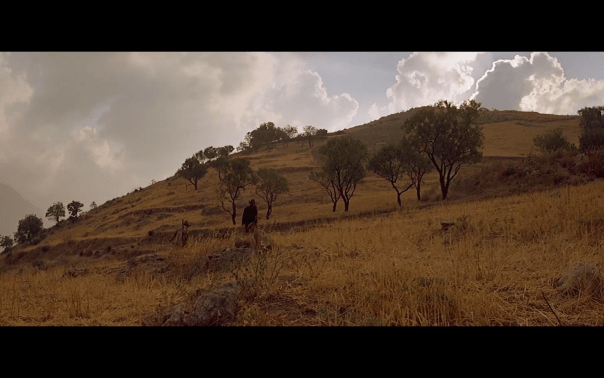
The Leopard is so beautiful and resonant to me. It really is every frame a painting, but also so much more than that. A simple image of Lancaster and Serge Regianni, in long shot, walking down a hill after the hunt, as shot by Giussepe Rottuno, is enough to move me. I thought it beyond great the first time I saw it, so I can´t honestly say it gets better with each viewing, but my understanding of it does, though, like with all great works of art, it´s so rich it always remains that little bit out of my reach.

Screenshot 2020-05-02 at 07.00.10Screenshot 2020-05-02 at 07.00.21Screenshot 2020-05-02 at 07.00.30Screenshot 2020-05-02 at 07.00.38


The landscape above moves me, partly because it reminds me of my childhood, but partly also because they are so beautifully lit. The screen-caps above don´t do justice to the gorgeous blu-ray I saw, with the gradations of light and the dense texture of the image.

Screenshot 2020-05-01 at 13.38.13Screenshot 2020-05-01 at 13.39.53Screenshot 2020-05-01 at 14.26.39


The mise-en-scène of the ball sequence, almost the last third of the film, is exquisite. If you look closely, it´s beautifully lit, shot in depath, with each minor bit part player offering major characerisation. It´s a thing of wonder.

José Arroyo

Burt Lancaster ‘to-be-looked-at-ness’

Burt’s was a career and a persona characterised by ‘to-be-looked-at-ness,’ even at the age of fifty, as here in The Leopard , and on to almost old age.

burt-leopard

Eavesdropping at the Movies: 227 – Southland Tales

Listen on the players above, on Apple Podcasts, or on Spotify.

A film many have heard of and few have seen, Southland Tales is writer-director Richard Kelly’s infamous difficult second album. Six years after his eventual cult hit Donnie Darko, this sprawling, confusing mess of an end-of-days parable was released to thunderous bafflement and almost no box office. We dive in and find that perhaps all we needed was to give it thirteen years to breathe.

There’s no defending much of the film’s execution. Kelly’s visuals are functional at best, almost never expressive, and rather obvious, there’s an abundance of plot that feels at once over- and under-developed, and there’s no emotional way in to significantly connect with any character. But Southland Tales is chock full of ideas and ambition, and there’s much to respond positively to. José considers how its critique of American culture continues to resonate today; Mike suggests that alongside M. Night Shyamalan’s The Village, it captures the state of mind of post 9/11, pre-financial crash, perpetually warring, deeply conservative and fearful America. Kelly may show little instinct for visual expression, but his ability to cast well and get the best out of his actors is remarkable, and for José, Justin Timberlake and Dwayne Johnson have never been better. And we consider the use of Revelations in the voiceover, and wonder where Seann William Scott has been for the last ten years.

For a Saturday night in, it’s tough to recommend Southland Tales. As a sizzlingly ambitious attempt to combine just about every worry it was possible to have in mid-2000s America into a grand work of sci-fi satire, it’s fascinating and worth your time. Its reach far exceeds its grasp, but that’s so much more appealing than the other way round.

With José Arroyo of First Impressions and Michael Glass of Writing About Film.


Eva Kastelic — Avatar: The Last Airbender, An Example of Pastiche or a Case of Cultural Appropriation

A video essay by Eva Katelic on TV and on animation, one that asks a question worth asking — is Avatar pastiche or cultural appropriation? — and that mobilises a whole array of audio-visual sources and techniques to help provide an answer. Also, great fun to watch.


Avatar: The Last Airbender (2005-2008)


From the anime inspired, bright coloured animation to its bold, yet realistic, fighting styles, I believe that what truly sets the show apart from other kid’s series is its skilful interweaving of varying cultural artistic practices under a single story.


The show is set in an alternate universe that is comprised of four nations, the fire, water, air and earth nations. What differentiates this animated world from ours is that certain characters, called benders, have the power to control the elements to their will. There is only one person who is able to control more than one given element and that is the Avatar. The Avatar is destined to restore peace and balance amongst the nations which have been at war for the past 100 years. There is always only one avatar in the world at any given point in time and as soon as one dies the next one is born, this is called the avatar cycle. The next avatar in the avatar cycle is a young airbender called Aang. Aang wakes after being frozen in an iceberg for the past 100 years and, upon awakening, is burdened with the task of mastering all forms of bending to end the 100-year war. The overarching goal of defeating the fire lord remains the same throughout all three seasons. The series is a classic coming of age story which follows Aang on his journey of defeating the fire nation throughout all three seasons. During Aang’s journey the audience discovers the carefully constructed world which the show is set in. We discover the oddly realistic fighting styles, abstract yet grounded architecture and the prominent cultural norms which shape the avatar’s world.


The video critique delves into the dialectical tension between pastiche and cultural appropriation within the diverse cultural references of the Tv series Avatar: The Last Airbender. I delve into the show’s incorporation of the style of popular Japanese animation, how the show blends together diverse architectural styles, how the show’s simplification of respected cultural figures such as the Dalai Lama is a case of cultural appropriation and how Avatar’s inclusion of diverse Kung Fu fighting styles is a respectful pastiche to the art of fighting. I conclude with the fact that, although the avatar takes some forms of cultural appropriation, it predominantly celebrates the varying cultural art forms in what can be labelled as pastiche. Prior to delving into a detailed analysis of the show I delineate what exactly I mean by the terms pastiche and cultural appropriation within this context.


Pastiche carries with it a number of connotations, derived back from its Italian origins. In the words of Ingeborg Hoesterey, the opinions of pastiche art fluctuated between positive and negative ones over the years[1]. However, pastiche, in the context of contemporary film has come to hold a positive connotation and this is evidenced by numerous film critiques found online today. [2]  Similarly, the phenomenon of cultural appropriation can be viewed differently depending on the context, however, I view cultural appropriation as bell hooks views the “acknowledgment of racial difference”[3], a hegemonic commodification of the ‘other’ [4]. I outline the inherent juxtaposition between the two and question whether the Avatar series falls on the positive side of pastiche or the negative one of cultural appropriation. The aforementioned is evidenced by Avatar’s anime-like animation style (which celebrates the art of Japanese anime and thus falls on the side of pastiche), the creative adaptation of real world architecture, the incorporation of varying kung fu fighting techniques (both forms of pastiche) versus the simplification of cultural figures such as the Dalai Lama (an example of cultural appropriation).


[1] Hoesterey, I. (2001). Pastiche. Bloomington: Indiana University Press.

[2] CrackerJacked (2017). Pastiche: Great Artists Steal. Available at: https://www.youtube.com/watch?v=JpHE7vXE3-A [Accessed 15 Dec. 2019].

[3] hooks, b. (2014). Black Looks. Routledge, pp.0-212.

[4] Ibid.